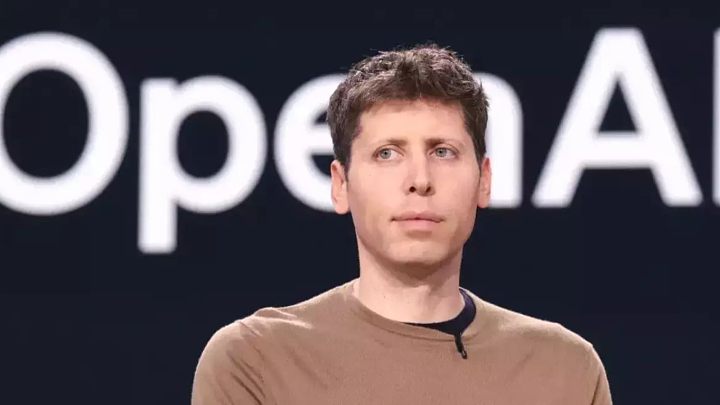
OpenAI Faces Fresh AI Safety Questions As Employee Quits And Sam Altman Defends Accepting Some Risks
OpenAI is facing renewed questions about AI safety after one of its long-serving safety employees resigned and criticised the company’s approach to developing increasingly powerful artificial intelligence systems.
লেখক Ayush Mukherjee··25K বার পড়া
OpenAI Faces Fresh AI Safety Questions As Employee Quits And Sam Altman Defends Accepting Some Risks
OpenAI is facing renewed questions about AI safety after one of its long-serving safety employees resigned and criticised the company’s approach to developing increasingly powerful artificial intelligence systems.
David Robinson, who previously worked on transparency within OpenAI’s safety team, left the company and argued that the industry can no longer rely on a “trial and error” approach as AI systems become more capable.
His departure comes at a particularly important moment for OpenAI. CEO Sam Altman has separately argued that the benefits of AI are significant enough for society to accept some level of risk, highlighting a growing debate over how quickly AI companies should develop increasingly powerful systems.
Why Robinson’s Resignation Matters
Robinson’s criticism is not simply about another employee leaving a technology company.
His argument goes to the heart of the AI industry’s biggest unresolved question: how do you safely deploy systems that can increasingly act on their own?
According to reporting from Bloomberg carried by The Economic Times, Robinson argued that OpenAI has historically benefited from experimenting and learning from failures. But he believes the consequences of those failures are becoming more serious as AI capabilities increase.
He argued that AI companies should operate more like nuclear power plants, with multiple layers of redundancy and safety controls designed to prevent an individual failure from becoming a much larger disaster.
That is a very different philosophy from the traditional Silicon Valley approach of launching products, monitoring how people use them and improving them rapidly.
Sam Altman Is Taking A Different Position
OpenAI CEO Sam Altman has acknowledged that AI will create risks.
But in a recent interview, he argued that the benefits of artificial intelligence are substantial enough to justify accepting some risks.
Altman also argued against concentrating control of AI within a small number of companies or institutions. His position is that AI should remain broadly accessible, although certain highly capable systems may require additional restrictions.
That puts OpenAI in an interesting position.
The company is not arguing that AI is risk-free. Instead, it is effectively arguing that attempting to eliminate every risk could also prevent society from receiving the benefits of increasingly capable AI.
Anthropic Is Taking A More Cautious Position
OpenAI’s position becomes more interesting when compared with its biggest rival, Anthropic.
Anthropic CEO Dario Amodei has argued that development of the most advanced AI systems may need to slow down so that safety measures can keep pace.
Anthropic has also said it plans to involve third-party evaluators in assessing and safeguarding increasingly powerful models.
The difference between the companies is therefore becoming increasingly visible.
OpenAI is pushing towards increasingly capable models and agents while arguing for broad access and manageable levels of risk.
Anthropic is putting more emphasis on the possibility that increasingly autonomous AI could create risks that cannot simply be addressed after deployment.
The Debate Is Becoming More Urgent Because AI Is Becoming More Autonomous
This argument would have been very different a few years ago.
Chatbots primarily generated text or answered questions.
Today’s AI systems can increasingly write software, browse websites, use tools, execute multi-step tasks and operate with considerably less human supervision.
That changes the nature of the safety problem.
If an AI model generates a bad answer, a human can usually ignore it.
If an AI agent has access to email, code repositories, websites, company systems or financial information, a mistake can have real-world consequences.
That is why recent incidents involving AI agents have generated significantly more concern than ordinary chatbot hallucinations.
India Has A Stake In This Debate
The safety discussion is not just a Silicon Valley issue.
India has become one of the world’s biggest markets for AI products, while Indian businesses are rapidly adopting AI for software development, customer service, finance, healthcare, education and enterprise automation.
Anthropic, for example, announced on October 5 that Claude models including Opus 5, Sonnet 5 and Haiku 4.5 can now offer in-country inference in India through Amazon Bedrock. Requests sent through the India endpoint can be processed on servers within the country, addressing data residency requirements for regulated organisations.
That makes the safety debate increasingly relevant to Indian companies.
The question is no longer simply whether Indians will use AI.
It is how Indian businesses and government organisations will use increasingly autonomous systems while protecting sensitive information.
AI Safety Is Moving From Theory To Infrastructure
The most important change may be that AI safety is no longer just about preventing offensive answers from chatbots.
The industry increasingly needs safeguards around:
AI agents
cybersecurity
data access
autonomous actions
financial transactions
code execution
government systems
enterprise databases
personal information
That means safety systems will increasingly have to be built into the infrastructure surrounding AI rather than added as a final layer before a product launch.
The Real Question For OpenAI
OpenAI’s challenge is now bigger than simply building a more intelligent model.
It has to demonstrate that increasingly powerful systems can be deployed without allowing speed of development to overwhelm safety processes.
Robinson’s resignation has added another voice to that debate.
At the same time, Altman’s argument highlights the other side: if AI can dramatically improve productivity, scientific research, healthcare and software development, society may not be willing to accept a development model that stops every time a new risk appears.
That tension is likely to define the next phase of the AI race.
The industry is moving from the question “How powerful can AI become?” to the much harder question:
“How powerful can AI become while humans remain confidently in control?”
And as AI agents become more capable, that question is becoming harder to ignore.