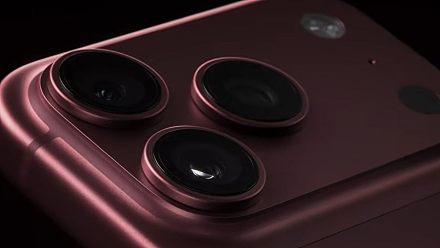
iPhone 18 Pro Max vs iPhone 17 Pro Max vs iPhone 16 Pro Max Camera Comparison: Shades Of 48MP Explained
iPhone 18 Pro Max vs iPhone 17 Pro Max vs iPhone 16 Pro Max Camera Comparison: Apple has made some of its biggest camera changes in years with the iPhone 18 Pro Max, but the upgrade becomes much more interesting when the
লেখক Ayush Mukherjee··38K বার পড়া
iPhone 18 Pro Max vs iPhone 17 Pro Max vs iPhone 16 Pro Max Camera Comparison: Shades Of 48MP Explained
iPhone 18 Pro Max vs iPhone 17 Pro Max vs iPhone 16 Pro Max Camera Comparison: Apple has made some of its biggest camera changes in years with the iPhone 18 Pro Max, but the upgrade becomes much more interesting when the new flagship is compared not just with the iPhone 17 Pro Max, but also with the iPhone 16 Pro Max.
At first glance, the three phones appear to follow the same formula: a 48MP main camera, a 48MP ultra-wide camera on the newer generations, a dedicated telephoto camera and Apple’s computational photography features. But the underlying camera experience has changed considerably in three years.
iPhone 16 Pro Max introduced a 48MP ultra-wide camera and brought a 5x telephoto camera to both Pro models. The iPhone 17 Pro Max then made a major change to the telephoto system, moving to a 48MP sensor with 4x optical-quality zoom and 8x optical-quality zoom, while also introducing an 18MP Center Stage front camera.
Now, the iPhone 18 Pro Max takes a different approach. Instead of simply increasing megapixels, Apple has added a mechanical variable aperture to the 48MP Fusion Main camera, giving photographers control over how much light enters the lens and how much of the scene remains in focus. The 18 Pro Max also retains the 48MP ultra-wide and 48MP telephoto cameras, while adding more professional controls.
iPhone 18 Pro Max vs 17 Pro Max vs 16 Pro Max Camera Specs
Camera feature
iPhone 18 Pro Max
iPhone 17 Pro Max
iPhone 16 Pro Max
Main camera
48MP Fusion
48MP Fusion
48MP Fusion
Main aperture
Variable ƒ/1.48, ƒ/1.8, ƒ/2.8, ƒ/4
ƒ/1.78
ƒ/1.78
Main focal length
24mm / 48mm
24mm / 48mm
24mm / 48mm
Main stabilisation
2nd-generation sensor-shift OIS
2nd-generation sensor-shift OIS
2nd-generation sensor-shift OIS
Ultra-wide
48MP Fusion
48MP Fusion
48MP
Ultra-wide aperture
ƒ/2.2
ƒ/2.2
ƒ/2.2
Telephoto
48MP, 4x / 8x optical-quality
48MP, 4x / 8x optical-quality
12MP, 5x optical
Maximum optical-quality zoom
8x
8x
5x
Digital zoom
Up to 40x
Up to 40x
Up to 25x
Optical-quality zoom range
16x
16x
10x
Macro
48MP
48MP
48MP
Front camera
18MP Center Stage
18MP Center Stage
12MP TrueDepth
4K Dolby Vision rear video
Up to 120fps
Up to 120fps
Up to 120fps
ProRes external recording
Up to 4K/120fps
Up to 4K/120fps
Up to 4K/120fps
Apple Log
Apple Log 2
Apple Log 2
Apple Log
ProRes RAW
Yes
Yes
No
Genlock
Yes
Yes
No
The table makes one thing clear: the biggest story is not simply the number printed beside each camera. The progression from the 16 Pro Max to the 18 Pro Max is about camera versatility, zoom flexibility, aperture control, computational photography and professional video tools.
iPhone 18 Pro Max Main Camera: The Biggest Change Is The Aperture
The main camera is where the iPhone 18 Pro Max separates itself most clearly from the iPhone 17 Pro Max and iPhone 16 Pro Max.
All three generations use a 48MP main camera. The iPhone 16 Pro Max and iPhone 17 Pro Max both use a fixed ƒ/1.78 aperture. The iPhone 18 Pro Max changes that with a mechanical variable aperture offering ƒ/1.48, ƒ/1.8, ƒ/2.8 and ƒ/4.
This is important because aperture controls more than brightness.
At ƒ/1.48, the iPhone 18 Pro Max can allow more light into the camera. That can help when shooting in darker environments and can also create a somewhat shallower depth of field. The difference may be particularly useful for portraits, indoor photography, evening shots and situations where you want the subject to stand out from the background.
The other aperture settings give the camera something previous iPhones did not have: the ability to deliberately stop down the lens.
At ƒ/4, for example, more of the scene can remain within the depth of field. This can be useful for landscapes, architecture, group photographs or subjects where you want both the foreground and background to appear sharp.
There is an important caveat, however. A smartphone’s relatively small sensor means users should not expect DSLR-style depth-of-field changes simply by moving between apertures. The practical improvement is likely to be more noticeable in exposure control, highlight management and creative control than in dramatic background blur. The Verge also notes that the wider ƒ/1.48 setting may ultimately be more significant for everyday photography than the variable-aperture feature itself.
iPhone 17 Pro Max vs iPhone 16 Pro Max Main Camera
The jump from the iPhone 16 Pro Max to the iPhone 17 Pro Max was much less dramatic on paper for the main camera.
Both use a 48MP Fusion Main camera with a 24mm equivalent focal length, ƒ/1.78 aperture and second-generation sensor-shift optical image stabilisation. Both also support 24MP and 48MP high-resolution photos.
That means an iPhone 16 Pro Max owner moving to the 17 Pro Max did not get the kind of fundamental optical change that the 18 Pro Max now brings with its variable aperture.
However, the 17 Pro generation improved the wider camera system and image processing, especially at the ultra-wide and telephoto ends.
Ultra-Wide Camera: 16 Pro Max Started The 48MP Era
The iPhone 16 Pro Max was already a major step forward for ultra-wide photography because Apple moved to a 48MP Ultra Wide camera. It featured a 13mm equivalent focal length, ƒ/2.2 aperture, 120-degree field of view and autofocus. It could also produce 48MP photos and support 48MP macro photography.
The iPhone 17 Pro Max retained the 48MP ultra-wide approach, while the iPhone 18 Pro Max continues with a 48MP Fusion Ultra Wide camera.
So, unlike the main camera, the ultra-wide camera has not seen a headline-grabbing resolution increase across these three generations. Instead, Apple has concentrated its major optical change on the main camera and telephoto system.
For someone moving from an iPhone 16 Pro Max to an iPhone 18 Pro Max, the ultra-wide experience is therefore more of an evolution than a revolution.
Telephoto Camera: This Is Where The 16 Pro Max Falls Behind
The telephoto camera tells one of the most interesting stories in this comparison.
The iPhone 16 Pro Max has a 12MP 5x Telephoto camera with a 120mm equivalent focal length, ƒ/2.8 aperture, 20-degree field of view, autofocus and 3D sensor-shift optical image stabilisation. It uses a tetraprism design. Apple rated it for 5x optical zoom in and 2x optical zoom out, giving a 10x optical zoom range, with digital zoom up to 25x.
The iPhone 17 Pro Max changed that formula dramatically.
Instead of a 12MP 5x telephoto, Apple introduced a 48MP Fusion Telephoto. It has a 100mm equivalent focal length at 4x, ƒ/2.8 aperture, Hybrid Focus Pixels, autofocus and 3D sensor-shift OIS. It also provides a 200mm equivalent 8x optical-quality zoom option.
The iPhone 18 Pro Max carries that 48MP telephoto concept forward, again offering 4x at 100mm and 8x optical-quality zoom at 200mm.
This is one of the biggest reasons the 17 Pro Max and 18 Pro Max are more versatile camera phones than the 16 Pro Max for distant subjects.
Why 4x And 8x Can Be More Useful Than The Old 5x
It might sound strange to call a 4x camera an upgrade over a 5x camera. But Apple’s newer system is not simply about the number 4 or 5.
The 48MP telephoto sensor gives the newer iPhones much more resolution to work with. Apple can use the high-resolution sensor and computational photography to provide a 4x view while also offering an 8x optical-quality option.
For portraits, 4x can be more convenient because it gives a slightly wider framing than 5x. For distant subjects, the 8x option gives the 17 Pro Max and 18 Pro Max considerably more reach.
That is why the newer system has a 16x optical-quality zoom range, compared with the 10x optical zoom range of the iPhone 16 Pro Max. Apple also raises maximum digital zoom from 25x on the 16 Pro Max to 40x on the 17 Pro Max and 18 Pro Max.
iPhone 18 Pro Max Zoom: What Has Actually Changed?
The iPhone 18 Pro Max essentially retains the 17 Pro Max’s 4x/8x telephoto architecture rather than introducing another major zoom jump.
That means the biggest telephoto leap in this three-generation comparison actually happened between the iPhone 16 Pro Max and iPhone 17 Pro Max.
The 18 Pro Max instead improves the camera system around that telephoto hardware. It adds more professional controls and continues to support high-resolution 48MP images from all three rear cameras.
48MP On All Three Rear Cameras: A Major Difference From The 16 Pro Max Era
The iPhone 16 Pro Max has a 48MP main camera, 48MP ultra-wide and 12MP telephoto.
The iPhone 17 Pro Max moved to a 48MP Pro Fusion system across all three rear cameras. The iPhone 18 Pro Max continues this approach.
In practical terms, this creates greater consistency when switching between lenses. The resolution gap between the telephoto and the other cameras is no longer as large.
For photographers who crop images heavily, edit RAW files or want to switch lenses while maintaining a similar level of detail, this is a meaningful change.
Front Camera: iPhone 16 Pro Max vs 17 Pro Max vs 18 Pro Max
The front camera evolution is even more straightforward.
The iPhone 16 Pro Max has a 12MP TrueDepth camera with an ƒ/1.9 aperture, autofocus, Night mode, Photographic Styles, ProRAW and 4K Dolby Vision recording up to 60fps.
The iPhone 17 Pro Max introduced an 18MP Center Stage front camera. It uses a square sensor that allows users to take portrait or landscape selfies without physically rotating the phone. Center Stage can automatically expand the field of view when more people enter the frame. It also supports Dual Capture and ultra-stabilised video.
The iPhone 18 Pro Max keeps the 18MP Center Stage camera and ƒ/1.9 aperture, but adds additional camera controls and improvements such as Smart Focus Tracking and improved low-light video processing.
So the front-camera story is simple: 12MP to 18MP was the big hardware jump; the 18 Pro Max focuses more on software, control and video refinement.
Video: iPhone 16 Pro Max Was Already Extremely Powerful
One of the most important points in this comparison is that the iPhone 16 Pro Max is still an extremely capable video phone.
It introduced 4K Dolby Vision recording at up to 120fps on the Fusion Main camera, along with 4K120 ProRes recording to external storage. Apple described 4K120 Dolby Vision as a major breakthrough when the 16 Pro models launched.
So the iPhone 18 Pro Max does not suddenly make the 16 Pro Max obsolete for video resolution or frame rate.
Instead, the newer models improve the professional workflow around that capability.
iPhone 17 Pro Max And 18 Pro Max Video Improvements
The iPhone 17 Pro Max added ProRes RAW, Apple Log 2 and Genlock, alongside the existing 4K120 capability. It also supports Dual Capture, allowing simultaneous front and rear camera recording.
The iPhone 18 Pro Max carries those professional video features forward and adds Pro controls for aperture, shutter speed, white balance and histogram viewing. It also brings Smart Focus Tracking and improved low-light video at 1080p.
The new variable aperture becomes particularly interesting for video creators because aperture is no longer fixed. A creator can potentially use the camera differently in bright outdoor scenes, low-light environments and situations where controlling depth of field matters.
Video Features Comparison
Video feature
iPhone 18 Pro Max
iPhone 17 Pro Max
iPhone 16 Pro Max
4K Dolby Vision
Up to 120fps
Up to 120fps
Up to 120fps
4K120 ProRes external
Yes
Yes
Yes
ProRes RAW
Yes
Yes
No
Apple Log
Apple Log 2
Apple Log 2
Apple Log
Genlock
Yes
Yes
No
Dual Capture
Yes
Yes
No
Action mode
Up to 2.8K/60fps Dolby Vision
Up to 2.8K/60fps Dolby Vision
Up to 2.8K/60fps
Cinematic mode
Up to 4K Dolby Vision/60fps
Up to 4K Dolby Vision/30fps
Up to 4K HDR/30fps
Manual aperture control
Yes
No
No
Manual shutter/white balance controls
Yes
Limited compared with 18 Pro
No equivalent integrated aperture system
The iPhone 18 Pro Max therefore represents a bigger upgrade for serious video creators than the basic 4K specifications suggest. The headline resolution has not changed, but the amount of control available to the person behind the camera has.
Low-Light Photography: Where The 18 Pro Max Could Pull Ahead
Low-light photography is another area where the iPhone 18 Pro Max has a clear hardware advantage.
The 16 Pro Max and 17 Pro Max use a fixed ƒ/1.78 main-camera aperture. The 18 Pro Max can open the main lens to ƒ/1.48.
That wider aperture allows more light to reach the sensor. In theory, this can help the phone maintain faster shutter speeds in dim conditions, reduce motion blur and produce cleaner images without relying as heavily on computational processing.
Apple specifically says the variable-aperture main camera is designed to deliver better low-light photos and video while also providing greater control over depth of field.
However, the difference should not be interpreted as meaning that the 16 Pro Max suddenly takes poor night photos. Apple’s computational photography pipeline has been strong for several generations, and both the 16 Pro Max and 17 Pro Max already include Night mode, Photonic Engine, Deep Fusion and Smart HDR 5.
Computational Photography: The Software Story Matters
All three phones rely heavily on computational photography.
The iPhone 16 Pro Max uses Photonic Engine, Deep Fusion, Smart HDR 5, Night mode, next-generation portraits and Photographic Styles.
The iPhone 17 Pro Max builds on that with an updated Photonic Engine that Apple says integrates machine learning into more parts of the image pipeline, helping preserve natural detail, reduce noise and improve colour accuracy, particularly in low light.
The iPhone 18 Pro Max adds another layer of control with Photographic Styles 3, smart focus tracking and the new Reference Image feature for the Fusion Main camera.
Macro Photography: Not A Huge Generational Leap
All three phones support macro photography, and the 16 Pro Max already offered a 48MP ultra-wide sensor with autofocus that enabled high-resolution macro photography.
The 17 Pro Max and 18 Pro Max continue with 48MP ultra-wide cameras and 48MP macro photography.
For macro photography alone, therefore, upgrading from a 16 Pro Max to an 18 Pro Max is not likely to be as transformative as the jump in telephoto capability or the introduction of variable aperture.
Portrait Photography: The 18 Pro Max Adds More Control
Portrait photography benefits from several changes across these generations.
The 16 Pro Max already offered next-generation portraits with Focus and Depth Control, Portrait Lighting and Night mode portraits using the LiDAR scanner.
The 17 Pro Max retained these capabilities while improving its camera hardware and processing pipeline.
The 18 Pro Max adds a physical aperture system. That matters because depth of field can now be influenced at the optical level rather than relying entirely on computational portrait processing.
It will not replace Apple’s software-based portrait effects, but it gives photographers another variable to work with.
Flash And Stabilisation
Apple retains the Adaptive True Tone flash across these generations.
On the main camera, the iPhone 16 Pro Max, 17 Pro Max and 18 Pro Max all use second-generation sensor-shift optical image stabilisation. The newer telephoto systems also use 3D sensor-shift stabilisation and autofocus.
That means stabilisation is not the headline difference between the three generations. The more significant changes are the telephoto sensor, aperture and computational processing.
How Much Better Is The iPhone 18 Pro Max Camera?
The answer depends on which iPhone you are upgrading from.
From iPhone 16 Pro Max to iPhone 18 Pro Max: this is a substantial camera-system upgrade. You get the newer 48MP telephoto system, 4x and 8x optical-quality zoom options, up to 40x digital zoom, a 48MP ultra-wide and, most importantly, a variable-aperture 48MP main camera. You also gain newer professional video features such as ProRes RAW, Apple Log 2 and Genlock.
From iPhone 17 Pro Max to iPhone 18 Pro Max: the upgrade is more targeted. The 17 Pro Max already has the 48MP telephoto, 48MP ultra-wide, 8x optical-quality zoom, 18MP Center Stage camera, ProRes RAW, Apple Log 2 and Genlock. The 18 Pro Max’s biggest new weapon is the variable-aperture main camera, along with additional pro controls and computational photography improvements.