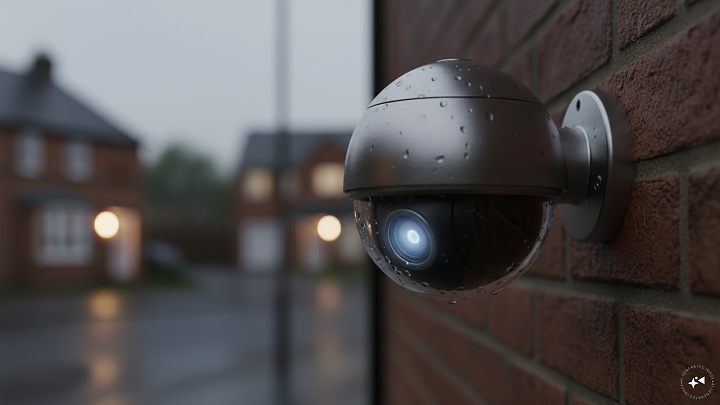
Home Security Cameras: More Cameras Don't Always Mean More Security
The first home security camera usually has a very clear purpose.
লেখক Anjan N Ghosh··47K বার পড়া
Home Security Cameras: More Cameras Don't Always Mean More Security
The first home security camera usually has a very clear purpose.
You want to see the front door. Or the parking area. Or the entrance to the building. You install one camera, open the app a few times, feel reassured and then something predictable happens.
You start thinking about the second camera.
Maybe one for the balcony. One for the back entrance. One inside the living room. Perhaps another facing the lift lobby. Before long, the house has better coverage than a small television studio.
I understand the appeal. Cameras are cheaper and easier to install than they used to be. Many can show a live view on the phone, record movement, send alerts, let you speak through them and store footage either locally or online. For people who travel frequently, have elderly parents at home, receive deliveries or simply want to know what happened outside the door, they can be genuinely useful.
But buying cameras is the easy part. Deciding what you actually want them to do is more important.
Start with the view.
A camera mounted too high may give you a beautiful recording of the top of someone’s head. A wide-angle camera can cover more area but may show less useful detail at a distance. A camera facing strong light may struggle at exactly the time you need a clear image. Outdoor cameras need to be suitable for heat, rain and dust. Night performance matters if the area you care about is dark.
None of this sounds as exciting as “smart person detection”, but placement decides whether the footage is useful.
Then come notifications.
The first evening, every alert feels important. Movement detected. Movement detected. Movement detected. By the fifteenth notification caused by a tree, pet, passing vehicle or changing light, the phone is one alert away from being thrown across the room.
This is where paying more for better detection can make sense. A camera that is better at telling a person from random movement may be more useful than one with a longer feature list. The best alert is not the one that arrives fastest. It is the one you don’t learn to ignore.
Storage deserves attention before purchase too. Some cameras accept local storage. Some rely heavily on online storage. Some offer both. Online plans can add a recurring cost, and that cost becomes more noticeable when you have several cameras. Find out what still works if you don’t pay for a subscription.
Then there is privacy, which deserves more than a line in the setup screen.
A camera inside a home is not just another connected gadget. It may see family members, children, domestic staff, visitors and private parts of daily life. I would think carefully about where indoor cameras are placed and whether they need to be recording all the time. Bedrooms and other private spaces should be obvious red lines for most homes.
Account security matters as well. Use a strong, unique password. Turn on extra login protection if the service offers it. Keep the camera and app updated. If several family members need access, use the proper sharing options instead of passing one password around a WhatsApp group.
And remember the people being recorded. In shared spaces, household members and regular workers should not have to discover a hidden camera by accident. Local rules and housing policies can also matter depending on where and what you are recording.
This is where the word “security” can become misleading. Cameras can show you what is happening. They can record evidence. They can discourage some behavior. They can alert you to movement. But they do not replace a good lock, proper lighting, sensible access control or basic neighborhood awareness.
A badly secured door with four cameras pointed at it is still a badly secured door.
The premium end of the market adds sharper video, better night images, battery backup, wider coverage, smarter alerts, motorized movement and more polished apps. Some of those upgrades are worth paying for when they solve a specific problem. But buying the most expensive camera for every corner can quickly turn a modest security setup into a surprisingly large bill.
I would map the house first. What do I need to see? At what time? Do I need a recording or just a live view? Is there power nearby? Is Wi-Fi reliable at that point? How long do I need footage to remain available? Who should have access?
Those questions are not very glamorous, but they usually tell you how many cameras you actually need.
Home security technology is at its best when it becomes boring. The camera sits there, records reliably, tells you when something genuinely needs attention and otherwise leaves you alone.
If the security system makes you check six live feeds every twenty minutes, it may have made the house more connected without making you feel any safer.