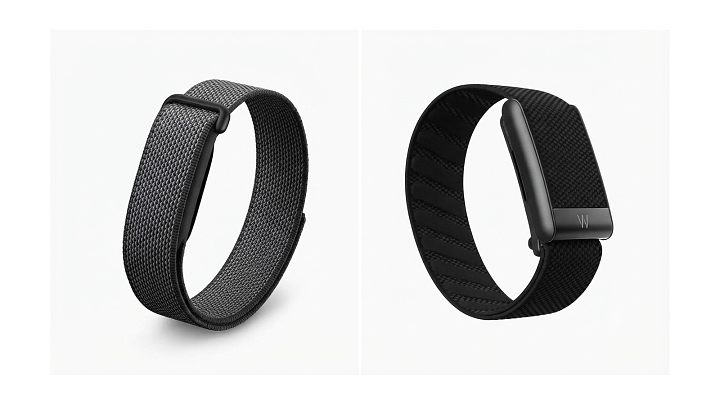
Google Fitbit Air vs WHOOP 5.0: Pay ₹13,999 or ₹21,990- Which Screenless Fitness Tracker Makes More Sense In India?
Google has entered the screenless fitness tracker market in India with the new Fitbit Air, putting it directly up against devices such as the WHOOP 5.0. Both trackers are designed to be worn around the clock without a di
লেখক Ayush Mukherjee··10K বার পড়া
Google Fitbit Air vs WHOOP 5.0: Pay ₹13,999 or ₹21,990- Which Screenless Fitness Tracker Makes More Sense In India?
Google has entered the screenless fitness tracker market in India with the new Fitbit Air, putting it directly up against devices such as the WHOOP 5.0. Both trackers are designed to be worn around the clock without a display, but the two take noticeably different approaches to health and fitness tracking.
The biggest difference is the price. The Google Fitbit Air costs ₹13,999 in India, while WHOOP 5.0 starts at ₹21,990 for the One membership and goes up to ₹28,990 for the Peak version.
So, how do the two compare?
Fitbit Air vs WHOOP 5.0: India Price
Feature
Google Fitbit Air
WHOOP 5.0 One
WHOOP 5.0 Peak
India price
₹13,999
₹21,990
₹28,990
Subscription required
No for core tracking
Yes
Yes
Subscription included
3 months Google Health Premium
12 months
12 months
Renewal
Google Health Premium: ₹99/month or ₹999/year
Membership required
Membership required
Display
No
No
No
Battery
Up to 7 days
14+ days
14+ days
Charging
USB-C cable
Basic charger
Wireless PowerPack
Fitbit Air includes three months of Google Health Premium with the tracker. Google’s paid health service adds features such as AI-powered coaching, personalised fitness plans, detailed sleep insights and additional wellness tools.
WHOOP, meanwhile, is built around a membership model. The WHOOP 5.0 One package in India costs ₹21,990 and the Peak package costs ₹28,990, with 12 months of membership included.
Design: Both Have No Screen
Both Fitbit Air and WHOOP 5.0 deliberately remove the screen.
The idea is straightforward: instead of checking notifications, steps or heart rate directly on your wrist, you wear the tracker continuously and look at the companion app when you actually want the information.
Fitbit Air is particularly small. It weighs 5.2g without the band and 12g with the band. It has a screenless pebble design, with interchangeable band options including Performance Loop, Active Band and Elevated Modern Band.
WHOOP takes a similar approach but adds flexibility around how it can be worn. WHOOP’s Any-Wear approach allows the sensor to be worn on different parts of the body using compatible accessories.
Health Tracking: Fitbit Air Has A Surprisingly Long List
Fitbit Air continuously tracks heart rate and offers a broad selection of health metrics.
24/7 heart-rate monitoring
Resting heart rate
Heart-rate variability (HRV)
Heart-rhythm monitoring
AFib notifications
Blood oxygen (SpO2)
Breathing rate
Skin-temperature variation
Steps
Calories burned
Distance
Active Zone Minutes
Cardio Load
Readiness
Sleep duration
Sleep stages
Sleep Score
Fitbit Air uses an optical heart-rate sensor, accelerometer and gyroscope, red and infrared sensors for SpO2 and a device temperature sensor. It is also water-resistant up to 50 metres.
That means Fitbit Air isn’t simply a step counter. It can build a fairly comprehensive picture of daily activity, sleep and cardiovascular health.
WHOOP 5.0 Goes Further Into Recovery
WHOOP’s biggest difference is the way it interprets the collected data.
Rather than focusing primarily on individual readings, WHOOP turns measurements into three major scores: Recovery, Strain and Sleep.
Recovery uses factors including HRV, resting heart rate, respiratory rate, sleep duration and quality, skin temperature and blood oxygen saturation.
WHOOP Strain is scored from 0 to 21 and attempts to quantify the cardiovascular load created by your activities.
Its sleep system goes beyond simply telling you how long you slept. It tracks sleep duration, sleep performance, efficiency, consistency, sleep stages, sleep need, sleep latency and sleep-related stress.
The WHOOP 5.0 One also includes:
Recovery Score
Sleep Score
Strain Score
Steps and activity tracking
VO2 Max
Heart-rate zones
Women’s hormonal insights
Haptic alarm
Personalised coaching
The Peak membership adds:
Healthspan
WHOOP Age
Pace of Aging
Real-time Stress Monitor
Health Monitor
Additional health insights
Fitbit Air vs WHOOP 5.0 For Sleep Tracking
Both devices are designed to be worn overnight, but their approaches are different.
Fitbit Air tracks sleep duration, sleep stages, sleep schedule and Sleep Score. Its algorithms use the collected data to provide sleep insights through the Google Health app.
WHOOP puts considerably more emphasis on sleep as part of its recovery system. It measures sleep performance, sleep need, consistency, efficiency, stages and physiological stress during sleep.
WHOOP also uses your previous sleep and activity history to determine how much sleep you need and how your sleep affects your recovery.
For someone who simply wants to know “How did I sleep?”, Fitbit Air provides the basic answer. WHOOP is designed more around “How did my sleep affect my readiness for today’s training?”
Fitness And Workout Tracking
Fitbit Air automatically detects common activities and can provide a workout recap through the Google Health app. Users can also start workouts through the app or log them manually.
Google Health Coach can go further by using information such as a photograph of gym equipment or a workout written on a gym whiteboard to help log activity.
WHOOP is much more focused on training load.
Its Strain system looks at cardiovascular effort and heart-rate zones, while the platform connects that training load with sleep and Recovery.
The result is a different philosophy.
Fitbit Air: track your activity and understand your health.
WHOOP: track your activity, understand the physiological cost and adjust your training accordingly.
AI Coaching: Google Health Coach vs WHOOP Coach
This is where Fitbit Air becomes particularly interesting.
Google Health Coach is built with Gemini and sits inside the Google Health app. It can answer health and fitness questions, create personalised fitness plans, recommend workouts, provide sleep insights and offer proactive recommendations based on the user’s data.
Google also offers a workout library and mindfulness sessions through the Premium subscription.
WHOOP has its own AI-powered WHOOP Coach, which uses the user’s WHOOP data and performance information to provide personalised recommendations and answers.
Both therefore have an AI layer, but the underlying philosophy remains different: Google’s system sits inside a broader health and wellness ecosystem, while WHOOP Coach is heavily centred around performance, recovery and training data.
Battery Life
WHOOP has the clear advantage on battery life.
The WHOOP 5.0 is rated for 14+ days of battery life. Its charging system also allows users to keep the tracker on while charging, which helps maintain continuous data collection.
Fitbit Air is rated for up to seven days.
However, Fitbit has a useful fast-charging feature: five minutes of charging can provide up to a day’s battery life. The full charge takes around 90 minutes.
So Fitbit Air needs to be charged roughly twice as often, but a short charging session can get it back into action quickly.
Water Resistance
Fitbit Air is water-resistant up to 50 metres.
WHOOP 5.0 is designed for continuous wear, including during workouts and sleep, with its charging system designed to minimise interruptions to tracking.
The Biggest Difference: Subscription
This is arguably the most important difference for Indian buyers.
Fitbit Air does not require Google Health Premium for its basic tracking.
Google’s base Google Health experience includes activity tracking, Sleep Score, sleep stages, heart rate, HRV, breathing rate, SpO2 and other wellness metrics. Premium adds Google Health Coach, adaptive fitness plans, detailed sleep insights, proactive insights, workout content and mindfulness sessions.
Google Health Premium costs ₹99 per month or ₹999 per year in India.
WHOOP, on the other hand, is fundamentally a membership product. The India package includes the WHOOP 5.0 device and 12 months of membership, after which the membership needs to be renewed to continue using the WHOOP experience.
That makes the long-term cost difference significant.
Fitbit Air vs WHOOP 5.0: Features At A Glance
Feature
Fitbit Air
WHOOP 5.0
Screen
No
No
24/7 heart rate
Yes
Yes
HRV
Yes
Yes
Resting heart rate
Yes
Yes
SpO2
Yes
Yes
Breathing rate
Yes
Yes
Skin temperature
Yes
Yes
AFib alerts
Yes
Available on higher-tier MG/Life hardware
ECG
No
No on standard 5.0; available on WHOOP MG/Life
Blood pressure
No
Blood Pressure Insights on MG/Life
Sleep stages
Yes
Yes
Sleep Score
Yes
Yes
Sleep need
Not positioned as a core WHOOP-style metric
Yes
Recovery score
Readiness
Recovery
Training load
Cardio Load
Strain
Stress
Health insights
Real-time Stress Monitor on Peak
VO2 Max
Not listed as a Fitbit Air device metric
Yes
Steps
Yes
Yes
Automatic activity detection
Yes
Yes
AI coaching
Google Health Coach
WHOOP Coach
Personalised plans
Yes, Premium
Yes
Haptic alarm
Not listed
Yes
Built-in GPS
No
No
Battery
Up to 7 days
14+ days
Charging while wearing
No
Yes, with compatible PowerPack
Water resistance
Up to 50m
Designed for continuous wear
Subscription required
No for base tracking
Yes
One important distinction is that ECG and blood-pressure features belong to WHOOP’s MG/Life tier, not the standard WHOOP 5.0. Indian buyers should therefore not assume those features are included with the regular WHOOP 5.0.
Fitbit Air vs WHOOP 5.0: Which One Makes More Sense?
The two devices are aimed at overlapping but different audiences.
Fitbit Air makes more sense for someone who wants:
An affordable screenless tracker
Basic health tracking without a mandatory subscription
Sleep tracking
Heart-rate and SpO2 monitoring
Steps and activity tracking
Readiness and Cardio Load
Google’s Gemini-powered Health Coach
A lightweight 12g device
Seven-day battery life
A lower long-term cost
WHOOP 5.0 makes more sense for someone who wants:
Detailed recovery analysis
Training load and Strain tracking
Deeper sleep analysis
VO2 Max and heart-rate zones
Long-term physiological trends
Stress monitoring
Healthspan and WHOOP Age on Peak
More than two weeks of battery life
A charging system that allows continuous wear
A platform built primarily around training and recovery
The interesting part is that Fitbit Air brings many of the basic ingredients of the WHOOP experience to a considerably lower entry price in India. At ₹13,999, it costs ₹7,991 less than WHOOP 5.0 One and ₹14,991 less than the WHOOP 5.0 Peak.
The gap becomes even more noticeable over several years because Fitbit Air’s core tracking does not require an ongoing membership, while WHOOP’s experience is tied to its subscription model.
At the same time, WHOOP’s higher price reflects a different proposition. Its central selling point is not simply collecting heart-rate or sleep data; it is turning those measurements into a continuous system around Recovery, Strain, Sleep and performance.
That makes the Fitbit Air vs WHOOP 5.0 decision less about which tracker has more sensors and more about how much health data the user actually wants to act on.
For a general user who wants a discreet tracker for sleep, heart rate, activity and everyday wellness, Fitbit Air offers a simpler and cheaper entry into screenless tracking. For athletes and data-heavy users who want their wearable to revolve around training load, recovery and long-term performance trends, WHOOP’s approach is substantially more specialised.