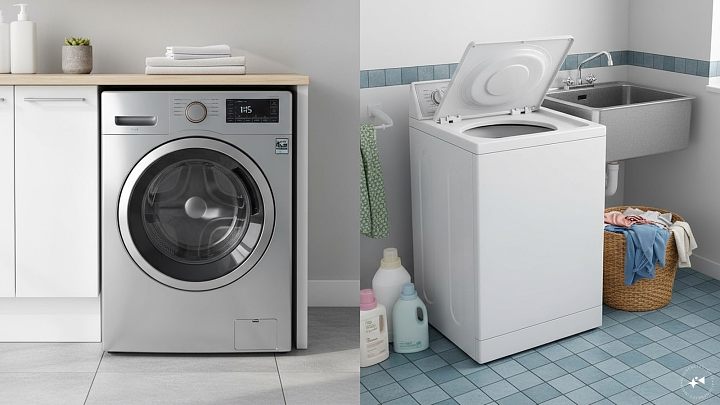
Front-Load vs Top-Load Washing Machine: Which Uses Less Water in Indian Homes?
If water consumption is a major concern when buying a washing machine, the choice between a front-load and top-load model can make a noticeable difference. Front-load washing machines generally use less water because the
লেখক Consumer Trends Desk··22K বার পড়া
Front-Load vs Top-Load Washing Machine: Which Uses Less Water in Indian Homes?
If water consumption is a major concern when buying a washing machine, the choice between a front-load and top-load model can make a noticeable difference. Front-load washing machines generally use less water because they tumble clothes through a smaller volume of water, while top-load models typically fill the drum or tub to a higher level during washing.
For Indian homes where water availability, electricity costs and regular laundry loads all matter, the right choice depends on more than just water consumption. Front-load machines are usually more water-efficient and can also deliver strong cleaning performance, while top-load machines offer simpler loading, shorter wash cycles on many models and generally lower purchase prices.
Verdict: Which one should you choose?
Choose a front-load washing machine if:
You want to minimise water consumption.
You wash clothes frequently.
You want better water efficiency over the long term.
You regularly wash heavily soiled clothes.
You want a machine with strong cleaning performance.
You are willing to pay more initially for greater efficiency.
Choose a top-load washing machine if:
You want a more affordable washing machine.
You prefer loading clothes from the top.
You want to add clothes easily during a wash cycle.
Water availability is not a major concern.
You prefer simpler everyday operation.
You want a machine that generally has a lower upfront cost.
A front-load washing machine is generally the better choice for Indian households where saving water is the priority. A top-load model remains a practical option for buyers who value convenience, simpler loading and a lower initial purchase price.
Top picks
1. LG Smart Choice, 7 Kg
Price: Was – Rs 42,490 | Now – Rs 27,490 | Discount – 35%
2. IFB 6 Kg 5 Star
Price: Was – Rs 34,490 | Now – Rs 25,400 | Discount – 26%
3. Haier 12 Kg AI Color Panel
Price: Was – Rs 69,990 | Now – Rs 51,990 | Discount – 26%
4. Samsung 7 kg, 5 Star, Eco Bubble Technology
Price: Was – Rs 23,200 | Now – Rs 18,490 | Discount – 20%
5. Haier 11 Kg, In-Built Heater, Front Panel Design
Price: Was – Rs 39,500 | Now – Rs 26,662 | Discount – 33%
Quick comparison
Feature
Front-Load
Top-Load
Water consumption
Lower
Higher
Cleaning performance
Excellent
Good
Energy efficiency
Generally higher
Generally lower
Loading convenience
Requires bending
Easier from standing position
Wash cycles
Often longer
Often shorter
Initial price
Generally higher
Generally lower
Clothes addition
Less convenient during cycle
Easier on many models
Space requirement
Can be stacked
Usually cannot be stacked
Best for
Water-conscious households
Convenience and budget
Maintenance
Requires more care around door seal
Generally simpler
How does a front-load washing machine work?
Front-load washing machines have a horizontally positioned drum, with clothes loaded through a door at the front. Instead of completely filling the drum with water, the machine uses a relatively small amount of water while repeatedly tumbling clothes through it.
This design is one of the main reasons front-load machines generally consume less water than conventional top-load washing machines. The tumbling action also allows detergent and water to work through the clothes efficiently.
Front-load machines are particularly useful for households that run multiple laundry cycles each week. Although their wash programmes can take longer, their lower water consumption can make them a more efficient option over the machine’s lifetime.
Where front-load washing machines perform best
Water conservation
Regular family laundry
Heavily soiled clothes
Efficient washing
Large laundry loads
Long-term household use
Where front-load washing machines struggle
Higher purchase price
Longer wash cycles
Bending required while loading
Door seal requires regular care
Cannot always be paused easily to add forgotten clothes
A front-load machine therefore makes the most sense when water efficiency is more important than having the lowest upfront cost.
How does a top-load washing machine work?
Top-load washing machines have a vertically positioned drum or tub, with clothes added through an opening at the top. Depending on the model and washing technology, the machine agitates or moves clothes through the water to remove dirt.
Traditional top-load washing machines generally use more water because clothes need to be immersed in a larger quantity of water during the wash process. However, newer fully automatic top-load models can use sensors and specialised wash programmes to control water levels more efficiently.
Their biggest advantage is convenience. Users can load clothes from above without bending as much, and some models allow additional garments to be added after the cycle has started.
Where top-load washing machines perform best
Easy loading
Budget purchases
Shorter wash cycles
Convenient everyday laundry
Frequent addition of clothes
Homes where water availability is adequate
Where top-load washing machines struggle
Higher water consumption
Generally lower water efficiency
More space required above the machine
Less suitable for stacking
Potentially higher water bills with frequent use
For households where water conservation is not a major concern, a top-load machine can still offer excellent everyday convenience.
Which uses less water?
Front-load washing machines generally use less water than top-load models.
The main reason is the way clothes are washed. A front-load machine uses the tumbling motion of the drum to move clothes through a relatively small amount of water. A top-load machine generally requires a larger volume of water to wash and move the clothes.
The exact difference depends on the capacity, wash programme, load size and specific model. Modern top-load machines with automatic water-level sensing can also reduce unnecessary water use compared with older designs.
Water consumption comparison
Front-load washing machine: Better water efficiency
Top-load washing machine: Higher water consumption in general
For an Indian household running several washing cycles each week, the cumulative water savings from a front-load machine can become significant over time.
Why do front-load machines use less water?
The horizontal drum design allows the machine to lift and drop clothes repeatedly rather than keeping the entire load submerged.
Only enough water is required to wet the clothes and enable the tumbling process. As the drum rotates, clothes move through the available water and detergent solution, helping clean the load without requiring the tub to be filled to a high level.
This is fundamentally different from traditional top-load washing, where a larger quantity of water is generally needed to move clothes through the wash.
Water efficiency also depends on using the correct programme and load size. Running a half-empty machine on a water-intensive cycle can reduce the practical savings of any washing machine.
Which offers better cleaning performance?
Front-load washing machines generally have an advantage in cleaning performance because the tumbling action provides more mechanical interaction between clothes, water and detergent.
This can be particularly useful for heavily soiled garments, towels, bedsheets and other bulky laundry. The gentler tumbling action can also reduce excessive friction between garments.
Top-load machines remain capable of cleaning everyday clothes effectively, particularly when users select an appropriate programme and avoid overloading the tub.
Cleaning comparison
Front-load washing machine: Better for deep cleaning and fabric care
Top-load washing machine: Good for everyday laundry and convenience
For households that regularly wash heavily soiled clothes, a front-load model can justify its higher initial price.
Which is more energy efficient?
Front-load washing machines are generally more energy-efficient because they use less water and typically extract more water during the spin cycle.
Removing more water before drying can reduce the amount of time required for clothes to dry, particularly when using a dryer. In Indian homes where clothes are usually dried outdoors, the energy-saving advantage from faster drying may be less significant, but lower water heating requirements can still matter when using warm or hot wash programmes.
Actual electricity consumption depends on the machine’s motor, wash temperature, programme, load size and usage pattern.
Which is easier to use?
Top-load washing machines have an advantage in loading convenience. The opening is positioned at the top, so users do not need to bend down as much when putting clothes in or taking them out.
Many top-load models also make it easier to add forgotten clothes during a cycle.
Front-load machines require users to bend or squat when loading laundry. Some models offer pause-and-add functionality, but this depends on the machine and wash programme.
For elderly users or households where loading convenience is particularly important, a top-load machine can therefore be more comfortable.
Which is better for small Indian homes?
Both types can work in Indian homes, but the available layout should be considered before buying.
Front-load washing machines can sometimes be placed beneath a countertop or stacked with a compatible dryer, making them useful where vertical space needs to be maximised.
Top-load models need sufficient clearance above the machine so the lid can open fully. This can become a problem if the machine is installed below a low shelf or kitchen counter.
For a compact laundry area, measure the machine’s width, depth and height, along with the required door or lid clearance, before making a purchase.
Which offers better value?
Top-load washing machines generally offer better value at the time of purchase because many models are available at lower prices.
However, a front-load machine can offer better long-term value for households that use significant amounts of water. Lower water consumption across hundreds of wash cycles can offset some of the higher initial cost.
The calculation depends on local water costs, electricity rates, household size and the number of laundry cycles performed each month.
If water is expensive or scarce in your area, the higher upfront cost of a front-load model may be easier to justify.
Which should you buy overall?
If your primary concern is reducing water consumption, a front-load washing machine is the better choice. Its horizontal drum and tumbling mechanism allow clothes to be cleaned using less water while also providing strong cleaning performance.
If your priorities are easy loading, a lower upfront price and convenient everyday operation, a top-load washing machine remains a practical option.
For most water-conscious Indian households, however, a front-load model is the better long-term investment, especially when the machine will be used several times a week.
Common washing scenarios
Situation
Better choice
Lowest water consumption
Front-Load Washing Machine
Water-conscious household
Front-Load Washing Machine
Heavy laundry loads
Front-Load Washing Machine
Deep cleaning
Front-Load Washing Machine
Fabric care
Front-Load Washing Machine
Lower upfront price
Top-Load Washing Machine
Easy loading
Top-Load Washing Machine
Adding clothes during wash
Top-Load Washing Machine
Shorter wash cycles
Top-Load Washing Machine
Limited water availability
Front-Load Washing Machine
FAQs
1. Which uses less water, front-load or top-load washing machines?
Front-load washing machines generally use less water because they clean clothes through a tumbling action using a smaller amount of water. Actual consumption varies by model, capacity and wash programme.
2. Why do front-load washing machines use less water?
Their horizontal drum allows clothes to tumble through a relatively small quantity of water instead of requiring the entire load to be immersed in a larger volume.
3. Are top-load washing machines less efficient?
Not necessarily. Modern top-load models can include automatic water-level sensing and efficient wash programmes. However, front-load machines generally have an advantage when water consumption is the main consideration.
4. Which is better for Indian homes?
A front-load washing machine is generally better for households where water conservation is important. A top-load model can be more suitable when convenience and a lower purchase price are the main priorities.
5. Which washing machine cleans clothes better?
Front-load machines generally offer stronger cleaning performance because their tumbling action provides effective mechanical movement of clothes through water and detergent.
6. Are front-load washing machines more expensive?
Generally, yes. Front-load models often have a higher upfront price than comparable top-load machines, although the difference varies according to capacity and features.
7. Which washing machine is easier to load?
Top-load washing machines are generally easier to load because the opening is positioned at the top, reducing the need to bend down.
8. Which should I buy overall?
Choose a front-load washing machine if saving water, cleaning performance and long-term efficiency are your priorities. Choose a top-load model if easy loading, convenience and a lower initial price matter more.
Disclaimer: The product descriptions mentioned in the article are solely based on the primary and secondary research conducted by our experts. To keep you ahead of the curve with these latest products, News18 utilises affiliate links. This means if you decide to shop through our recommendations, we may earn a small referral commission at no extra cost to you. Please be advised that News18 is not responsible for any claims under the Consumer Protection Act, 2019, or other applicable laws regarding the final performance, quality, or safety of these products.