Dyson CameraJet Price At Rs 50,000: Why Does A Toothbrush Need Camera, WiFi, Bluetooth?
Dyson CameraJet: Dyson has put a camera inside a toothbrush. The Dyson CameraJet electric toothbrush costs $499.99 (approximately ₹47,000 to ₹50,000). It is yet to launch in India officially. At first, that sounds like a
লেখক Ayush Mukherjee··20K বার পড়া
Dyson CameraJet Price At Rs 50,000: Why Does A Toothbrush Need Camera, WiFi, Bluetooth?
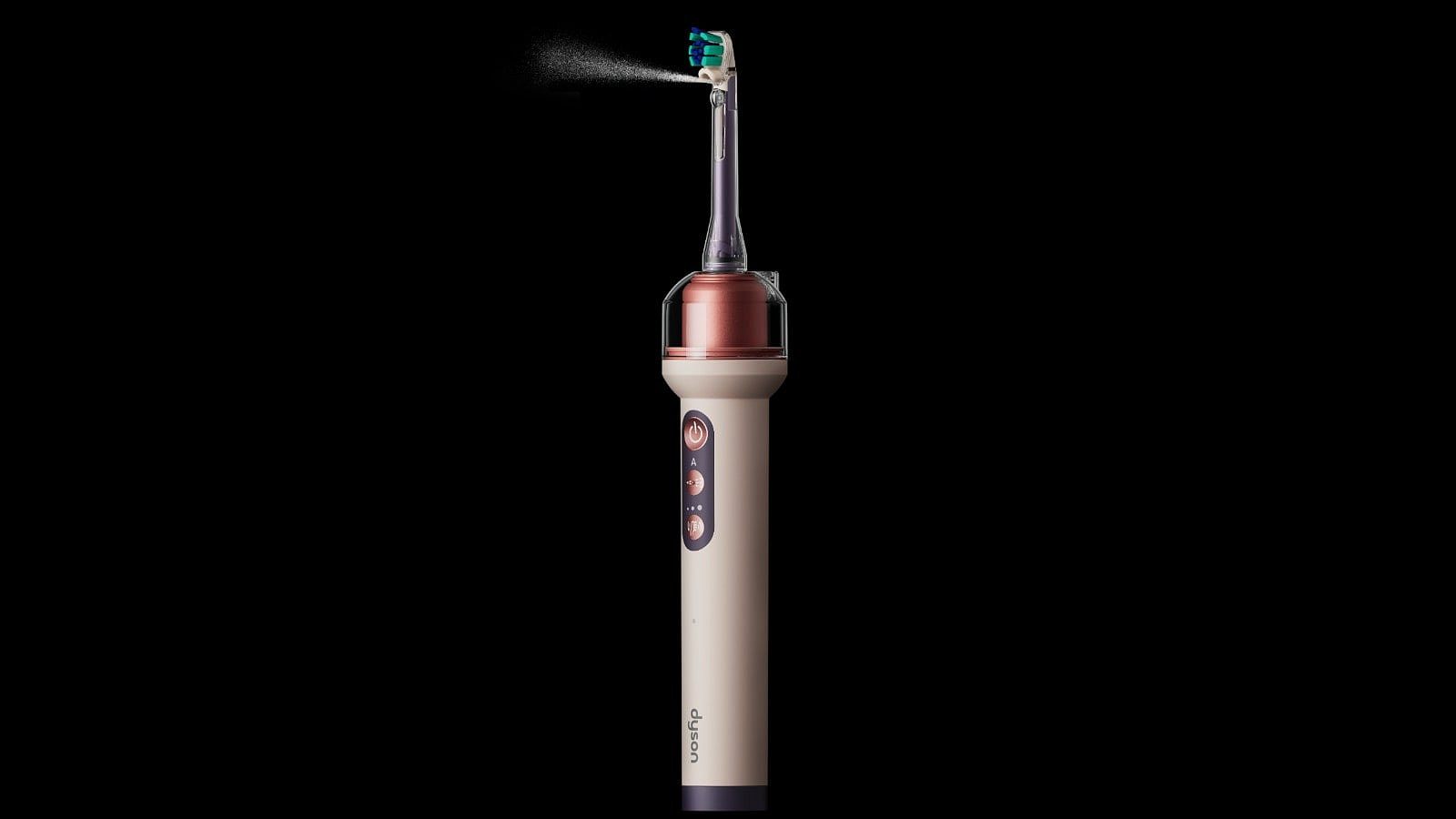
Dyson CameraJet: Dyson has put a camera inside a toothbrush. The Dyson CameraJet electric toothbrush costs $499.99 (approximately ₹47,000 to ₹50,000). It is yet to launch in India officially. At first, that sounds like another example of technology being added simply because it can be. But the company says there is a specific reason for putting a camera inside its new Dyson CameraJet: it wants the toothbrush to see the gaps between your teeth, identify them in real time and then automatically send a jet of mouth rinse into those spaces.
Unveiled in September 2026, the CameraJet is Dyson’s first major move into oral care and combines an electric toothbrush, liquid flosser, mouth-rinse dispenser, camera and machine-learning system in one device. Dyson says the product is the result of six years of research and development.
Why Does A Toothbrush Need A Camera?
The simple answer is that Dyson believes people often miss the spaces between their teeth while brushing.
Those interdental gaps are difficult to see while brushing normally. Instead of expecting the user to know exactly where to direct a water flosser, Dyson has attempted to automate the process.
The CameraJet has a 100,000-pixel macro lens camera built into the toothbrush. The camera captures 28 live images per second, while Dyson’s machine-learning-powered Gap Optical Targeting system analyses those images to identify, track and predict the gaps between teeth.
When the system detects a gap, the toothbrush can trigger a targeted burst of mouth rinse. Dyson says the jet can be activated within around 100 milliseconds of the camera detecting the gap.
In other words, the camera is effectively being used as the toothbrush’s eyes.
What Happens When The Camera Finds A Gap?
This is where the CameraJet becomes more interesting than a normal electric toothbrush.
The brush head continues brushing while the camera looks at the teeth. When the system identifies an interdental gap, the device directs a conical burst of liquid towards that area.
Dyson describes this as precision flossing. The idea is to combine brushing and interdental cleaning rather than making users switch between an electric toothbrush and a separate flossing device.
Dyson says the entire brushing, flossing and rinsing routine can be completed in about three minutes.
The company also says its testing found the CameraJet removed up to 69% more plaque in hard-to-reach areas than market-leading premium electric toothbrushes. That figure is a Dyson claim based on its external testing, so it should not be interpreted as proof that every user will see the same improvement.
The Camera Can Also Let You See Inside Your Own Mouth
There is another reason the camera exists, and this could be the feature that gets people talking.
The CameraJet can send a live view from the camera to the MyDyson app. Dyson describes the camera as a high-quality endoscope and says users can see what their dentist would see through the app’s live-viewing feature.
The app also provides guided cleaning, brushing and flossing insights, coverage mapping and personalised feedback.
That means the toothbrush is not simply cleaning your teeth. It is also attempting to show you where you are brushing properly and where you are missing.
But Why Put A Camera In Something So Personal?
Cameras are now common in phones, laptops, doorbells, cars and home appliances. But putting one inside a device that goes into your mouth takes the idea of connected hardware into a much more personal space.
Dyson appears to have anticipated the privacy concerns. The company says the camera is active only during live viewing or when the automatic jetting system is operating. It also says images are not recorded or stored on the toothbrush or in the cloud.
That distinction matters. The camera is being used primarily as a real-time sensor rather than as a conventional camera that builds up a library of images.
Still, the concept is unusual enough that privacy is likely to remain part of the conversation around the product.
It Is Not Just A Camera: The Toothbrush Is Packed With Technology
The camera is only one part of Dyson’s engineering effort.
The CameraJet uses variable sonic oscillation, which Dyson says keeps the bristles moving and helps prevent stalling. The brush head has two types of bristles, with firmer inner bristles aimed at surface stains and softer outer bristles designed to clean along the gumline.
There are also three brushing intensities, including a gentler mode, while the brush heads contain RFID tags that allow the system to identify the head and track how many cleaning cycles it has completed.
The toothbrush connects using 2.4GHz Wi-Fi and Bluetooth, allowing it to communicate with the MyDyson app.
Dyson Had To Build Special Toothpaste For The Camera
There is an unexpected side effect of putting a camera inside a toothbrush: ordinary toothpaste is not necessarily ideal for the system.
Dyson has developed its own non-foaming toothpaste for the CameraJet. The reason is straightforward. Excessive foam could interfere with the camera’s ability to see the teeth and identify the gaps that it is supposed to target.
The complete Dyson Dental System includes the CameraJet toothbrush, charging dock, travel case, Dyson Toothpaste and Dyson Mouthrinse. Dyson launched the system in Ceramic Ultra Blue and Ceramic Pink.
How Much Does The Dyson CameraJet Cost?
The CameraJet is firmly positioned as a premium gadget.
Dyson’s US website lists the CameraJet at $499.99. The company has also launched it in other markets, with UK pricing reported at around £419.99.
For Indian consumers, the bigger question is when Dyson will officially bring the CameraJet to India. Dyson India’s Unveiled 2026 page currently lists the CameraJet as “Coming soon”, rather than providing an Indian price.
So, Is The Camera Actually Useful?
That depends on what you expect from a toothbrush.
If the goal is simply to brush twice a day, a conventional electric toothbrush is considerably easier and cheaper. The CameraJet’s appeal is aimed at people who want more automation and feedback from their oral-care routine.
The interesting part is that Dyson has identified a genuine problem: your toothbrush cannot normally see the areas you are missing.
By giving the toothbrush a camera, Dyson can turn cleaning from a largely manual process into something closer to an automated system: see the gap, identify the gap, target the gap and clean it.
Whether that is worth paying nearly $500 for is another question.
But that is also what makes the CameraJet such an unusual technology story. Dyson has not simply made a smarter electric toothbrush. It has effectively tried to give a toothbrush eyes.