Audiophile Simplified: Do You Really Need Expensive Gear to Enjoy Good Music?
We now have access to millions of songs within seconds, yet some music lovers are spending serious money on wired headphones, dedicated music players, DACs and even returning to vinyl. Can we actually hear the difference
লেখক Anjan N Ghosh··13K বার পড়া
Audiophile Simplified: Do You Really Need Expensive Gear to Enjoy Good Music?
We now have access to millions of songs within seconds, yet some music lovers are spending serious money on wired headphones, dedicated music players, DACs and even returning to vinyl. Can we actually hear the difference, or have audiophiles simply found another expensive rabbit hole to disappear into?
Music first, equipment later
Audio has fascinated me for as long as I can remember. Maybe it’s the technology behind reproducing sound, maybe it’s my love for music, or probably a combination of both.
I consider myself fortunate to have lived through several generations of music technology. My first turntable was a Philips playing HMV vinyl records. My first cassette player was a Sony, followed by an AKAI reel-to-reel and later a Sony CD Walkman D-E330 with Sony headphones. One of my most prized possessions was a pair of Woodstock floor-standing speakers that entertained me for almost 15 years.
Today, I can carry thousands of songs in my pocket and stream almost anything I want within seconds. Technically, things have never been easier or probably better. Yet audiophiles are going back to vinyl, buying wired headphones, separate DACs, dedicated Digital Audio Players and downloading enormous FLAC and DSD files when Spotify or Apple Music can play almost any song with one tap.
Why?
More importantly, can an ordinary music listener actually hear the difference?
Before we get buried under terms like bitrate, sampling frequency, DAC, FLAC, DSD, LDAC, aptX, balanced output and Hi-Res Audio, let me make one thing clear. You don’t need to understand most of them to enjoy music. But understanding a few of them can help you enjoy it better.
And that’s exactly what I want to simplify here.
Music has always been much more than background entertainment for me. I used to study school textbooks while listening to music, although I know many people who cannot concentrate with even the slightest music playing in the background. I have celebrated with music, suppressed anger with music, relieved stress with music and rarely felt lonely when there was something playing around me.
Over the years I have realised that I listen to music in two very different ways – casual listening and critical listening.
Casual listening is probably what most of us do every day. I might stream music from Spotify or Apple Music using my phone connected to wireless earphones while travelling, walking, exercising, working or simply doing nothing. The equipment isn’t the focus. The music is.
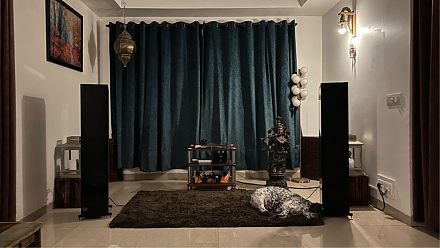
Critical listening is different. That’s when I deliberately make time for music. The phone might be replaced by a dedicated Digital Audio Player or another source. Wireless earphones may give way to wired headphones or IEMs. At home, the chain can involve a streamer, DAC, preamplifier, amplifier and speakers.
The purpose isn’t necessarily to make the music louder. It’s to hear more of what is already there – the slight movement of fingers on guitar strings, a cymbal fading away at the back of the soundstage, the separation between the bass guitar and kick drum, the location of a piano slightly to the left of the vocalist, or sometimes even the musician taking a breath before the next line.
That’s when listening becomes less casual and a little more critical. And that’s also where the audiophile rabbit hole begins.
So, what exactly is an audiophile?
The word itself sometimes creates the wrong impression. Mention “audiophile” and people imagine somebody sitting alone in a dark room with ₹10 lakh speakers, gold-plated cables and a facial expression suggesting that everybody else has been listening to music incorrectly.
I don’t see it that way.
For me, an audiophile is simply someone interested not only in music, but also in how accurately that music is reproduced. You don’t necessarily need expensive equipment. You don’t need to know the frequency-response graph of every headphone you own. And you certainly don’t need to convince your friends that your ₹50,000 cable has transformed Hotel California into a completely different recording.
If you’re curious about why one pair of headphones sounds better than another, why a particular recording sounds more spacious, or why the same song suddenly reveals instruments you hadn’t noticed before, you’ve already started walking down that road.
How far you walk is entirely up to you – and probably your bank balance.
Vinyl died. Then somebody forgot to tell vinyl.
One of the more interesting developments in audio has been the return of vinyl. Compact discs were supposed to kill records. Digital downloads were supposed to kill CDs. Streaming was supposed to kill practically everything.
Yet turntables are sitting in living rooms again.
Part of the attraction is undoubtedly nostalgia. Putting a record on a turntable, lowering the stylus and physically flipping the album after one side finishes creates an involvement that tapping “Play” on a phone simply doesn’t.
There is also something visually beautiful about a turntable. Let’s admit it – some audio equipment is bought not only for sound but also because it looks fantastic in the living room. We do exactly the same with furniture, watches and cars, so why pretend otherwise?
But there is also the sound. Vinyl is an analogue medium. Rather than music being represented by digital samples, the physical groove contains the information that eventually becomes sound through the cartridge, phono stage, amplifier and speakers.
Does that automatically mean vinyl sounds better than digital? No.
A badly mastered record played through an inexpensive turntable isn’t magically superior to a well-mastered digital recording. The quality of the original recording, mastering and playback chain matters enormously.
Some listeners nevertheless prefer the character of vinyl – often described as warm, natural or engaging. Others prefer the extremely low noise, wide dynamic range and convenience of digital.
I’m not interested in declaring a winner.
If playing a record makes you sit down and listen to an entire album instead of skipping tracks every 30 seconds, vinyl has already achieved something streaming hasn’t.
Streaming changed everything
For most people today, music means streaming. Spotify, Apple Music, Amazon Music and other services have effectively placed gigantic music libraries inside our pockets. I can wake up listening to Dire Straits, play Dave Brubeck during lunch and end the night with Enigma without searching through a rack of CDs.
Convenience wins.
But streaming also introduced another question – quality.
For years, streaming services relied heavily on lossy compression. MP3 and AAC are examples of formats designed to reduce the amount of data required to store or transmit audio. They achieve this partly by removing information the encoding system decides we’re less likely to notice.
And before audiophiles start throwing DACs at me, let me clarify something. Good lossy audio can sound extremely good.
In a car, aircraft, gym or busy office, I would challenge most people to consistently identify a good high-bitrate compressed stream from a lossless one. Background noise alone can hide much of the subtle difference.
Sit in a quiet room with good equipment and a familiar recording, though, and things can become more interesting.
Lossy versus lossless – think SD versus 4K
This is where terminology starts frightening people unnecessarily. Let’s simplify it.
Imagine watching the same wildlife documentary twice. The first is a heavily compressed standard-definition version. The second is a good 4K version on a decent television.
The story hasn’t changed. The tiger is still the same tiger.
What changes is the amount of detail available to you. You begin noticing texture in the fur, individual blades of grass, subtle shades in the shadows and details in the background that simply weren’t as obvious before.
That’s roughly how I like to explain good lossless audio.
Think of it as audio in 4K.
Lossless compression preserves the original audio data rather than permanently throwing some of it away. CD quality is 16-bit/44.1 kHz. Hi-Res audio goes beyond that, commonly reaching 24-bit/96 kHz or 24-bit/192 kHz.
Does that mean you’ll immediately hear a dramatic difference? Not necessarily.
Your equipment matters. Your surroundings matter. The recording matters. Your hearing matters. And perhaps most importantly, whether you’re actually paying attention matters.
Try it yourself. Take a few well-recorded tracks you’re extremely familiar with. I often like recordings such as Dave Brubeck Quartet’s Take Five, Eagles’ Hotel California, Diana Krall or Dead Can Dance for this kind of listening.
Don’t listen for “better”. Listen for details.
Can you locate instruments more precisely? Does the bass have texture rather than simply boom? Can you hear the decay of cymbals? Does the vocalist appear to occupy a physical position between the speakers or inside your head?
If you hear the difference and enjoy it, excellent.
If you don’t, congratulations – you may just have saved yourself a lot of money.
What exactly is a DAC?
DAC is another three-letter abbreviation that sounds much more complicated than it really is.
DAC stands for Digital-to-Analog Converter.
Digital music exists as numbers. Your ears don’t understand numbers. Your headphones and speakers ultimately need an analogue electrical signal that can move a driver and create sound waves. The DAC performs that conversion.
You already own several DACs without thinking about them. Your smartphone, laptop, television and many other devices contain some form of digital-to-analogue conversion.
So why do audiophiles buy separate DACs?
Because, as with most electronics, implementation and quality differ. A dedicated DAC may provide cleaner conversion, lower noise, support higher-resolution formats and feed a better analogue signal to the amplifier.
Will plugging a ₹1 lakh DAC into an inexpensive pair of earphones suddenly transform them? No.
That would be like installing a racing engine in a car with bicycle tyres.
The entire chain matters.
Smartphone or dedicated Digital Audio Player?
For most people, the smartphone is the best music player ever invented. Think about it. It’s already in your pocket, permanently connected to the internet, has access to virtually every streaming platform, supports enormous storage through cloud services and can connect to wireless headphones instantly.
For casual listening, I struggle to find a good reason to carry anything else.
Then we move from private listening to what I call private-critical listening.
Enter the DAP – Digital Audio Player.
A modern DAP often looks like a slightly overweight smartphone. Many run customised Android, have touchscreens, Wi-Fi, streaming applications and expandable microSD storage.
But inside they’re designed primarily around audio. You’ll often find dedicated DAC chips, powerful headphone amplifiers, separate audio circuitry and multiple outputs such as 3.5mm unbalanced and 4.4mm balanced connections.
Some high-end models are heavy enough to remind you they’re in your pocket every time you start walking. And yes, they can get expensive. Very expensive.
Do you need one? Probably not.
Do I understand why somebody who loves critical listening wants one? Absolutely.
A good DAP can drive demanding headphones properly, store a huge offline lossless library and provide a dedicated listening device without WhatsApp messages appearing halfway through your favourite guitar solo.
Sometimes removing distractions is itself an upgrade.
Why do audiophiles need enormous storage?
This question becomes obvious the moment you start downloading lossless music. Compressed audio files are relatively small. Lossless files are not. Formats such as FLAC and ALAC preserve the original information while using lossless compression. WAV can be considerably larger. DSD files can become enormous.
Suddenly the 128GB storage that seemed generous begins looking rather small.
That’s why many DAPs support high-capacity microSD cards. An audiophile carrying hundreds of albums locally can consume hundreds of gigabytes surprisingly quickly.
Is carrying 1TB of music slightly ridiculous when practically every song can be streamed? Maybe.
But try streaming Hi-Res audio while driving through a part of the Himalayas where your mobile network has disappeared.
That microSD card suddenly looks rather intelligent.
Wired versus wireless
This debate has probably destroyed more peaceful audiophile conversations than it deserves.
Wireless earphones have become extraordinarily good. They’re convenient, compact, feature excellent microphones, offer Active Noise Cancellation and increasingly deliver impressive audio quality. For most of my daily listening, wireless makes complete sense.
But wired audio still has advantages. There’s no battery to charge. No Bluetooth pairing. No wireless interference. A good wired connection can also preserve the audio signal without relying on a Bluetooth codec.
The old blanket statement that “Bluetooth cannot be lossless” also needs updating. Newer technologies can provide lossless transmission when both ends of the connection support the necessary hardware and codec, and wireless conditions cooperate.
But compatibility is the key word. Your phone, headphones and codec support all need to cooperate. Simply switching the Lossless button on in your streaming application doesn’t automatically mean lossless bits are arriving at your ears.
This is exactly the kind of detail marketing brochures sometimes forget to mention.
For guaranteed Hi-Res listening, wired remains the simpler route.
The downside? A wire dangling from your ears to your pocket.
Apparently humanity managed this terrible hardship for several decades.
3.5mm disappeared. Audiophiles survived.
Smartphone manufacturers gradually removed the headphone jack, telling us courage and progress demanded it.
Audiophiles responded by buying dongles.
A USB-C DAC or USB-C-to-3.5mm adapter is probably the simplest and cheapest way to connect good wired earphones to a modern smartphone. Some of these tiny adapters contain surprisingly capable DACs.
You don’t necessarily need a brick-sized external amplifier strapped to the back of your phone. Start small.
That’s something I would strongly recommend to anybody becoming interested in better audio. Upgrade slowly. Listen first. Spend later.
Headphones or IEMs?
This is highly subjective.
Some people love large over-ear headphones because they are comfortable, create a convincing soundstage and naturally isolate the ears from the environment. Others prefer IEMs – In-Ear Monitors – because they’re small, portable and can offer exceptional audio quality without the bulk of a headband and large ear cups.
Fit matters enormously with IEMs. The best ₹1 lakh IEM in the world can sound terrible if it doesn’t seal properly inside your ear. Conversely, a well-fitting modestly priced IEM can sound surprisingly good.
Ear shapes differ. Preferences differ. Some people dislike having anything inside the ear canal for extended periods.
There’s no universally correct answer.
My advice is simple – don’t buy headphones based entirely on somebody else’s ears.
Unfortunately, YouTube reviewers cannot lend you theirs.
And then there’s ANC
Active Noise Cancellation has become almost compulsory on premium wireless earphones and headphones.
I have a slightly complicated relationship with ANC. I find it extremely useful on flights. Aircraft engine noise is precisely the kind of continuous low-frequency sound ANC handles beautifully. Switch it on and suddenly a long flight becomes considerably more peaceful.
Outside flights, I generally prefer transparency mode or simply keeping ANC off.
Part of this is personal comfort. Strong ANC can sometimes create a pressure-like sensation that I don’t particularly enjoy. More importantly, while walking or moving around outdoors I prefer remaining aware of my surroundings.
Complete silence isn’t always desirable.
If you’re crossing a road while your ₹30,000 noise-cancelling headphones successfully prevent you from hearing the approaching bus, I’d argue the technology has worked a little too well.
Do expensive headphones automatically sound better?
No.
There. I probably saved you another few lakhs.
Price and sound quality are related only up to a point. Better materials, drivers, engineering, manufacturing tolerances and research and development all cost money. A good ₹30,000 headphone will usually offer things a ₹2,000 headphone cannot.
But audio suffers heavily from diminishing returns.
The difference between ₹2,000 and ₹20,000 can be enormous. ₹20,000 to ₹50,000 may still be clearly noticeable.
₹50,000 to ₹2 lakh?
Now we’re entering territory where personal preference becomes extremely important.
And this is where measurements don’t tell the entire story either. One headphone may produce more technically accurate sound while another makes you enjoy your favourite music more.
Which is better?
I’ll take the one that makes me listen longer.
Don’t forget the recording
This is perhaps the most overlooked part of the entire audiophile discussion.
You can buy the world’s best DAC, amplifier and headphones, but they cannot restore information that wasn’t captured or preserved properly in the recording.
Recording quality and mastering matter enormously.
Some old recordings sound spectacular despite their age. Some modern recordings sound disappointingly compressed despite being available in Hi-Res.
A 24-bit/192 kHz badge doesn’t automatically guarantee great sound. It tells you something about the file. It doesn’t tell you whether the recording engineer did a good job.
This is why audiophiles often end up discussing particular masters or releases of albums rather than merely the format.
Yes, the rabbit hole gets deeper.
I warned you.
How much equipment do you actually need?
Here’s where I probably differ from some hardcore audiophiles.
I don’t believe enjoying good audio requires converting your living room into a laboratory.
Start with music you love. Then get a decent pair of headphones or IEMs. Listen.
If you’re happy, stop there.
Seriously.
If curiosity takes over, try lossless streaming. Compare wired and wireless. Try a small external DAC. Listen to a good dedicated audio system somewhere.
Don’t upgrade because somebody on an audio forum says your equipment isn’t “resolving enough”.
Upgrade when you can hear something you want to improve.
Otherwise you’re simply collecting equipment.
Nothing wrong with collecting equipment either – I’m hardly in a position to criticise people for buying gadgets they don’t strictly need!
Just don’t confuse collecting gear with enjoying music.
The most important component isn’t in the equipment rack
After years of listening to music through turntables, cassette players, reel-to-reel, CDs, smartphones, streaming services, wireless earphones, wired headphones and dedicated audio equipment, I’ve reached a fairly simple conclusion.
The most important component of any audio system is still the listener.
Your ears. Your preferences. And the music that means something to you.
Technical specifications can help explain why equipment behaves differently. Lossless audio can preserve more information. Better DACs and amplifiers can improve reproduction. Good headphones can reveal details that inexpensive ones hide. But none of this guarantees enjoyment.
A favourite song played through an ordinary pair of earphones can affect you more deeply than a technically perfect recording played through equipment costing several lakhs. That’s the strange thing about audio. We spend enormous amounts of time trying to reproduce music perfectly, while the reason we listen to it in the first place has very little to do with perfection.
So, by all means explore better audio. Try lossless. Experiment with headphones. Listen to a good DAC. Dig out an old vinyl record. Discover what a well-recorded track sounds like through a proper stereo system. Just don’t get so busy listening to your equipment that you forget to listen to the music.
After all, that’s why we bought all this gear in the first place.
Disclaimer: These are my personal observations based on years of listening to music and experimenting with audio equipment. Audio preferences are highly subjective. If your ₹2,000 earphones make you happy, don’t let an audiophile with a ₹4 lakh DAP convince you that you’re enjoying your music incorrectly.