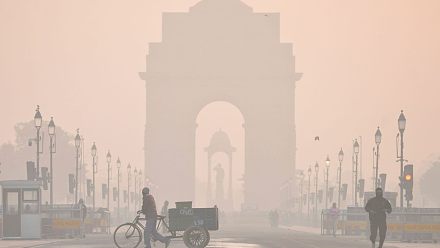
‘Reactive To Proactive’: Delhi-NCR Steps Up Pollution Checks With 150 Inspections Ahead Of Winter Smog
Delhi-NCR grappling with smog and pollution, particularly during winter, is not new. However, this year, authorities have begun reviewing and strengthening pollution control and enforcement measures well ahead of the win
লেখক Aanchal Sinha··145K বার পড়া
‘Reactive To Proactive’: Delhi-NCR Steps Up Pollution Checks With 150 Inspections Ahead Of Winter Smog
Delhi-NCR grappling with smog and pollution, particularly during winter, is not new. However, this year, authorities have begun reviewing and strengthening pollution control and enforcement measures well ahead of the winter season.
The Enforcement Task Force (ETF) of the Commission for Air Quality Management (CAQM) reviewed pollution control and enforcement measures across Delhi-NCR during its 139th meeting on September 14. The review covered the period from August 24 to September 7, during which 150 inspections were carried out.
Of these, seven inspections were conducted at Construction and Demolition (C&D) sites, 98 in the industrial sector, and 45 related to Diesel Generator (DG) sets.
A special inspection drive was also conducted in Nuh, Haryana, on September 3. CAQM Flying Squads, along with district administration, police and Haryana State Pollution Control Board (HSPCB) officials, inspected 35 premises. While 13 were found compliant, officials will re-inspect seven locked units. Proposed action includes sealing one DG set, issuing orders in seven cases and imposing Environmental Compensation (EC) in six cases.
Across NCR, action has been proposed against violations, including closing three C&D projects and one industrial unit, as well as sealing 25 DG sets.
According to Irfan Rashid, a communications officer in a government PSU, enforcement teams operate on a policy of zero tolerance towards non-compliance. Following the 150 inspections, statutory directions under CAQM powers have been initiated against violating entities. These include immediate closure directions for non-compliant C&D sites and industrial units, sealing unauthorised or non-compliant DG sets, imposing Environmental Damage Compensation (EDC), and issuing show-cause notices for legal prosecution under relevant environmental protection provisions.
Operations at sealed or halted units will not resume until full compliance is physically verified.
How Can Early Action Help Reduce Winter Smog?
On whether these inspections, closures and seizures will help reduce winter smog, Irfan said a major driver of winter smog is the local baseline emissions—dust, industrial fuel burning, and diesel exhaust—that get trapped near the ground due to cold-weather thermal inversion.
By proactively cracking down on large particulate sources (C&D dust and unapproved industrial fuels) and taking heavily polluting DG sets off the grid before adverse meteorological conditions set in, we lower the baseline pollution load. This preemptive suppression prevents the rapid accumulation that triggers severe Air Quality Index (AQI) spikes.
What Will Be Different This Year?
According to Irfan, the key shift this year is transitioning from a reactive crisis model to a proactive, data-backed operational model.
Authorities have started ground enforcement in late summer to identify and address non-compliance, retrofit systems and seal violators well ahead of October, rather than waiting for smog to worsen.
The approach also includes targeted action at 13 key pollution hotspots in Delhi, with measures such as automated dust-suppression deployment, round-the-clock patrol units and road paving.
Real-time satellite mapping and meteorological forecasts are also being integrated into the Graded Response Action Plan (GRAP) to trigger preventive action 3–4 days in advance, with the aim of reducing the severity and duration of peak smog episodes.
Beyond Winter: What Is The Government Planning?
The administration has also shifted towards a year-round, 360-degree airshed management strategy, according to Irfan. This includes moving notified industrial areas towards 100% piped natural gas (PNG) and other approved clean fuels.
The strategy also covers year-round crop-residue management machinery in neighbouring states, along with stricter municipal solid waste (MSW) tracking and mechanised sweeping on high-density arterial roads.
Clean-energy measures include shifting public transport towards electric mobility, expanding metro connectivity and promoting solar or green power adoption across public utilities to reduce thermal emissions.
What About Vehicle Pollution And Fitness Checks?
Vehicle-emission management is also being strengthened through digital and on-ground enforcement. Pollution Under Control (PUC) centres are being integrated with real-time CCTV feeds and automated smoke-testing equipment to tackle forged or fraudulent certificates.
Mandatory fitness testing for commercial vehicles is also being expanded through Automated Testing Stations (ATS), using computerised and sensor-based testing lanes to reduce manual intervention.
The strategy also includes enforcement against de-registered end-of-life vehicles, including 10-year-old diesel and 15-year-old petrol vehicles. Automatic Number Plate Recognition (ANPR) cameras at border checkpoints and fuel stations are being used for enforcement, alongside phased mandates for zero-emission delivery and light goods fleets.