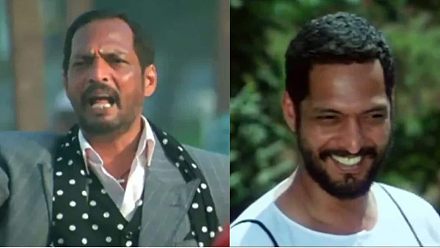
‘Bhagwan Ka Diya Hua Sab Kuch’ To ‘Ek Machchhar’: Nana Patekar’s Most Unforgettable Dialogues
Veteran actor Nana Patekar, 75, died on Thursday morning after suffering a cardiac arrest. The actor experienced severe chest pain at his home in Goa, following which a medical team was sent to his flat.
লেখক Aanchal Sinha··30K বার পড়া
‘Bhagwan Ka Diya Hua Sab Kuch’ To ‘Ek Machchhar’: Nana Patekar’s Most Unforgettable Dialogues
Veteran actor Nana Patekar, 75, died on Thursday morning after suffering a cardiac arrest. The actor experienced severe chest pain at his home in Goa, following which a medical team was sent to his flat.
Nana Patekar had a rare ability to make a dialogue feel bigger than the scene it was spoken in. Whether he played an angry revolutionary, a tough police officer, a gangster, or a comic character, his voice, pauses, and unmistakable delivery often turned a line into something audiences remembered long after the film ended.
Over the years, several of his dialogues have become inseparable from his performances. Some carried anger and social commentary, others conveyed menace, while films such as Welcome revealed his ability to turn the same intensity into comedy.
Here are some of Nana Patekar’s most memorable dialogues.
‘Ek Machchhar Saala Aadmi Ko Hijda Bana Deta Hai’ — Yeshwant (1997)
Among Nana Patekar’s most striking performances is Yeshwant, where his character delivers a long, intense passage about how something seemingly insignificant can affect a person’s entire life.
“Ek machchhar, saala ek machchhar insaan ko aadmi se hijda bana deta hai. Ek khatmal puri raat ko apaahij kar deta hai. Subah ghar se niklo, bheed ka ek hissa bano. Shaam ko ghar jao, daru piyo aur bacchee paida karo, aur subah talak phir ek baar mar jao.”
The words are striking, but it is Patekar’s delivery that gives the passage its lasting impact. His ability to shift between anger, frustration and exhaustion made the scene one of the many performances for which he became known.
‘Aa Gaye Meri Maut Ka Tamaasha Dekhne?’ — Krantiveer (1994)
Few lines are as closely associated with Nana Patekar’s Krantiveer as:
“Aa gaye meri maut ka tamaasha dekhne?”
The dialogue comes from one of the film’s most remembered sequences and captures the raw, confrontational quality that defined his character. Patekar’s performance in the film remains one of the strongest examples of how his voice and physical presence could transform a line into a cinematic moment.
‘Pandrah Sau Ki Naukri Karne Waala…’ — Tirangaa (1993)
In Tirangaa, Patekar played a police officer and delivered another dialogue that combined an ordinary reference with an unmistakable threat:
“Pandrah sau ki naukri karne waala, ek din tujhe dedh sau ka kafan pehnayega.”
The line stands out for its bluntness. There is little ornamentation in the words, but Patekar’s delivery gives them their weight, turning a reference to a modest salary into a chilling warning.
‘Yeh Musalman Ka Khoon, Yeh Hindu Ka Khoon’ — Krantiveer (1994)
Patekar’s Krantiveer also contained one of his most powerful performances against communal divisions. In a memorable sequence, his character challenges the idea of distinguishing people by religion through the blood running in their veins.
“Yeh Musalman ka khoon, yeh Hindu ka khoon… bata is mein Musalman ka kaunsa, Hindu ka kaunsa, bata”
The force of the scene comes from the directness of the question. Patekar does not merely deliver the words; he confronts the people around him with them, making the dialogue one of the film’s most remembered moments.
‘Hum Sab System Ka Hissa Hain’ — Ab Tak Chhappan (2004)
Patekar brought a different kind of intensity to Ab Tak Chhappan, where he played police officer Sadhu Agashe. The character operated within a system where decisions were often made above him, leaving little room for individual choices.
“Ek police inspector joint commissioner ke saath kya argument karega? Unko bhi koi bada sahab bola hoga, hum sab system ka hissa hain. System decide karta hai, apun follow karta hai.”
The shorter version most often associated with the film is:
“Hum sab system ka hissa hain, system decide karta hai, apun follow karta hai.”
The line captured the resignation and pragmatism of his character and became one of the dialogues associated with the film.
‘Behtar Hai Tu Apna Iraada Badal De’ — Ghulam-E-Musthafa (1997)
Patekar’s screen presence could also make a simple warning sound threatening. In Ghulam-E-Musthafa, he delivered one such line:
“Behtar hai tu apna iraada badal de, nahin toh main tera naksha badal doonga.”
It is direct and menacing, with the kind of straightforward phrasing that often worked particularly well with Patekar’s delivery.
‘Bhagwan Ka Diya Hua Sab Kuch Hai’ — Welcome (2007)
Then came Uday Shetty in Welcome, a role that showed another side of Nana Patekar. The intensity remained, but the anger and menace were transformed into comic timing.
“Bhagwan ka diya hua sab kuch hai. Daulat hai. Shohrat hai. Izzat hai. Bas ek nek aur shareef ladka chahiye tha.”
His comic exchanges in the film produced several memorable moments, including:
“Aalu le lo, kanda le lo… subah se na ek aalu bika hai, na bika hai aadha kanda”
The performance demonstrated just how easily Patekar could shift from hard-hitting dramatic roles to comedy without losing the distinctive personality that audiences associated with him.
Why Nana Patekar’s Dialogues Stayed With Audiences
Nana Patekar’s dialogues were memorable not simply because of the words written on the page. His greatest strength was the way he inhabited them.
A sentence could begin quietly and end in a roar. A pause could communicate as much as a line. A change in pitch, a stare or even a moment of silence could completely alter the meaning of what he was saying.
That quality allowed him to make very different kinds of characters feel authentic. The anger of Krantiveer, the intensity of Yeshwant, the police persona of Ab Tak Chhappan and the comic chaos of Welcome all belonged to different worlds, yet Patekar’s voice gave each of them a distinct identity.
His career across Hindi and Marathi cinema included films such as Parinda, Krantiveer, Agni Sakshi, Khamoshi: The Musical, Yeshwant, Ab Tak Chhappan and Welcome. Across those performances, he moved between intense dramatic characters, villains, policemen and comic roles.
That range is perhaps the biggest reason his dialogues continue to be remembered. People did not simply remember what Nana Patekar said. They remembered how he said it.
His voice could sound angry, wounded, sarcastic, frightening or unexpectedly funny. Sometimes, it could do all of that within the same performance.
Nana Patekar’s death marks the end of an extraordinary chapter in Indian cinema. Over a career spanning decades, the veteran actor carved out a distinct place for himself with performances that were as intense and unconventional as they were memorable. From Krantiveer and Yeshwant to Ab Tak Chhappan and Welcome, Patekar brought an unmistakable voice and presence to every character he portrayed.