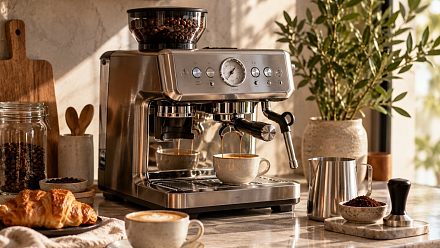
The home coffee corner is having a moment. From bean-to-cup machines to Italian-designed espresso makers, India’s coffee drinkers are bringing the café experience into their kitchens, one carefully pulled shot at a time.
مصنف Consumer Trends Desk··30K بار پڑھا
Why Indian Homes Are Buying Espresso Machines?
The home coffee corner is having a moment. From bean-to-cup machines to Italian-designed espresso makers, India’s coffee drinkers are bringing the café experience into their kitchens, one carefully pulled shot at a time.
There was a time when a good cup of coffee at home meant instant coffee, hot milk and a teaspoon that had seen better days. Then came the café habit: the morning flat white on the way to work, the weekend cappuccino, the iced latte ordered almost automatically. Now, for a growing number of coffee enthusiasts, the next step is happening at home.
The espresso machine has become more than a kitchen appliance. It is a ritual, a design object and, increasingly, part of how people want their homes to feel.
Across India’s urban coffee culture, the appeal is easy to understand. Specialty cafés have made people more curious about beans, extraction, milk texture and the difference between a hurried caffeine fix and a genuinely good cup. Meanwhile, the popularity of home brewing has created room for a new kind of kitchen investment: equipment that promises a more personalised coffee experience.
The dream is no longer simply to make coffee before the first meeting of the day. It is to make the coffee you actually want to drink, without leaving the house.
The kitchen counter is the new coffee bar
The modern kitchen is being asked to do more than store groceries and house the occasional air fryer. It has become a space for slow breakfasts, weekend entertaining and small daily luxuries. A dedicated coffee corner fits neatly into that picture.
Think of a stainless-steel espresso machine sitting beside a ceramic cup collection, a jar of freshly roasted beans and a grinder that looks almost sculptural. It is practical, certainly, but it also has the appeal of a beautifully styled corner of the home.
For design-conscious homeowners, the machine itself can become part of the kitchen’s visual language. Stainless steel works in minimalist spaces, matte black complements darker cabinetry, and compact machines suit kitchens where counter space comes at a premium.
The appeal is not just aesthetic. Having coffee equipment at home allows drinkers to experiment with different beans, adjust their drinks to their liking and develop a morning routine that feels distinctly their own.
The economics of making café coffee at home
A premium espresso machine can be a substantial purchase, with some models costing upwards of ₹50,000 and high-end options crossing ₹1 lakh. Yet for people who buy café coffee regularly, the calculation can become tempting.
Consider someone spending ₹250 on a café drink five days a week. That adds up to approximately ₹65,000 a year, before weekend coffees or price increases. A home espresso setup could make financial sense over time, although beans, milk, accessories, cleaning supplies and machine maintenance all add to the cost.
The more important consideration is frequency of use. An expensive machine makes little sense if it is switched on only occasionally. For someone who enjoys two or three coffees a day, however, the investment may feel easier to justify.
There is also the freedom to experiment. Want a double espresso after lunch, an oat-milk flat white in the morning or an iced latte on a warm afternoon? A home setup makes it possible to tailor the drink to the moment.
The smartest purchase is not necessarily the most expensive one. It is the machine that matches your coffee habits, available space and willingness to learn.
From instant coffee to the home barista
One reason espresso machines appeal to enthusiasts is that they make the process more tangible. Coffee stops being something that simply appears in a cup and becomes a sequence of small decisions.
The grind size affects extraction. The quantity of coffee matters. Water temperature and brewing time influence the result. And when milk is involved, texture can make the difference between an ordinary latte and one with a smooth, velvety finish.
For beginners, this can feel intimidating. Fortunately, not every machine requires barista-level knowledge.
Fully automatic machines grind the beans, brew the coffee and, on some models, prepare milk drinks at the touch of a button. Semi-automatic machines offer greater control over extraction and milk frothing, making them attractive to people who enjoy learning the craft.
Neither approach is inherently better. One prioritises convenience; the other makes the process part of the pleasure.
The premium coffee machine is becoming a lifestyle purchase
There is a reason premium coffee equipment often looks at home in the kitchens of design enthusiasts. The best machines combine functionality with materials and finishes that feel considered.
Five premium espresso machines to consider for your home
If you are ready to move beyond instant coffee or a basic coffee maker, hese five premium machines are worth exploring. They range from hands-on espresso equipment to fully automatic options for people who want café-style drinks with less effort.
Prices and availability vary, so check the current Amazon India listing and confirm the seller, warranty and service arrangements before purchasing.
1. De’Longhi La Specialista Touch Espresso Machine
For the coffee enthusiast who wants more control over the process, the La Specialista Touch combines an integrated grinder with guided preparation features. It is an appealing middle ground between learning the craft and having technology do some of the work for you.
Best for: Espresso, cappuccino and latte enthusiasts who enjoy experimenting.
2. Philips 5500 Series LatteGo Fully Automatic Espresso Machine
For households where everyone has a different coffee order, a fully automatic machine can be particularly useful. The Philips 5500 Series is designed around a broad selection of drinks and a milk system that reduces the effort involved in making cappuccinos and lattes.
Best for: Busy households that want variety without learning manual espresso techniques.
3. Gaggia Classic E24 Espresso Machine
For the coffee enthusiast who enjoys mastering the details, Gaggia’s Classic E24 offers a more hands-on approach to espresso. Its traditional portafilter design and manual milk-steaming wand make the process part of the pleasure, rather than something to automate away.
Best for: Coffee lovers who want to refine their espresso-making skills.
4. Breville Barista Express Impress
Breville’s Barista Express Impress combines an integrated grinder with assisted tamping, helping make the transition from café regular to home barista a little less intimidating. It suits people who want to learn the craft while enjoying a more guided workflow.
Best for: Espresso enthusiasts who want an integrated grinder and a more supported brewing process.
Before you buy, think beyond the machine
An espresso machine is only one part of the equation. Freshly roasted coffee beans, a suitable grinder if one is not built in, good water and regular cleaning all influence the result.
Counter space matters, too. A machine with an integrated grinder may reduce the number of separate appliances, but it can still take up a significant amount of room. If milk-based drinks are your preference, check how the machine froths milk and how easily its components can be cleaned.
Finally, consider after-sales service. For an expensive appliance, local support, warranty coverage and access to replacement parts are just as important as the feature list.
The most satisfying setup is one you will actually use, not simply one that looks impressive on the kitchen counter.
The real luxury is making coffee your own
Perhaps the biggest appeal of the home espresso machine is that it makes a familiar daily habit feel a little more personal. It allows you to experiment, slow down and discover exactly how you like your coffee.
For some, that means mastering the espresso shot. For others, it means pressing a button before the first work call and having a cappuccino ready in minutes. Both are valid versions of the same pleasure.
India’s home coffee culture is not about replacing every café visit. It is about bringing a little of that experience into everyday life, in a way that suits your own home and habits.
And if the kitchen counter happens to look rather beautiful in the process, that is a bonus.