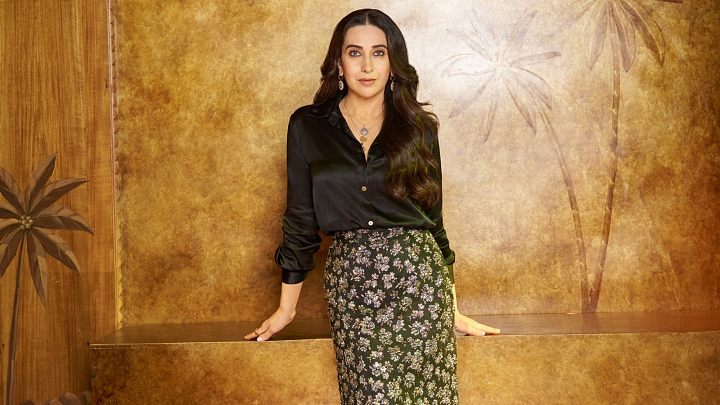
Want Karisma Kapoor’s Youthful Glow at 52? Nutritionist Rujuta Diwekar Has Three Pieces of Advice
Karisma Kapoor has long been admired for her effortless style, fitness and timeless beauty. But according to celebrity nutritionist Rujuta Diwekar, the secret to maintaining good health and fitness as the years go by is
مصنف Swati Chaturvedi··9K بار پڑھا
Want Karisma Kapoor’s Youthful Glow at 52? Nutritionist Rujuta Diwekar Has Three Pieces of Advice
Karisma Kapoor has long been admired for her effortless style, fitness and timeless beauty. But according to celebrity nutritionist Rujuta Diwekar, the secret to maintaining good health and fitness as the years go by is not an elaborate diet or a relentless pursuit of weight loss. Instead, it lies in the everyday habits one builds much earlier in life.
Diwekar, who has worked with several Bollywood celebrities, including Kareena Kapoor Khan and Karisma Kapoor, recently shared her perspective on how women can look after their health as they grow older. In an Instagram video shared on October 21, she used Karisma’s long-standing commitment to fitness to explain why the habits established in one’s 30s can have a lasting impact on health in the decades that follow.
Her message is refreshingly simple: focus on exercise rather than the weighing scale, avoid extreme diets and make sustainable lifestyle choices before health concerns become more noticeable.
The Secret Is Consistency, Not a Quick-Fix Diet
When it comes to Karisma Kapoor’s fitness, Diwekar believes the answer lies in the cumulative benefits of years of looking after herself.
The actor has previously spoken about how she lost weight without eliminating carbohydrates from her diet. In an older conversation with Diwekar, Karisma revealed that eating fish curry and rice for dinner had been part of her weight-loss journey, challenging the assumption that eating rice at night necessarily leads to weight gain.
For Diwekar, this reflects a larger principle: long-term health is better supported by consistent, sustainable habits than by short-lived dietary restrictions.
Rather than looking for a secret ingredient or a particular food that promises to reverse ageing, the focus should be on eating adequately, staying active and building a routine that can be maintained over the years.
Why Your 30s Matter More Than You Think
According to Diwekar, the 30s are an important decade for women to pay closer attention to their health. While the changes may initially be subtle, shifts in hormones, body composition, menstrual cycles, skin and hair can become more noticeable as women move through their late 30s and into their 40s.
Hormonal changes vary considerably from person to person, and not every woman experiences the same symptoms. However, this stage of life can be a useful time to reassess exercise, nutrition and other health habits.
Diwekar’s broader point is that women should not wait until they notice changes in their appearance or fitness levels to begin taking care of themselves. The habits they develop earlier can help support their well-being in later decades.
Exercise for Strength, Not Just Weight Loss
One of Diwekar’s central recommendations is to stop treating weight loss as the primary reason to exercise.
She suggests aiming for at least three hours of exercise a week, with the emphasis on maintaining a consistent routine rather than working out solely to lose kilos.
Regular physical activity can support cardiovascular health, muscle strength, mobility and bone health. For women, maintaining bone strength becomes particularly important as they age, especially around the menopausal transition, when the risk of bone loss can increase.
Exercise does not have to mean spending hours in the gym. Depending on individual fitness levels and health needs, a sustainable routine could include brisk walking, strength training, cycling, swimming, dancing or other activities that are enjoyable enough to keep doing regularly.
The goal is to build a lifelong relationship with movement, rather than viewing exercise as a temporary measure to change one’s appearance.
View this post on Instagram
A post shared by Rujuta Diwekar (@rujuta.diwekar)
Why Restrictive Diets May Not Be the Answer
Diwekar also cautions against experimenting with restrictive diets, particularly those that involve eliminating entire food groups without a medical or nutritional reason.
Giving up rice, cutting out carbohydrates, avoiding sugar completely or skipping dinner may appear to offer a straightforward route to weight loss. However, overly restrictive eating patterns can make it harder to meet the body’s nutritional requirements, particularly when they are poorly planned or difficult to sustain.
A balanced diet should provide sufficient energy, protein, carbohydrates, fats, vitamins and minerals. Nutrients such as calcium, vitamin D, vitamin B12 and iron are especially important to pay attention to as part of overall health, although individual requirements differ.
Instead of following every new diet trend, women can focus on eating a varied range of foods and ensuring their meals are nourishing, satisfying and practical for everyday life.
This approach also leaves room for familiar Indian staples such as rice, dal, roti, vegetables and curd, rather than treating traditional foods as obstacles to fitness.
Eat Well Without Losing the Joy of Food
An important part of Diwekar’s philosophy is that food should not become a source of constant anxiety. Eliminating favourite foods or following increasingly rigid rules can make eating unnecessarily stressful. A sustainable approach to nutrition allows for variety, enjoyment and cultural food traditions while ensuring that nutritional needs are met.
Karisma’s earlier comments about eating rice alongside fish curry illustrate how a balanced eating pattern does not necessarily require abandoning carbohydrates. The broader lesson is that no single food determines a person’s weight or health in isolation; overall dietary patterns, portion sizes, physical activity and individual circumstances all matter.
For women navigating changes in their bodies through their 30s, 40s and beyond, the emphasis should be on nourishment and consistency rather than punishment or deprivation.
Can You Really Stay Youthful as You Age?
While lifestyle habits can support long-term health, ageing is a natural process influenced by several factors, including genetics, hormones, sleep, stress, environmental exposure and overall health.
There is no single diet or exercise routine that can guarantee a youthful appearance, nor can another person’s routine be expected to produce identical results for everyone.
What can make a meaningful difference is taking care of the body over time: staying physically active, eating a nutritionally balanced diet, sleeping adequately and seeking appropriate medical advice when health changes arise.
Diwekar’s advice, viewed in this context, is less about trying to look a particular age and more about building a foundation for healthy ageing.
The Takeaway
Karisma Kapoor’s fitness journey offers a useful reminder that sustainable habits matter more than quick fixes. Diwekar’s advice centres on three straightforward principles: make exercise a regular part of life, avoid unnecessarily restrictive diets and begin prioritising long-term health well before the effects of ageing become a concern.
Ultimately, staying fit in your 50s is not about discovering a miracle food or following an extreme routine. It is about the everyday choices that, repeated over many years, can help support strength, energy and overall well-being.