[TRIGGER WARNINGS: mentions of self-harm, mental health conditions]
مصنف NIKA ROQUE,GMA News··20K بار پڑھا
The cost of being okay
[TRIGGER WARNINGS: mentions of self-harm, mental health conditions]
PART I: The human cost
For Patricia, 27, managing their mental health involves not just self-care activities, but also making a lot of financial sacrifices. "Convenience store food today, so I can buy my meds tomorrow," they tell themselves.
A session with their therapist costs them P2,200 to P2,500, a price heavy enough that they had to take a break. Especially since they go up to three times a month.
“I am currently not in frequent therapy because of money concerns,” they told GMA News Online.
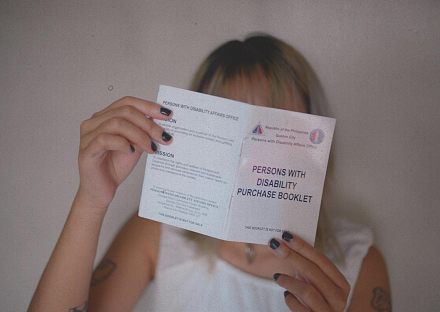
Patricia is no longer taking medications for the same reason. Even with their Persons with Disabilities (PWD) ID, it’s difficult for them to afford.
This reality reflects the burden of those who struggle with mental illness in the Philippines: it is not just something Filipinos pay for when they get sick, but rather a recurring cost that must be balanced against food, utilities, and other necessities.
When these expenses become unaffordable, managing mental health can become difficult, or even impossible.
P
atricia first received psychiatric help after self-harming at around 14 or 15 years old. Their troubles were noticed by a cousin, who urged the family to get Patricia checked by a doctor.
They were initially diagnosed with bipolar disorder.
“What people commonly thought at that time was that it was just gonna be for a short time. They weren’t aware of the maintenance for someone living with mental health issues,” they said.
After attempting to take their own life on their 18th birthday, they were brought to the Philippine General Hospital and checked by psychiatric experts. They were confined in a psychiatric ward, the cost of which was covered by a Health Maintenance Organization or HMO.
Patricia was ultimately diagnosed with Borderline Personality Disorder, something they consider a closer fit to who they truly are.
At this time, Patricia was studying at a state university, so they had access to free consultations.
However, when they transferred schools, they were no longer eligible to receive free mental health services.
This was when Patricia sought their own doctors for their psychiatric sessions.
Some sessions cost them as much as P2,500, but they found that at the National Center for Mental Health (NCMH), they could consult with private doctors at just P1,000 per session.
“Speaking from a place of privilege, I am still supported by my family. And they recognize that I need the support, so they haven’t let go of me financially,” Patricia said.
B
ut for a breadwinner like Mary, 25, mental health is easy to deprioritize. She is her parents’ only child, so she always puts their needs first.
“I’m not the first thing that comes to mind, because if my family is hungry, there’s no money for the bills, I wouldn’t be able to eat as well,” Mary said.
However, things changed when her struggles started affecting her work.
“With my condition, my productivity, confidence, and leadership skills have been compromised. Most importantly, compartmentalizing was difficult. Work-life balance was not being met, and self-neglect is one of the reasons my mental health deteriorated,” she shared.
After speaking with a therapist and psychiatrist, she was diagnosed with Major Depressive Disorder, Bipolar II, and Depersonalization-Derealization Disorder.
The process was a long one. Mary lamented that mental healthcare in Laguna is not as accessible as Manila, where there are centers like NCMH.
“Especially in the province, it’s hard to find a psychiatrist that, you know, works for you,” Mary said.
“I had a hard time looking for a psychiatrist here in Laguna,” she added, explaining that online consultations are not for her, and she prefers to be face-to-face with the doctor to express what she feels, what she needs, and what works for her.
She also had to weigh whether “the commute, the traffic, and everything” was worth the effort.
Ultimately, she decided that it was a blessing in disguise “when sh-t hit the fan,” because she took it as a sign to put herself first.
“The takeaway truly is like, so you only have yourself, even though if you say you have a safety net or everything—but if you’re not yourself, you lose them. You lose your family, you lose these relationships if you feel like you’re not yourself and you’re not taking care of yourself,” Mary said.
G
etting diagnosed was only the first step of the problem. Mary also had to consider how much mental healthcare she could afford.
She earns P28,000 a month with tax deductions, and her current job does not have HMO benefits.
“I’m lower middle class,” she said. “I just earn enough.”
“And I provide for my parents—not the whole family just my parents—I help them around, but I’m currently leaving my job because it’s affecting me and I couldn’t catch up.”
Mary’s psychiatrist and therapist have allowed staggered payments for her, such as P1,000 per session before she can pay in full.
She spends P3,500 on medications, with one that is P60 per tablet, while she can get more affordable brands for the others.
V
ex, 21, faces a different version of the same problem. A student based in Quezon City, Vex lives with Attention-deficit/hyperactivity disorder (ADHD), depression, and anxiety.
She spends P4,000 to P6,000 a month for her three medications, which are all needed to stabilize her.
“I can’t do anything about it,” Vex said. “It’s shocking that it’s not free.”
Vex goes home to her home province of Cavite to save on food and other expenses. As a student, she is financially supported by her parents. She also has a PWD ID due to a physical condition.
“I go to Cavite because my mommy is here, and there are groceries here. Instead of doing the groceries there, I can eat here and stuff.”
Despite this, she admits that she has still skipped appointments and medications due to financial concerns.
PART II: The professional cost
W
hy is mental healthcare so expensive? Dr. Rowalt Alibudbud, a psychiatrist at the Medical Center Manila, explains high rates are “usually, because of the length of the session of a psychiatrist compared to other doctors.”
He adds, “aside from that, there is a big cost behind providing mental health services.”
For example, if a psychiatrist has a private clinic, there are costs for rent, utilities, equipment, technology, and secretaries or administrative staff. If the consultation is online, there are still bills for technology and platforms to deliver the proper service.
There are also taxes, professional license renewals, continuing education, transportation, and other operating expenses.
“And of course, like professionals, other mental health professionals also have families. There are needed payments for the home, tuition, transportation, and other basic needs,” Alibudbud said.
“So if the patient pays a professional fee, that does not mean that all of it is take-home income by the doctor or therapist. There is a part of it that will go to running the practice.”
Alibudbud added that the cost of living has spiked in recent years, following the COVID-19 pandemic, global supply chain disruptions, Russia-Ukraine war, and continuing conflicts in the Middle East.
“These have contributed to higher prices of goods and services, and also affects operating costs and everyday expenses of professionals,” he said.
Regarding medications, some psychiatric medicines are imported, some have limited generic availability, and prices would also differ depending on the brand and pharmacy.
T
here is also an issue with the shortage and distribution of mental health professionals. Relative to the Philippines’ large population, there is a lack of psychiatrists, psychologists, and other mental health workers. More professionals are also concentrated in Metro Manila and other urban areas.
“As of 2026, there are only approximately 3,000 registered psychologists serving a country of more than 100 million people. This does not necessarily mean that professionals charge higher fees because of the shortage, but it highlights how limited mental health services remain in the country,” explains Psychologist Jerizza Arizabal of JRA Psychological Services and Psychlink Consulting.
As a practicing psychologist, one of the costs in providing proper psychological assessments would be the required standardized and specialized instruments.
“One example is the Wechsler Adult Intelligence Scale, Fifth Edition, or WAIS-5, which is used to assess cognitive abilities among individuals approximately 16 to 90 years old. A complete assessment kit can cost around USD 2,000,” Arizabal said.
“Other psychological tests can also be expensive because psychologists have to purchase legitimate, standardized materials and, in some cases, undergo additional training to administer and interpret them properly. These expenses can contribute to the overall cost of psychological assessment,” she added.
Arizabal adds that a professional’s training is another factor.
“Completing an undergraduate degree in psychology does not automatically qualify someone to practice independently as a psychologist in the Philippines. Psychologists have to undergo graduate-level education, supervised training, and professional licensure before they can practice,” she said.
Even after becoming licensed, continued professional training, supervision, and maintaining professional competencies are part of the profession.
Constantine L. Yu Chua, a psychiatrist at Makati Medical Center, runs down how a mental health professional also requires major financial resources and personal effort.
“For example, a psychiatrist—a medical doctor specializing in mental health—needs to study four years of college, four years of medicine, one year of medical internship, and at least three years of specialty training. There are certifying examinations at each stage and continuing education is needed to maintain licenses,” Yu Chua said.
Another major factor that isn’t commonly talked about is the emotional and mental load of the profession.
“Professionals carry painful stories, witness difficult emotions, work through complex interactions, have their own thoughts and feelings affected every session, and have to be available in times of crisis—all while dealing with their own lives,” Yu Chua said.
He explained that there are no lab tests that name a person’s mental health condition, but instead “requires analysis of many layers and dimensions.”
“Both emotional and cerebral demands are high. Burnout and compassion fatigue are considerable forms of ‘occupational hazard’ in this field,” he said.
Yu Chua also pointed out that the expensive prices are a socio-economic concern beyond simple pricing on the part of the professionals.
In fact, compared to other countries, private consultation is actually much less expensive in the Philippines, he claimed.
“It is just that our financial infrastructure unfortunately necessitates out-of-pocket rather than subsidized expenditure and there are limited public services,” he said.
PART III: The cost of going without care
F
or people who cannot afford mental healthcare, the cost of going without it can extend beyond their symptoms. It can affect their ability to work, maintain daily routines, and meet their most basic needs.
Vex, who admitted to skipping medications and appointments due to financial reasons, experienced first-hand its debilitating effects.
“When I skipped medications, I got super depressed to the point the voices were so loud I couldn't sleep. I kept crying that time,” Vex said, and added that there was not a day when she did not cry.
Patricia, meanwhile, would feel the biological adjustments when they would stop taking medications, and experience their body crashing.
“That definitely made things harder for me in terms of getting back into routine, it would cost me more because I would have to readjust my meds again and it would take a toll on my work and being able to be efficient,” they said.
Inconsistency of taking meds often results in their body “crashing.”
“Generally, in order to get back on track, sometimes I'd have to devote a day to readjust and rest which I imagine not a lot of people would have the privilege of having too,” Patricia said.
For Mary, who lives in Laguna, there’s an added challenge when it comes to procuring meds, which she stressed she cannot skip.
“I would take all the effort to go to another branch, even in a different city, Binan City, just to get my meds because I need them. I really need them. I cannot not take those meds because it’s risky. I’m scared of what’s gonna happen to me if I stop,” Mary said.
“No, I cannot [skip]. It’s too dangerous, most importantly I'm under a lot of medications like benzodiazepines and the withdrawal symptoms are dangerous,” she added.
Mary has had to take on odd jobs to pay for her medication, but she still continues to make sacrifices to make the budget work.
“I wish I don’t have to sacrifice things, like basically having to ration the food. I need to sacrifice the budget for food, I need to sacrifice the budget for the utility bills just to take care of myself,” she said.
PART IV: What needs to change?
M
aking mental healthcare affordable requires more than lowering consultation fees.
The bigger question, Alibudbud said, is: “How do we make mental healthcare affordable for patients while making it financially sustainable for the professionals who provide it?”
If mental health professionals lower their fees without addressing the actual costs of running a mental health practice, “we might just exacerbate the shortage and maldistribution of professionals.”
“We really need to look at this as a health-system issue through better public and private insurance coverage, more efficient payment and reimbursement systems, stronger government services, more public investment, and community-based mental healthcare,” Alibudbud said.
He highlighted the fact that mental healthcare in the Philippines has been “historically underfunded.”
“When there are insufficient publicly funded services, facilities, and professionals, more of the cost of care can fall directly on patients and their families. This can make consultations, psychotherapy, psychological assessments, and medications difficult to afford, especially when treatment requires regular or long-term care,” he said.
If local government units far and wide could set up mental health centers down to barangay levels, it would make a huge difference, Mary said.
“They should recognize mental health as important as physical health,” she added. “Patients shouldn’t struggle to get help, like commute far.”
Patricia meanwhile pointed out that access to therapy, crisis intervention, and other forms of support must also be part of the equation.
“I wish we would have more services, not just medicines, not just doctors, for example, therapy,” they added.
“Even providing crisis management like trauma therapy, or people to check on those who lost their homes is already gonna help the mental health situation in the Philippines extremely,” they added.
Yu Chua added that there should be more promotion and prevention-related projects integrated into schools and workplaces.
“This emphasizes that mental health is not just about treatment and does not only happen in the clinics, but is an everyday thing that is based in communities,” he said.
Alibudbud also called for financing that recognizes that some mental health conditions require long-term care, as well as more mental health professionals distributed across provinces and smaller communities.
“A person shouldn’t have to go to Metro Manila or a major tertiary hospital just to get basic mental healthcare,” he said.
“What we want to see in the Philippines is a mental health system where a person will get the appropriate care near their homes, at a price they can afford, for as long they can, and without stigma or discrimination,” he added.
Arizabal also wishes that her fellow mental health professionals “would not have to carry the burden of constantly adjusting their livelihood just to make these services accessible.”
“As a practicing psychologist, I hope that even in my own little way, I can contribute by making my services as accessible as I reasonably can,” she said. “But I also hope that there will be greater support from the government and other organizations in funding mental health programs, facilities, and services, especially as more Filipinos seek help for their mental health.”
“In a perfect world, I would wish that those who are struggling with their mental health would be able to access the care they need without having to worry about whether they can afford it.”
PART V: What help is available?
E
xperts and patients alike have painted a picture of the sobering reality of mental healthcare in the Philippines: Underfunded public services leave patients shouldering much of the cost.
That said, what help is available?
There are several mental health services in the Philippines that are free or low-cost. These include free 24/7 crisis hotlines from NCMH and the Department of Health, along with low-cost psychiatric and psychological support from centers such as the Philippine General Hospital and Ateneo Bulatao Center for Psychology Services.
The country has various mental health hotlines for those in need of immediate mental health aid. Most of the hotlines are available 24/7, with trained counselors ready to take on the calls and give a listening ear.
NCMH, PGH, and East Avenue Medical Center provide free to low-cost psychiatry consultations as well as medications.
There are also various centers with affordable psychology or counseling consultations, which are available for free, donation-based, or low-cost. Therapy sessions are available via online meetings or face-to-face. —JCB GMA News