Navratri 2026 Day 4: Maa Kushmanda, Puja Time, Colour, Bhog and Mantra, How To Worship The Fourth Form Of Goddess Durga?
Navratri Day 4 2026 Maa Kushmanda Puja Time, Colour, Bhog and Mantra: Navratri 2026 Day 4 Maa Kushmanda Puja Time, Colour, Bhog and Mantra: As the nine-day Sharad Navratri festival moves into its fourth day, devotees wil
مصنف Nibandh Vinod··26K بار پڑھا
Navratri 2026 Day 4: Maa Kushmanda, Puja Time, Colour, Bhog and Mantra, How To Worship The Fourth Form Of Goddess Durga?
Navratri Day 4 2026 Maa Kushmanda Puja Time, Colour, Bhog and Mantra: Navratri 2026 Day 4 Maa Kushmanda Puja Time, Colour, Bhog and Mantra: As the nine-day Sharad Navratri festival moves into its fourth day, devotees will turn to Maa Kushmanda, the fourth form of Goddess Durga, on Wednesday, October 14, 2026. Known for her association with creation and cosmic energy, Maa Kushmanda holds a distinctive place in the Navdurga tradition.
Maa Kushmanda is traditionally linked with the cosmic egg and is believed to represent the divine energy that brought light, warmth and life to the universe. Her name and mythology are closely associated with creation, vitality and the sustaining force of the cosmos.
According to Drik Panchang, Day 4 falls on October 14, with Chaturthi Tithi beginning on October 13 and ending in the early hours of October 15. The colour associated with the day is royal blue.
From the date and tithi to puja time, bhog, colour, mantra and the significance of Maa Kushmanda, here is everything to know about Navratri Day 4 in 2026.
Navratri 2026 Day 4 Date
Navratri Day 4 will be observed on Wednesday, October 14, 2026.
The day corresponds to Ashwin Shukla Chaturthi and is dedicated to Maa Kushmanda, the fourth form of Navdurga.
According to Drik Panchang:
Chaturthi Tithi begins: October 13, 2026, at 11:29 PM
Chaturthi Tithi ends: October 15, 2026, at 1:14 AM
Read More: Navratri 2026 Ghatasthapana: Date, Time, Muhurat And Puja Vidhi
Who Is Maa Kushmanda?
Maa Kushmanda is worshipped as the fourth form of Goddess Durga during Sharad Navratri.
The name Kushmanda is traditionally interpreted through the words “Ku”, meaning little, “Ushma”, meaning warmth or energy, and “Anda”, referring to the cosmic egg.
Read More: Navratri 2026: 9 Forms Of Maa Durga, Names And Their Significance
According to Hindu tradition, Maa Kushmanda is associated with the creation of the universe and the cosmic energy that sustains life.
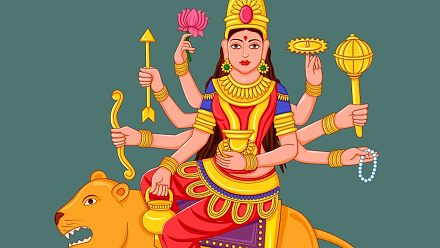
She is traditionally depicted as an eight-armed goddess, known as Ashtabhuja Devi, riding a lion. Her hands hold different divine objects, including weapons, a lotus, a rosary and a vessel associated with divine nectar.
Her form is therefore associated with creative energy, vitality, light and abundance.
Navratri 2026 Day 4 Colour
This year, the Navratri colour for Day 4 is royal blue.
Royal blue is traditionally associated with depth, calmness, strength and stability. Devotees may wear royal blue clothing or incorporate the colour into their puja decorations and festive arrangements.
Colour traditions can differ between communities and regions, so devotees may follow the customs observed in their family or local tradition.
Read More: Navratri Colours 2026: Day-Wise List From October 11 To October 19
Maa Kushmanda Bhog
Malpua is traditionally associated with the bhog offered to Maa Kushmanda.
Devotees may also offer fruits and other customary prasad during the puja.
Ash gourd, also known as winter melon and traditionally associated with the name Kushmanda, is considered an auspicious offering in some traditions.
The exact bhog and puja samagri can vary according to regional customs, family traditions and temple practices.
Read More: Navratri Fasting Rules 2026: What To Eat And What To Avoid During Vrat
Maa Kushmanda Puja Vidhi
The precise method of worship can differ among families and traditions. A commonly followed puja sequence includes:
Take a bath and wear clean clothes before beginning the puja.
Clean the puja area and prepare the altar.
Light a diya and begin with an invocation to Lord Ganesha.
Offer prayers to the Kalash and Akhand Jyoti established during Ghatasthapana.
Meditate on Maa Kushmanda and invoke her presence.
Offer flowers, kumkum, sandalwood and other traditional puja items.
Present malpua, fruits and other customary offerings as bhog.
Recite the Maa Kushmanda mantra and other prayers.
Perform aarti and offer prayers for health, peace and prosperity.
Distribute the bhog as prasad.
Devotees following a particular family or regional tradition should follow their customary puja procedure.
Maa Kushmanda Mantra
The primary mantra associated with Maa Kushmanda is:
ॐ देवी कूष्माण्डायै नमः॥
(Om Devi Kushmandayai Namah)
Devotees may chant this mantra during the worship of Maa Kushmanda on Navratri Day 4.
Maa Kushmanda Dhyan Mantra
A traditional dhyan or stuti verse associated with Maa Kushmanda is:
सुरासम्पूर्णकलशं रुधिराप्लुतमेव च।
दधाना हस्तपद्माभ्यां कूष्माण्डा शुभदास्तु मे॥
Surasampurnakalasham Rudhiraplutameva Cha
Dadhana Hastapadmabhyam Kushmanda Shubhad to Hindu mythology, the cosmos was initially described as being enveloped in darkness and without theastu Me.
Devotees may recite this prayer during the worship of Maa Kushmanda.
Navratri 2026 Day 4 Puja Time
According to Drik Panchang, Chaturthi Tithi begins at 11:29 PM on October 13 and ends at 1:14 AM on October 15.
The Legend of Maa Kushmanda
Maa Kushmanda is traditionally associated with the creation of the universe.
According to Hindu mythology, the cosmos was initially described as being enveloped in darkness and without the life and energy that would later characterise creation.
Maa Kushmanda is believed to have appeared as a source of divine light and energy. Her smile is traditionally described as bringing warmth and light to the cosmic darkness and setting the process of creation into motion.
This association with the cosmic egg, or Anda, is reflected in the traditional interpretation of her name.
Maa Kushmanda is also described in some traditions as residing in the core of the Sun and providing the energy associated with life and creation.
Her radiant form therefore represents the creative power of Shakti and the energy that sustains the universe.
How Is Maa Kushmanda Depicted?
Maa Kushmanda is traditionally depicted with eight arms, which is why she is also known as Ashtabhuja Devi.
Her hands are traditionally shown holding objects such as:
Bow
Arrow
Lotus
Mace
Discus
Trident
Kamandalu or vessel associated with divine nectar
Rudraksha mala
She is generally depicted riding a lion. It represents the combination of divine power, knowledge, strength, prosperity and spiritual energy.
Significance of Worshipping Maa Kushmanda
Maa Kushmanda is associated with creative energy and vitality.
Her worship on the fourth day of Navratri is traditionally linked with seeking blessings for health, strength, prosperity and spiritual well-being.
Her connection with cosmic creation also gives Day 4 a distinct place in the nine-day worship of Goddess Durga.
The goddess’s radiant imagery represents the movement from darkness towards light and the creative force that sustains life.
Navratri Day 4 Colour: Why Royal Blue?
Royal blue is the colour associated with Navratri Day 4 in 2026.
The rich colour is commonly interpreted as representing depth, stability, calmness and strength.
Devotees may incorporate royal blue into their clothing, decorations, flowers or puja arrangements.