Mahalaya 2026: What Is Mahishasura Mardini And Why Is It Associated With Mahalaya?
Mahalaya 2026 will be observed on Saturday, October 10, marking an important transition in the Hindu calendar from Pitru Paksha to Devi Paksha. For devotees, particularly in Bengal and among Bengali communities worldwide
مصنف Nibandh Vinod··16K بار پڑھا
Mahalaya 2026: What Is Mahishasura Mardini And Why Is It Associated With Mahalaya?
Mahalaya 2026 will be observed on Saturday, October 10, marking an important transition in the Hindu calendar from Pitru Paksha to Devi Paksha. For devotees, particularly in Bengal and among Bengali communities worldwide, Mahalaya also signals the emotional beginning of the Durga Puja season.
At the heart of this tradition is Mahishasura Mardini, the celebrated account of Goddess Durga’s battle with the buffalo demon Mahishasura, as well as the iconic radio programme heard by generations of listeners before dawn on Mahalaya.
Mahalaya has a dual significance.
Read More: When Is Mahalaya 2026? Date, City-wise Timings, Significance And Rituals
It is observed as Sarva Pitru Amavasya, the final day of Pitru Paksha, when families traditionally perform Shraddha and Tarpan for their ancestors.
At the same time, in the cultural traditions surrounding Durga Puja, the day is associated with the invocation of Goddess Durga and the beginning of Devi Paksha.
What is Mahishasura Mardini?
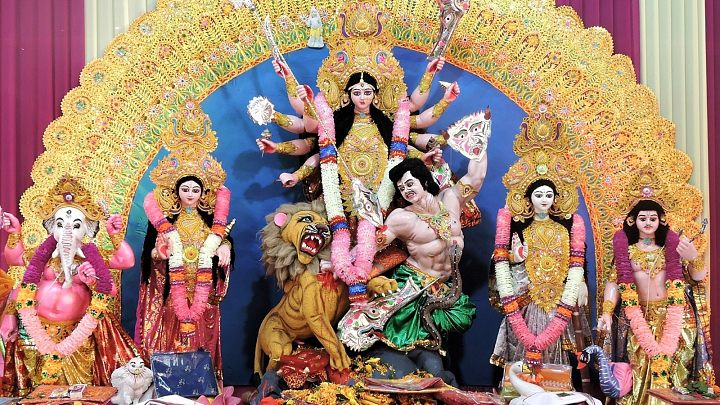
Mahishasura Mardini means “the destroyer of Mahishasura.” The name refers to Goddess Durga in her warrior form and to the celebrated episode in which she defeats Mahishasura, the buffalo demon.
According to the Devi Mahatmya tradition, Mahishasura had received a boon that made him extremely difficult for the Gods to defeat. Empowered by this boon, he challenged the Gods and disrupted the cosmic order.
The Gods ultimately combined their divine energies, from which Goddess Durga manifested. She was armed with weapons and attributes bestowed by the gods and confronted Mahishasura in a fierce battle.
The battle is traditionally associated with the nine nights of Navratri, culminating in the goddess defeating Mahishasura. The victory represents the triumph of dharma over adharma and good over evil and is commemorated during the Durga Puja and Navratri traditions.
Why is Mahishasura Mardini associated with Mahalaya?
The association comes from both religious tradition and Bengali cultural history.
Mahalaya marks the transition to Devi Paksha
Mahalaya is observed at the end of Pitru Paksha, the fortnight traditionally dedicated to remembering and performing rituals for ancestors.
The following phase is Devi Paksha, the period associated with the worship of the Goddess. This transition gives Mahalaya its distinctive place in the Durga Puja calendar.
For many devotees, therefore, Mahalaya represents the symbolic movement from remembering one’s ancestors to welcoming the Goddess.
Mahalaya and the invocation of Goddess Durga
In popular Bengali tradition, Mahalaya is linked to Agomoni, the welcoming of Goddess Durga to Earth.
The day is consequently associated with the idea of invoking or awakening the Goddess before the main days of Durga Puja begin. This is one reason the recitation of the Mahishasura Mardini programme has become inseparable from the morning of Mahalaya.
Rather than describing Mahalaya as the literal “birth” of Durga’s warrior form, it is more accurate to say that tradition regards the day as the symbolic invocation of the Goddess ahead of Durga Puja.
The Mahishasura Mardini programme and Birendra Krishna Bhadra
For millions of Bengalis, Mahishasura Mardini is not just a mythological account, it is a familiar sound associated with the arrival of Durga Puja.
The famous radio programme was first produced in 1931 under the direction of composer Pankaj Kumar Mullick. Its script was written by Bani Kumar and combined Sanskrit chants, narration and Bengali devotional music around the story of Goddess Durga and her battle with Mahishasura.
The distinctive voice of Birendra Krishna Bhadra, who narrated the programme, later became one of its defining features. The programme was initially performed live before it was recorded; the recorded version was made in 1966.
The programme’s pre-dawn broadcast became a Mahalaya ritual in Bengali households. All India Radio has continued to broadcast special Mahalaya programming, including Mahishasura Mardini, with a traditional early-morning slot.
For listeners, Bhadra’s powerful recitation, Sanskrit verses and devotional music have become an auditory marker of the Puja season.
Why do devotees listen to Mahishasura Mardini at dawn?
The tradition is closely tied to the early-morning atmosphere of Mahalaya.
For generations, families have woken before sunrise to listen to the broadcast. The combination of Sanskrit invocations, devotional songs and Bhadra’s resonant narration creates a ritual that is as much cultural as it is religious.
Even as radio has given way to television, streaming platforms and mobile phones, the tradition continues. For many Bengali families, playing Mahishasura Mardini remains one of the first signs that Durga Puja is approaching.
This cultural connection is also why the name Mahishasura Mardini is often used almost interchangeably with the Mahalaya morning experience, even though the term itself originates in the religious story of Durga’s victory over Mahishasura.
Mahalaya 2026 date and timings
According to the Drik Panchang, Mahalaya/Sarva Pitru Amavasya will fall on Saturday, October 10, 2026. The Amavasya Tithi begins on October 9 at 9:35 PM and ends on October 10 at 9:19 PM.
Amavasya Tithi begins: October 9, 2026 at 9:35 PM
Amavasya Tithi ends: October 10, 2026 at 9:19 PM
Kutup Muhurat 11:45 AM–12:31 PM
Rohina Muhurat: 12:31 PM–1:18 PM
Aparahna Kaal: 1:18 PM–3:37 PM.
Kutup and Rohina Muhurat and the subsequent Aparahna period as significant windows for Amavasya Shraddha rituals. The exact timings of religious rituals can vary by location because Panchang calculations are location-specific.
What is the significance of Mahalaya 2026?
Mahalaya 2026 brings together three important strands of tradition: ancestral remembrance, the transition into Devi Paksha and the cultural invocation of Goddess Durga.
The day is observed as Sarva Pitru Amavasya, making it significant for Shraddha and Tarpan. At the same time, its association with the arrival of the Goddess gives it a special place in the run-up to Durga Puja.
And for Bengali households, the sound of Mahishasura Mardini provides the emotional bridge between these traditions.
That is why Mahalaya is much more than a date on the Hindu calendar. It is a day when ritual, mythology, music and memory come together, and when, for many devotees, the arrival of Durga Puja truly begins.