'Dopamine Sites' Are Making Food Delivery A Fantasy: Why Are We Ordering Meals That Never Arrive?
It is 2 AM, you are not particularly hungry, yet the familiar itch to munch something arrives anyway. You open a delivery app, scroll past butter chicken and perhaps sushi, add a few dishes to the cart, watch the total c
مصنف Tanya Dutt··20K بار پڑھا
'Dopamine Sites' Are Making Food Delivery A Fantasy: Why Are We Ordering Meals That Never Arrive?
It is 2 AM, you are not particularly hungry, yet the familiar itch to munch something arrives anyway. You open a delivery app, scroll past butter chicken and perhaps sushi, add a few dishes to the cart, watch the total climb, and hover over checkout. Then you close the tab or, if you are among a growing number of people, you open a different kind of site entirely, one that lets you do all of that without the bill, the calories, or the rider at the door.
It goes all the way from pressing “order” and feeling satisfied but without spending a rupee and without a single meal arriving at your door.
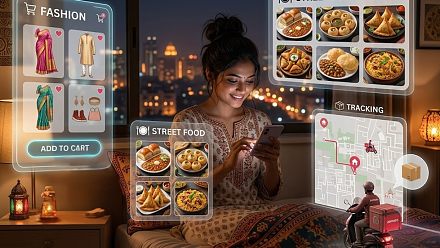
That is the strange appeal of “dopamine sites”, a growing internet trend that began gaining attention in South Korea and is now spreading elsewhere, including India. These websites recreate the pleasurable rituals of shopping, food delivery and even taking breaks, but remove the actual transaction or consequence.
From fake food-delivery platforms, simulated shopping carts, to even virtual smoke breaks. You browse, select, “pay,” and sometimes track a courier who will never arrive. But the food never comes, the clothes never ship, the cigarette is only an animation. What remains is the small, familiar rush that accompanies the act of wanting. My question as many would ask is, what, exactly, are people seeking when they seek this?
Why Does Ordering Food Feel Good Even Before The Food Arrives?
Dopamine is often casually described as the brain’s “pleasure chemical”, but that is an oversimplification. It plays an important role in motivation, learning and reward-related behaviour. The anticipation of getting something desirable can itself be highly engaging.
This trend took shape in South Korea earlier this year. A mechanical-engineering student in Seoul created a joke site called Food Never Arrives, later an app, that let users order nonexistent meals and see how much money and how many calories they had “saved.” A wave of imitators followed.
In India, two developers from Udaipur, Purvansh Parmar and Anshul Sharma, launched FoodNeverComes, which now offers dozens of cuisines, hundreds of dishes, real recipes for the meals you did not order, and a fictional delivery experience complete with a dummy call from a confused rider. They report more than 2.7 million visits since June. Other sites simulate Temu-style shopping hauls or let users plan holidays that never leave the runway.
Neuroscientists have long distinguished between “wanting” and “liking.” Dopamine as the molecule of incentive salience the motivational pull toward something rather than the pure pleasure of having it. The two often travel together, but not always. We can chase hard and still feel underwhelmed once the object is in hand. Anticipatory utility, is the pleasure of looking forward. Sometimes the chase itself is the better part of the experience.
Dr Anna Lembke, the Stanford psychiatrist and author of Dopamine Nation, makes a related point. “Dopamine signals “get more” or “do more”; it does not automatically equal pleasure. Rituals and cues attached to a reward can become reinforcing on their own. In addiction, the routines leading up to use can eventually matter as much as the substance. Anticipation of reward can be as reinforcing as the reward itself.”
What Is A Dopamine Site Actually Giving You?
Many of us fill real baskets online only to abandon them. We scroll menus late at night, add items, and then decide against it or order more than we need because the process itself soothes something. The dopamine sites simply formalise the ritual and remove the cost.
Users describe the experience as zoning out, taking a low-pressure break, or feeling less alone because others are doing the same thing in the same virtual space at the same time. A Korean student visiting a simulated smoke-break site during exams put it simply: it felt like taking a pause with someone, even though no one was speaking.
FoodNeverComes describes itself as a fake food-delivery simulator. Its menus, prices, carts, checkout and delivery tracking are simulated, and no real transaction takes place. It currently offers hundreds of dishes across dozens of cuisines, with real recipes attached to many of them.
That makes it less like ordering dinner and more like window-shopping with a very convincing ending.
A person might be craving a late-night biryani but know that ordering it means spending ₹400 or ₹500. They might also know they do not really need another takeaway meal. Browsing a simulated menu allows them to indulge in the fantasy without opening their wallet.
That is precisely the kind of behaviour some young users in South Korea describe. The Korea Times reported that users turned to fake food-delivery websites because they could recreate the satisfaction of ordering without the expense. Some also described the experience as a brief way to zone out or relieve stress.
Could Fake Food Actually Help With Impulse Eating Or Spending?
There is an obvious appeal to removing the financial consequence from an impulsive purchase. If the alternative is spending money you do not have on a late-night takeaway you did not really want, a simulated order is certainly less expensive.
But there is another side to the experiment.
Psychologists are cautious, some warn that rehearsing the behaviour may strengthen the very craving it is meant to short-circuit. Novelty may fade after a handful of imaginary orders.
If someone keeps ordering imaginary food because they are lonely, overwhelmed or using food delivery as a form of emotional comfort, the website may provide a few minutes of relief without addressing why the ritual feels necessary in the first place.
And that may be why the trend is more revealing than ridiculous.
Why Is GenZ Finding Comfort In Fake Experiences?
The Korean phenomenon has appeared alongside conversations about burnout, financial pressure and digital fatigue.
In an era of burnout, uncertain futures and constant digital stimulation, even a loose sense of shared presence can feel like relief. You do not have to form a relationship. You simply know that other people are scrolling the same menus or watching the same animated cigarette burn down. The connection is thin, but it is not nothing.
That is also where dopamine sites become more than an odd internet joke.
Another type of site recreates a smoking break. Users can enter a virtual break room, see other people online and leave brief messages. Nobody has to introduce themselves. Nobody has to make conversation, yet the experience can create the feeling that someone else is taking a break at the same time.
The internet has spent years making us better at wanting things — scrolling through menus, comparing products, saving holidays, filling carts and watching countdowns. Dopamine sites take that behaviour and remove the final transaction.