New York City Mayor Zohran Mamdani Bans Generative AI For Students: Kids Should Focus On Human Connection
New York City is taking a major step back from generative AI in classrooms. The city has announced a one-year moratorium on student-facing generative AI tools for children from 2-K through eighth grade in its public scho
लेखक Ayush Mukherjee··10K पढ़े गए
New York City Mayor Zohran Mamdani Bans Generative AI For Students: Kids Should Focus On Human Connection
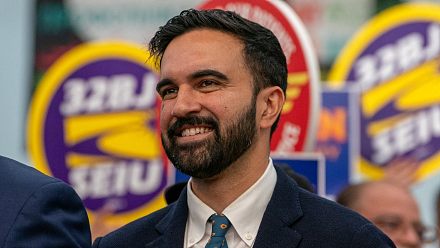
New York City is taking a major step back from generative AI in classrooms. The city has announced a one-year moratorium on student-facing generative AI tools for children from 2-K through eighth grade in its public schools, covering the 2026-27 academic year.
The policy, announced by New York City Mayor Zohran Mamdani, is aimed at reducing students’ dependence on AI chatbots, AI tutors and other generative AI applications at a stage when they are still developing fundamental academic and social skills.
The move will affect nearly 600,000 students, or around two-thirds of New York City’s public-school population, when combined with a separate policy designed to reduce individual screen time.
Mamdani’s administration says the decision is based on the belief that younger children need direct interaction with teachers and classmates rather than relying on artificial intelligence to solve problems or generate answers for them.
Why New York City Is Restricting AI In Schools
Under the new policy, students from 2-K through eighth grade will not be permitted to use student-facing generative AI tools in New York City public schools during the 2026-27 school year.
2-K is an early childhood education programme for two-year-old children, meaning the restrictions begin well before kindergarten and continue through middle school.
The mayor’s office argues that young students need opportunities to work through difficult questions themselves, develop relationships with teachers and learn alongside other children.
The policy also reflects a broader debate taking place in education systems around the world: whether AI should become a routine part of learning or whether children should first develop core skills without depending heavily on automated tools.
Mamdani has rejected the idea that AI in early education is unavoidable. His administration believes schools should prioritise human interaction, independent thinking and traditional learning methods during the early years of a child’s education.
ChatGPT And AI Chatbots Face Restrictions
The new rules cover software that provides generative AI directly to students, including AI tutoring tools and other applications capable of generating answers or content.
New York City Public Schools plans to discontinue or disable AI features in more than 38 programmes that had previously been permitted but no longer meet the city’s updated safety and oversight requirements.
Student-facing chatbots will therefore be significantly restricted for younger students. The policy also prohibits so-called companion chatbots across all grades.
This is broader than simply blocking one particular service. Instead of targeting only popular AI platforms such as ChatGPT, the policy establishes a wider framework covering student-facing generative AI tools.
High School Students Will Still Be Allowed To Use AI
New York City is not imposing a blanket ban on artificial intelligence across its entire school system.
High school students will still be able to receive controlled exposure to AI through a limited number of school-based pilot programmes. The initiative could cover up to 50,000 students in general education classes, representing roughly 5 per cent of the public-school student population.
The pilots will be limited to a maximum of five classes at each participating high school. Students will use vetted AI tools under the direct supervision of trained educators.
The tools used in these programmes will have to satisfy requirements covering areas such as safety and student data privacy.
The approach effectively creates a controlled environment where older students can learn how AI works and how to use it responsibly rather than relying on unrestricted access.
Students Will Also Get AI Literacy Lessons
Even students who are not participating in the AI pilot programmes will receive some exposure to the technology.
Every high school student will receive two 45-minute AI literacy or critical-thinking sessions each year.
These lessons are intended to help students understand both the capabilities and limitations of artificial intelligence. Topics will include AI bias, potential risks, ethical questions, careers, future skills and responsible use of the technology.
The objective is to make students more informed users of AI before the technology becomes a routine part of their academic or professional lives.
Teachers Can Still Use AI, But With Restrictions
The moratorium primarily targets student-facing AI rather than banning artificial intelligence throughout the school system.
Teachers will still be permitted to use AI for tasks such as instructional planning and operational work, provided the tools comply with New York City Public Schools’ safety requirements.
However, teachers will not be permitted to use AI for grading or student assessments under the new policy.
There are also exceptions for certain students. Assistive technologies for students with disabilities, tools supporting students learning English and AI applications used in career-readiness programmes such as computer science can still be permitted.
New York City Is Also Cutting Screen Time
The AI restrictions are being introduced alongside a separate effort to reduce students’ use of individual digital devices.
Children in second grade and below will face restrictions on one-to-one screen time, referring to situations where a student uses an individual device such as a laptop or tablet.
The city is recommending daily limits of:
Grade
Recommended One-To-One Screen Time
Second grade and below
Restricted
Third to fifth grade
30 minutes per day
Sixth to eighth grade
45 minutes per day
The combination of AI restrictions and screen-time limits represents a broader attempt by New York City to rethink how much technology children should use during school hours.
Why AI In Education Is Becoming A Global Debate
The New York policy comes as schools worldwide grapple with the rapid adoption of generative AI.
AI tools can help students find information, explain difficult subjects, brainstorm ideas and complete certain homework tasks. But educators and researchers have also raised concerns that excessive dependence on AI could reduce the amount of independent thinking students do themselves.
One study involving researchers from Stockholm University and the University of Hong Kong examined the effects of AI-assisted homework. The research reported that students’ homework performance improved after using AI, while their performance on closed-book monthly examinations declined.
The findings highlight a key concern for educators: getting better answers with AI does not necessarily mean developing stronger knowledge or understanding.
For schools, the challenge is therefore not simply deciding whether AI is good or bad. The bigger question is how much AI students should use, at what age and under what supervision.
Screen Time Is Another Concern For Parents
New York City’s separate screen-time policy reflects another growing concern among parents and educators.
Researchers have been studying whether early and prolonged exposure to smartphones and other digital devices can affect children’s learning, attention and cognitive development.
Research involving scientists from Inserm and the National University of Singapore has also examined links between early smartphone access and outcomes such as memory and academic performance.
These findings do not mean that every child who uses a smartphone will experience learning problems. However, they add to the wider discussion around how much screen exposure is appropriate for children.