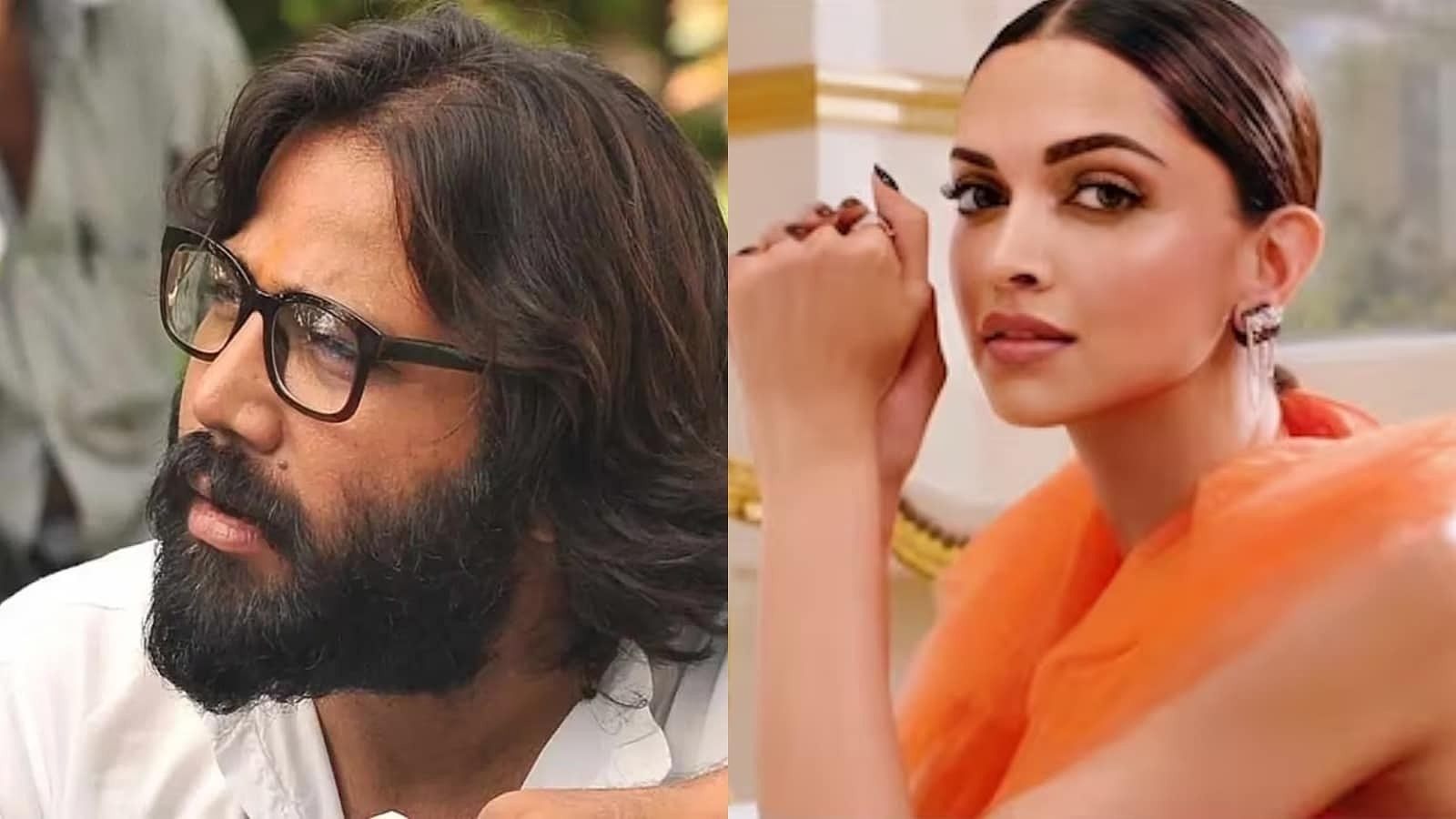
Deepika Padukone Spirit Exit Explained: 10% Profit Share, 8-Hour Workday And Fallout With Sandeep Reddy Vanga
Deepika Padukone’s exit from Sandeep Reddy Vanga’s Spirit has refused to die down more than a year after it first made headlines. What started as a routine casting update in April 2025 has turned into one of Bollywood’s
लेखक Shreyanka Mazumdar··62K पढ़े गए
Deepika Padukone Spirit Exit Explained: 10% Profit Share, 8-Hour Workday And Fallout With Sandeep Reddy Vanga
Deepika Padukone’s exit from Sandeep Reddy Vanga’s Spirit has refused to die down more than a year after it first made headlines. What started as a routine casting update in April 2025 has turned into one of Bollywood’s longest-running off-screen controversies, with fresh claims resurfacing in August 2026 about money, working hours and a script leak.
What Is Spirit And Who Was Originally Cast
Spirit is a pan-India action drama directed by Sandeep Reddy Vanga, the filmmaker behind Kabir Singh and Animal, produced jointly by Bhushan Kumar’s T-Series and Vanga’s own Bhadrakali Pictures. It stars Prabhas as an IPS officer and also features Vivek Oberoi and Prakash Raj. Deepika Padukone was originally attached to play the female lead opposite Prabhas. The film is currently scheduled for a March 2027 release, with Triptii Dimri now playing the part instead.
Soon after, Vanga posted a cryptic, strongly worded message on X without naming Deepika directly. He wrote about placing “100% faith” in an actor once he narrates a story, called it an “unsaid NDA”, and accused someone of leaking his story. “When I narrate a story to an actor, I place 100% faith. There is an unsaid NDA(Non Disclosure Agreement) between us. But by doing this, You’ve ‘DISCLOSED’ the person that you are…. Putting down a Younger actor and ousting my story? Is this what your feminism stands for ? As a filmmaker, I put years of hard work behind my craft & for me, filmmaking is everything. You didn’t get it. You won’t get it. You will never get it. Aisa karo…. Agli baar poori kahani bolna… kyunki mujhe jarra bhi farak nahi padtha. #dirtyPRgames. I like this kahawath very much � खुंदक में बिल्ली खंबा नोचे!” he wrote on X. Around the same time, Triptii Dimri, who had earlier worked with Vanga on Animal, was announced as the new female lead.
When I narrate a story to an actor, I place 100% faith. There is an unsaid NDA(Non Disclosure Agreement) between us. But by doing this, You’ve ‘DISCLOSED’ the person that you are….
Putting down a Younger actor and ousting my story? Is this what your feminism stands for ? As a…
— Sandeep Reddy Vanga (@imvangasandeep) May 26, 2025
Deepika did not issue a direct public statement at this stage.
The Spirit Row Resurfaces: August 2026
Back in 2025, News18 exclusively reported the real reason that led the makers of Spirit to drop and replace Deepika Padukone with Triptii Dimri. “There seems to be a deliberate attempt to control the narrative,” a source close to the development revealed to us, adding, “The actress’ perception team is struggling to come to terms with her replacement and is conveniently spinning her exit as a ‘work-life balance’ decision. But the reality is quite different.”
According to the source, the real reasons behind the exit are far more practical and rooted in professional disagreements. “The actor had reportedly demanded ₹25 crores for approximately 35 days of shoot, along with a 10% profit share, extensive entourage expenses, and even expressed unwillingness to deliver dialogues in Telugu—something the director felt strongly about. To top it off, confidential plot details from Spirit were allegedly leaked, which raised serious concerns among the producers,” the insider stated.
More than a year later, the controversy returned when Pranay Reddy Vanga, Sandeep’s brother and one of Spirit’s producers, spoke to NTV Telugu reiterated the profit sharing version and offered a fuller account. He said talks with Deepika had gone on for close to 18 months and that the makers were serious about casting her, even offering to raise her base fee by an additional Rs 5-6 crore. According to Pranay, three things were on the table: remuneration, timing or working hours, and Deepika’s request for a 10% share of Spirit’s profits. He said the profit-share demand pushed the project’s budget beyond what the makers could justify, and that this, not just the work-hours issue reported earlier, was central to why Deepika was eventually dropped.
Pranay also alleged that once the makers began looking at other actors for the role, details about Spirit’s story and plot began leaking to the media, and suggested this happened around the same time.
What Deepika’s Side Has Said
Deepika has not issued a formal statement addressing any of the claims made by Pranay Reddy Vanga or the earlier reports. Her only visible reaction has been indirect: she liked an Instagram post by a journalist that slammed Vanga and his brother’s comments and defended her right to negotiate profit-sharing and working conditions. The post argued that male stars who negotiate similar terms are usually called “disciplined”, while a woman doing the same is called “difficult”.
What A Profit Share Actually Means In Films
A profit share, sometimes written into a contract alongside or instead of a flat fee, entitles an actor to a percentage of a film’s net profits once the makers recover the production and distribution costs, rather than a fixed one-time payment regardless of how the film performs. It is a common arrangement for the industry’s biggest male stars, who often combine a fixed fee with a backend percentage tied to box office performance, effectively betting on the film’s success alongside the producers. A 10% profit share, as reportedly sought by Deepika, would mean she stood to earn a tenth of the film’s net profit if Spirit did well commercially, on top of whatever base fee was agreed. Producers, on their end, weigh this against the film’s total budget, since a bigger profit cut for the lead cast reduces the studio’s own margin even on a hit.
The Double Standard Around Deepika’s Working Hours
Strip away the back-and-forth and the story reduces to two competing accounts: the makers say the economics did not work, Deepika’s side suggests she was never seriously in consideration to begin with and somewhere in between, an actor coming off major box office success asked to be paid like the industry’s most bankable stars usually are.
When a male star asks for a percentage of profits, fewer people would call it a controversy. It is presented as smart, standard, the mark of someone who has arrived. When a woman does the same, it often becomes a story about a “difficult” actor rather than one about a fair ask.
In fact, Deepika Padukone’s husband, Dhurandhar star Ranveer Singh, also opted for a backend profit-sharing arrangement for Aditya Dhar’s blockbuster franchise, produced by Jio Studios and B62 Studios. In an interview with ET Digital, Dhurandhar co-producer Jyoti Deshpande revealed that Ranveer Singh took a smaller fixed fee for the film and opted for a backend deal, meaning he would participate in its financial upside. “In Dhurandhar, Ranveer came with a smaller fixed fee and a backend deal, and therefore benefited from that arrangement. The same was true for Aditya, who also came in with a smaller fixed fee and a backend. He ended up making a significant upside along with us. That’s how you distribute both the risk and the reward,” Deshpande had said.
Deepika’s Exit Raises A Bigger Question About Women At Work
Deepika’s exit reports first surfaced not long after she became a mother, and the working-hours angle was conveniently framed around her wanting an eight-hour day rather than the open-ended shifts Indian film sets often run on. It is not an unreasonable thing to ask for, from anyone, but it read differently once attached to a new mother’s name. A shorter, more predictable working day post-childbirth is not a lack of commitment, it is a basic accommodation most workplaces are expected to make.
Whether the real sticking point was money, hours, both, or something else entirely may never be fully confirmed, since neither side has put out a joint, on-record account. But the pattern in how each side’s version has been received says something on its own: a woman asking for what she is worth and for the working conditions she needs, still gets read as a problem to be managed rather than a negotiation to be respected.
Read More: Deepika Padukone Will Never Work With Sandeep Reddy Vanga Because Of His ‘Misogynist Nature’: Report