India Vs Japan 'Wide' Controversy: What Do ICC Laws Say? Can Umpire Change His Decision?
The historic one-off India-Japan T20I was shrouded by controversey due to a pivotal decision of wide by the on-field umpire in the last over of the match.
লেখক Rudransh Khurana··149K বার পড়া
India Vs Japan 'Wide' Controversy: What Do ICC Laws Say? Can Umpire Change His Decision?
The historic one-off India-Japan T20I was shrouded by controversey due to a pivotal decision of wide by the on-field umpire in the last over of the match.
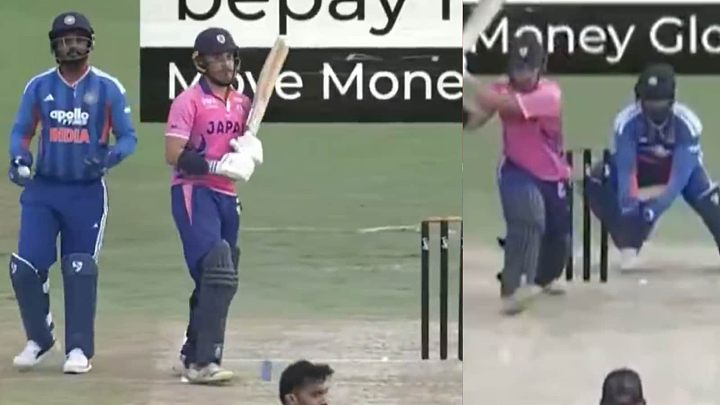
A Japan side missing some of its most important players came as close as needing six runs off four balls. Axar Patel then bowled a leg-sided delivery which was met with a missded reverse sweep from Alexander Shirai-Patmore. The ball was initially adjudged wide, but after protests from both Axar and India skipper Shreyas Iyer, the umpire reversed his decision, leading to a wave of criticism for the Indian side.
Japan went on to lose the match by just two runs, making the call a potentially game-changing moment.
What does the ICC law say?
pic.twitter.com/cMBkzEI3J7
— Ben Gardner (@Ben_Wisden) September 22, 2026
In ODI and T20I cricket, deliveries going down the leg side of a batter are automatically called wide. This is done to prevent negative bowling, and due to the limited-overs nature of the contest.
Since reverse sweeps and switch-hits have become more prevalent, there has been a debate on how to apply this law. For instance, a batter attempting a switch hit on a leg-side ball, and missing it completely, raises concern on whether the batter deserves the benefit of a wide call.
However, the actual laws are quite gray, with no mention of such shots.
Here’s what they say, per ICC’s latest playing conditons update:
22.1 Judging a Wide
22.1.1 If the bowler bowls a ball, not being a No ball, the umpire shall adjudge it a Wide
if, according to the definition in clause 22.1.2
22.1.1.1 the ball passes wide of where the striker is standing and which also
would have passed wide of the striker standing in a normal batting
position.
22.1.1.2 the ball passes above the head height of the striker standing upright at
the popping crease.
22.1.2 The ball will be considered as passing wide of the striker unless it is sufficiently
within reach for him to be able to hit it with the bat by means of a normal
cricket stroke.
22.1.3 Umpires are instructed to apply very strict and consistent interpretation in
regard to this clause in order to prevent negative bowling wide of the wicket.
In this case, the umpire seemed to go by the law that every leg-sided delivery is wide. But India’s argument could have been that Alexander played a ‘normal cricket stroke’, by means of which he could have ‘reached’ the ball, as per the clause 22.1.2.
So, the umpire had to consider whether the batter could have reached the ball. That’s also debatable because Axar’s ball spun wildly towards the leg-side.
Can umpires change their decision?
It’s rare which makes it feel a bit unbelievable, but the ICC laws leave room for the umpires to change their call.
Law 2.12 says, “An umpire may alter any decision provided that such alteration is made promptly and does not contradict clause 20.6 (Dead ball not to be revoked). This apart, an umpire’s decision, once made, is final.”
In fact, there’s precedent for it. In the first women’s T20I between Australia and New Zealand in a bilateral series of September 2024, the on-field umpire gave it wide when Ellyse Perry similarly missed a reverse sweep and immediately changed his call.
Watch it here:
A missed reverse sweep down the leg side – and the umpire changes his call for wide #AUSvNZ pic.twitter.com/spuRw3rPVQ
— cricket.com.au (@cricketcomau) September 19, 2024
The debates would go on until the ICC clarifies its laws further.