The Rise Of Sachin Pilot: How Congress's Rajasthan Problem Became Its Punjab Solution
Sachin Pilot has been handed a political assignment that carries a touch of irony. The Congress leader who once found himself at the centre of one of the party’s most serious internal rebellions in Rajasthan has now been
লেখক Pragati Ratti··121K বার পড়া
The Rise Of Sachin Pilot: How Congress's Rajasthan Problem Became Its Punjab Solution
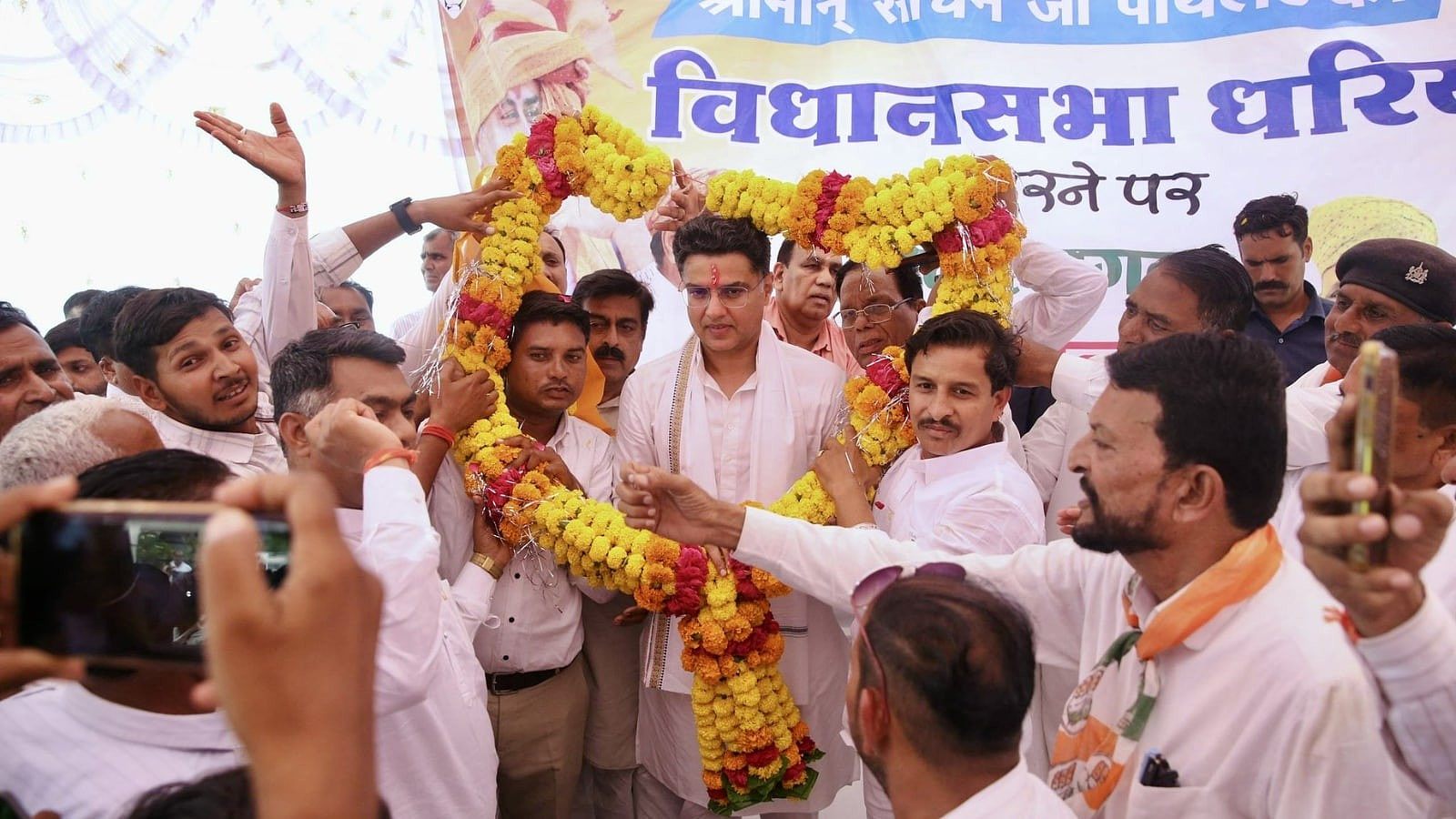
Sachin Pilot has been handed a political assignment that carries a touch of irony. The Congress leader who once found himself at the centre of one of the party’s most serious internal rebellions in Rajasthan has now been asked to do what is pretty much the opposite: bring together a deeply divided state unit in Punjab and steer it towards the 2027 Assembly election.
The Congress high command has appointed the 49-year-old Pilot as its AICC general secretary in charge of Punjab, replacing former Chhattisgarh chief minister Bhupesh Baghel, who has been moved to Assam. The change comes months before the Punjab polls and at a time when the state Congress is struggling with competing factions and a leadership tussle.
Read More: Baghel Out, Pilot In: Why Congress Is Betting On Its ‘Troubleshooter’ To Fix Punjab Before 2027 Polls
The choice of Pilot is significant because he knows from experience what an unresolved leadership battle can do to a state unit.
How Pilot Turned Rebel In Rajasthan
Pilot entered national politics early. He became a Lok Sabha MP from Dausa in 2004 at the age of 26 and subsequently served as a Union minister. But his real political rise came in Rajasthan, where he became president of the state Congress in 2014.
At the time, the party was at a low point in the state. Pilot helped rebuild the organisation and led Congress into the 2018 Assembly election, where it returned to power. But the victory also created the conditions for the next battle.
Pilot, then a relatively young leader with a substantial support base, became deputy chief minister under Ashok Gehlot. The relationship between the two was uneasy from the beginning, with differences over leadership, organisational control and Pilot’s political future gradually becoming impossible to contain.
In July 2020, the conflict exploded. Pilot and a group of MLAs moved to a resort outside Rajasthan as the Congress government faced its biggest internal crisis. Pilot was removed as deputy chief minister and Rajasthan Congress president. For a moment, it appeared that he could leave the party altogether.
But he did not. At the height of speculation that he could join the BJP, Pilot made his position clear: “I will not join BJP.” He also insisted that he had worked hard to bring Congress back to power in Rajasthan.
In another interview during the crisis, Pilot framed the dispute as a fight with Gehlot rather than with the Congress itself. “I will not join BJP but will stay in Congress and fight,” he said, adding, “I am an equal owner of Congress party as Ashok Gehlot is.”
Rather than walk away, Pilot remained within the Congress system, even as his relationship with Gehlot remained one of the party’s most closely watched internal rivalries.
The Rebel Who Became The Mediator
Pilot’s subsequent political journey has been less dramatic than his 2020 rebellion, but arguably more important for his standing within the Congress.
The party did not restore him to the position he had held before the revolt. Instead, he was given organisational responsibilities and later became an AICC general secretary with charge of Chhattisgarh.
That role helped alter his image inside the party.
The Rajasthan episode had established Pilot as a leader with an independent political base and ambitions of his own. His later assignments allowed the Congress leadership to increasingly view him as someone capable of handling difficult organisational situations without necessarily becoming the centre of them.
That is the reputation he now carries into Punjab.
And there is another reason his Rajasthan experience matters. Pilot knows what factional politics looks like from the inside.
He has experienced the consequences of a state Congress unit being divided between powerful leaders, competing ambitions and questions over who ultimately controls the organisation. Punjab’s current problem may involve different personalities, but the basic political challenge is familiar.
Why Punjab Is A Different Test
Pilot’s immediate job is to make the Congress organisation functional enough to fight an election.
The state unit has been dealing with differences involving senior leaders and rival camps. The Congress high command’s decision to remove Baghel and bring in Pilot followed growing concerns about the factionalism. Reports have also pointed to dissatisfaction among sections of the Punjab Congress with Baghel’s handling of the state unit and his perceived proximity to PCC chief Amarinder Singh Raja Warring.
The timing makes the challenge even more urgent. Punjab is scheduled to vote in early 2027, leaving the Congress with limited time to settle its internal equations, strengthen its cadre and decide how it wants to present itself to voters.
Pilot’s mandate, therefore, goes beyond holding meetings between rival leaders. He will have to rebuild trust between factions, prevent ticket distribution from becoming another flashpoint and persuade leaders with individual political ambitions that they have more to gain from a united Congress than from weakening rivals within the party.
Reports suggest that his appointment could also precede wider organisational changes in Punjab, including questions surrounding the state party leadership.
There is perhaps no better backdrop to Pilot’s Punjab assignment than his own relationship with Gehlot. The two leaders remained political rivals for years after the 2020 crisis. Yet the relationship eventually softened in public.
In 2025, when Gehlot was asked about his relationship with Pilot, he famously played down the old rivalry, saying: “When were we ever apart?” Pilot, too, emphasised the need to move forward and fight the BJP together.
That does not erase the history between the two. But politically, it demonstrates something how rival camps can coexist within the same party when the leadership decides that organisational survival is more important than personal rivalry.
This is exactly the lesson Pilot will now have to sell in Punjab.
Pilot: The Organisational Fixer
There is also a larger story behind Pilot’s elevation. For years, he was discussed primarily as a potential chief ministerial candidate in Rajasthan and as one of the Congress’s prominent younger leaders. His 2020 rebellion reinforced the image of a leader seeking a larger role within the party.
His Punjab assignment represents a different phase.
He is now being trusted not simply to build his own political base but to manage the ambitions of others.
This means Congress now appears to be betting that Pilot’s relative acceptability across factions, his organisational experience and his ability to communicate across political groups can help it avoid repeating the kind of internal paralysis that has damaged the party in Punjab.
The party also sees advantages in his relatively young profile and his appeal among sections of the OBC electorate. His background as the son of veteran Congress leader Rajesh Pilot adds another layer to his national political identity.
But Punjab will ultimately judge Pilot by results, not reputation. If he can bring the rival camps onto one platform, strengthen the organisation and take Congress into the 2027 election as a credible challenger, the assignment could establish him firmly as one of the party’s national organisational leaders.
If the factions continue fighting despite his intervention, the appointment could instead reinforce the perception that Congress’s problems in Punjab are deeper than any one in-charge can solve.
For Pilot, then, Punjab is more than another organisational posting. It is a test of how far he has travelled since 2020.
The man who was once Congress’s Rajasthan rebel is now being asked to become its Punjab peacemaker. And in a party where internal battles have often been as consequential as electoral ones, this may be the biggest test of his political maturity yet.