Punjab's Chitta Crisis: What Gulzar Singh Case Reveals About The State's Persisting Drug Problem
The death of 47-year-old Gulzar Singh in Punjab’s Sangrur district has brought the state’s long-running drug crisis back into sharp political and public focus. Singh, a daily wager from Toor Banzara village, allegedly co
লেখক Pragati Ratti··159K বার পড়া
Punjab's Chitta Crisis: What Gulzar Singh Case Reveals About The State's Persisting Drug Problem
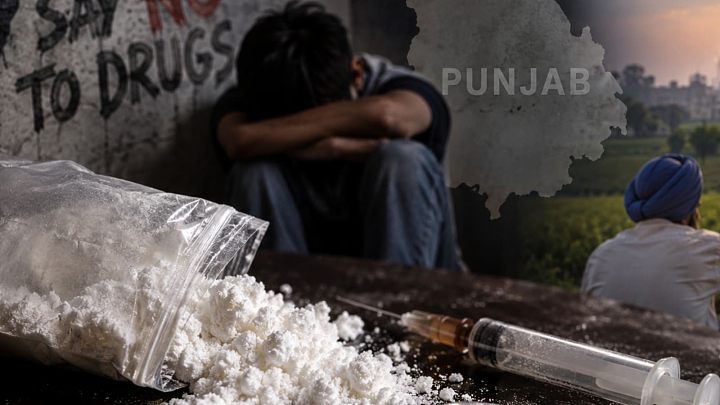
The death of 47-year-old Gulzar Singh in Punjab’s Sangrur district has brought the state’s long-running drug crisis back into sharp political and public focus. Singh, a daily wager from Toor Banzara village, allegedly consumed poison a day after raising the issue of the easy availability of “chitta” – a term commonly used in Punjab for heroin and other illicit drugs – before state Finance Minister Harpal Singh Cheema.
According to reports, Singh told Cheema that his son was addicted to drugs and had even sold household belongings to fund his addiction. In a video recorded before his death, Singh alleged that he was subsequently threatened after speaking about the issue. He later consumed poison and died at Dayanand Medical College and Hospital in Ludhiana.
Cheema has denied any role in the incident and said he had listened to Singh’s complaint and asked police to take action against those involved in the drug trade. “Yes, I went to Toor Banzara village on Sunday… Gulzar Singh raised the issue of drug availability and told me that his son was a drug addict. I listened to his grievance and even asked the police to take appropriate action against those involved in the supply of drugs,” Cheema told The Indian Express.
The Sangrur police, meanwhile, have termed the death a case of suicide and said further action would depend on the family’s statement. The police have also said the family had not given a statement linking the death directly to Singh’s interaction with the minister or the alleged threats.
The case has consequently become more than an individual tragedy. It has put a spotlight on a question Punjab has struggled with for years: how deep does the state’s drug problem actually run despite repeated government crackdowns?
Nearly Half Of Punjab’s Prisoners Are Drug-Dependent
One of the starkest indicators has come from the Punjab and Haryana High Court itself. A Punjab government status report submitted to the court showed that 15,768 out of 35,449 inmates lodged across the state’s jails were drug-dependent – roughly 45 per cent of the prison population. The court said the proportion was close to 50 per cent and described the situation as a “serious challenge for the state” requiring the highest priority.
The court also noted that many of these drug-dependent inmates were in the prime of their youth. The figures emerged in proceedings concerning drug dependence among prisoners after a report from the Mansa sessions division highlighted the large number of inmates receiving treatment through Out-Patient Opioid Assisted Treatment (OOAT) clinics operating inside prisons.
That statistic illustrates why Punjab’s drug crisis cannot be viewed only as a policing issue. Addiction, criminality, prison overcrowding, rehabilitation and access to treatment are deeply interconnected.
Punjab Says Crackdown Yielding Results
The Bhagwant Mann government, however, points to an extensive enforcement campaign to demonstrate that it is taking the drug menace seriously.
Under its anti-drug campaign “Yudh Nashean Virudh”, launched in March 2025, Punjab authorities say citizen tip-offs have played a major role in identifying suspected drug networks.
Between March 1, 2025 and September 3, 2026, the Safe Punjab Helpline received 51,979 tip-offs, which authorities say contributed to 25,339 drug-related arrests. Overall, 59,293 FIRs had been registered under the Narcotic Drugs and Psychotropic Substances (NDPS) Act during the period.
The crackdown has also resulted in the seizure of 3,757 kg of heroin, along with large quantities of other narcotics. Authorities say the figures demonstrate growing public participation in the fight against drug trafficking.
But the Gulzar Singh case, coming alongside the prison data, highlights the other side of the equation: enforcement numbers do not necessarily tell us how far the underlying addiction problem has been solved.
Why Punjab’s Drug Crisis Is Difficult To Tackle
Punjab’s geography has long made it vulnerable to drug trafficking, particularly because of its proximity to the international border with Pakistan. Heroin and other narcotics can enter through organised trafficking networks before moving through layers of suppliers and local peddlers.
But the problem is not limited to supply. For a family like Gulzar Singh’s, the crisis is experienced at the level of addiction, with a son allegedly dependent on drugs, household assets being sold and a parent desperately seeking intervention.
Arresting traffickers can disrupt supply chains, but treating people already dependent on opioids requires sustained medical support and rehabilitation.
Punjab’s OOAT programme, which provides medication-assisted treatment to people dependent on opioids, is therefore an important part of the state’s response. Its presence inside prisons also demonstrates how closely addiction has become intertwined with the criminal justice system.
The Political Battle Over Punjab’s Drug Crisis
Gulzar Singh’s death has now become another flashpoint between the AAP government and the Opposition. BJP leader Gaurav Bhatia attacked Chief Minister Bhagwant Mann and the AAP leadership over the case, alleging that the government had ignored Singh’s plea. In a sharp attack on Chief Minister Bhagwant Mann, Bhatia said: “Surya ast, Bhagwant Mann mast.” He also sought to link the Punjab government’s handling of the drug crisis with the political controversies surrounding the AAP’s previous tenure in Delhi, asking: “Delhi under liquor, Punjab under drugs… what is this Arvind Kejriwal?”
SAD leader Bikram Singh Majithia also accused the government of creating an atmosphere in which people were afraid to speak about drugs. Congress leaders have similarly targeted the Mann government over the issue.
Gulzar Singh’s case has therefore reopened an old wound in Punjab: the distance between government claims of progress in the war on drugs and the experience of families still confronting addiction at home.