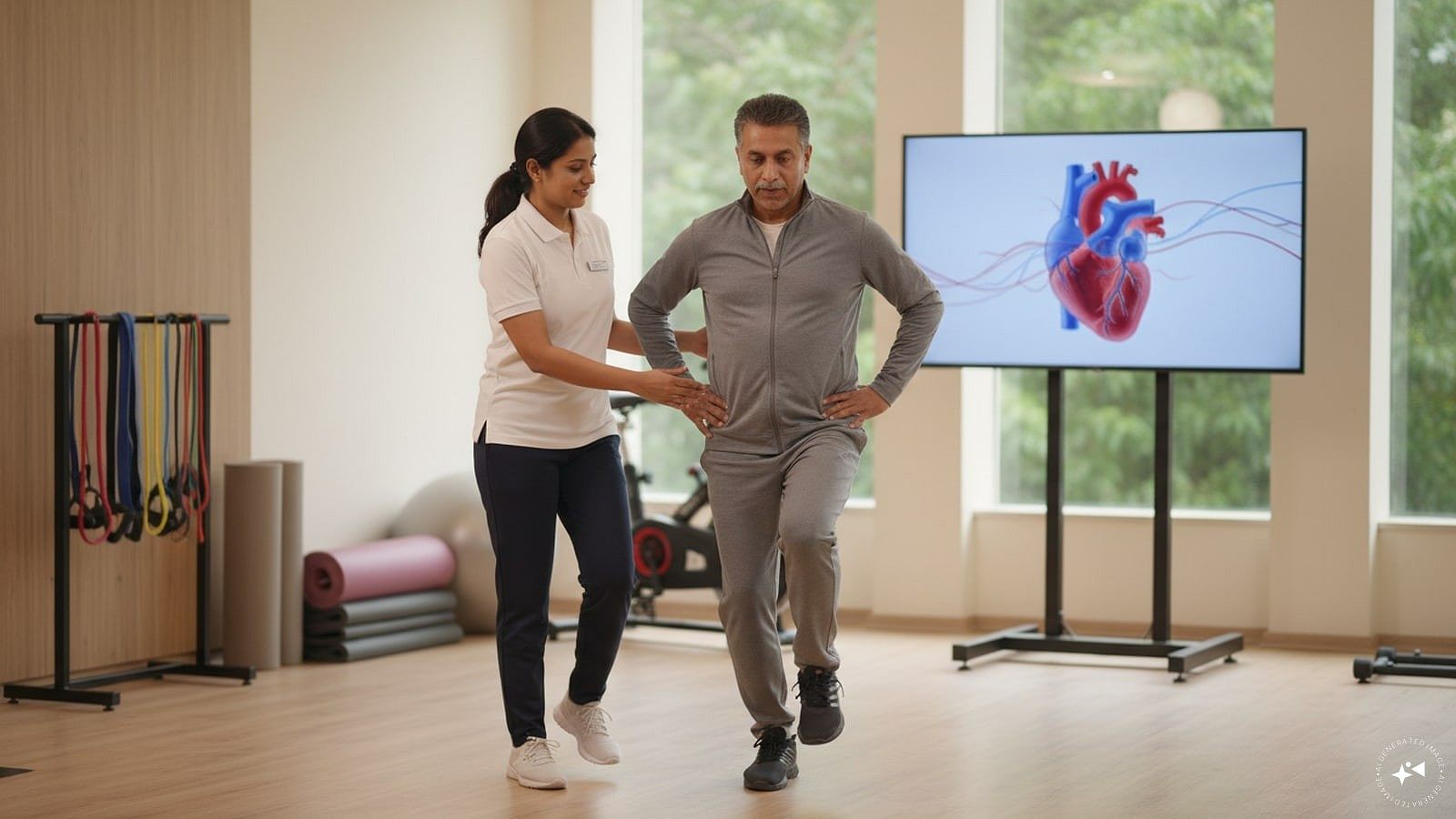
World Physiotherapy Day 2026: 7 Easy Exercises For A Healthier Heart
World Physiotherapy Day 2026: World Physiotherapy Day is observed every year on September 8 to recognise the contribution of physiotherapists to health, mobility, rehabilitation and quality of life. In 2026, the global c
লেখক Nibandh Vinod··22K বার পড়া
World Physiotherapy Day 2026: 7 Easy Exercises For A Healthier Heart
World Physiotherapy Day 2026: World Physiotherapy Day is observed every year on September 8 to recognise the contribution of physiotherapists to health, mobility, rehabilitation and quality of life. In 2026, the global campaign turns its attention to cardiovascular disease and stroke, highlighting how physiotherapy and physical activity can contribute to prevention, management and rehabilitation.
The campaign also encourages people to sit less and move more, making everyday physical activity an important part of healthier living. From walking and gentle strength exercises to mobility and balance movements, simple activities can help people become more active. However, exercise should always be adapted to individual fitness, age and health needs.
World Physiotherapy Day 2026: What Is The Theme?
The 2026 World Physiotherapy Day campaign focuses on the role of physiotherapy and physical activity in the prevention, management and rehabilitation of cardiovascular disease and stroke. The campaign is part of a four-year focus on noncommunicable diseases.
The theme is particularly relevant because physical inactivity is a recognised risk factor for cardiovascular disease. The World Health Organization says regular physical activity can help prevent and manage conditions including heart disease, hypertension and stroke.
This does not mean that exercise alone can prevent every heart problem. Rather, regular movement is one important component of a broader approach that can also include a balanced diet, healthy weight, adequate sleep, avoiding tobacco and managing conditions such as high blood pressure and diabetes.
How Much Physical Activity Do Adults Need?
The World Health Organization recommends that adults get 150-300 minutes of moderate-intensity aerobic physical activity per week, or 75-150 minutes of vigorous activity, or an equivalent combination. It also recommends muscle-strengthening activities involving major muscle groups on at least two days a week.
The American Heart Association similarly recommends at least 150 minutes of moderate-intensity aerobic activity each week, preferably spread across the week, along with muscle-strengthening activity on at least two days.
But someone who is currently inactive does not need to begin with a full 150-minute target immediately. Starting with shorter, comfortable sessions and gradually increasing activity can make the transition easier.
7 Easy Exercises To Support Heart Health
Brisk Walking
Walking is one of the simplest ways to add aerobic activity to your routine.
A beginner can start with a comfortable pace and gradually increase speed or duration. As fitness improves, brisk walking can become a moderate-intensity workout.
For people who spend long hours sitting, adding short walks throughout the day can also be a practical way to increase overall movement.
How to start:
Begin with 10-15 minutes if you are currently inactive.
Gradually increase the duration.
Pick a pace that feels purposeful but remains manageable.
Build towards the recommended weekly activity target over time.
The American Heart Association notes that people can gradually work towards 150 minutes of moderate activity a week and that even small increases in movement can be useful for people who are currently inactive.
Marching In Place
If going outdoors is inconvenient, marching in place can provide a simple indoor movement option.
Stand upright, lift one knee at a time and swing the arms naturally. Start slowly and increase the pace only if it remains comfortable.
Try this:
March for 30-60 seconds.
Rest if needed.
Repeat for several rounds.
Gradually increase the duration as your fitness improves.
This can be particularly useful for people looking for an easy way to interrupt prolonged sitting.
Sit-To-Stand
The sit-to-stand exercise uses the muscles of the legs and hips and can be performed using a sturdy chair.
Sit near the front of the chair with your feet firmly placed on the floor. Lean slightly forward and stand up in a controlled manner. Then slowly sit back down.
For beginners:
Use a sturdy chair.
Keep movements controlled.
Start with a small number of repetitions.
Hold onto a stable support if balance is a concern.
Strength training is an important part of a complete physical-activity routine, with the American Heart Association recommending muscle-strengthening activity at least twice a week.
Wall Push-Ups
Wall push-ups are a gentler alternative to floor push-ups and can help introduce upper-body strengthening.
Stand facing a wall, place your palms against it at about chest height and take a small step backwards. Bend your elbows to bring your body towards the wall, then push back to the starting position.
Remember:
Keep your body aligned.
Move slowly.
Avoid holding your breath.
Stop if you experience pain or unusual symptoms.
The exercise can be adjusted by changing the distance between your feet and the wall.
Heel Raises
Heel raises are a simple lower-leg strengthening and balance exercise.
Stand behind a sturdy chair or close to a stable support. Slowly raise your heels so you are standing on your toes, pause briefly and lower them with control.
Beginner tip: Keep your hands lightly on the chair for support.
Balance and strengthening activities can complement aerobic exercise, particularly for older adults. The American Heart Association includes balance and strength movements among activities used in cardiac rehabilitation and physical-activity programmes.
Step-Ups
Step-ups can provide both leg strengthening and an aerobic component when performed safely.
Use a low, stable step or a designated exercise platform. Step up with one foot, bring the other foot up and then step down carefully.
For beginners:
Start with a low step.
Hold a stable support if necessary.
Perform slowly at first.
Increase repetitions gradually.
People with balance problems, joint problems or cardiovascular conditions should seek professional guidance about whether step-ups are appropriate for them.
Gentle Yoga And Mobility Movements
Gentle yoga and mobility exercises can help incorporate stretching, balance and controlled movement into a routine.
Simple movements such as gentle seated stretches, shoulder mobility exercises and controlled leg movements can be used depending on an individual’s abilities.
The American Heart Association notes that activities such as yoga can contribute to balance, strength and flexibility.
The goal is not to perform complicated poses. For beginners, the focus should be on controlled, comfortable movement rather than pushing the body into extreme positions.
Why Exercise Matters For Heart Health
Regular physical activity can have several cardiovascular benefits. According to the American Heart Association, physical activity can help lower blood pressure and cholesterol and support healthy body weight.
The World Health Organization also identifies regular physical activity as beneficial for preventing and managing cardiovascular disease and other noncommunicable diseases.
Exercise can also help reduce the amount of time people spend sitting. This is important because modern lifestyles can involve long periods of sedentary behaviour.
The goal, therefore, does not have to be an intense workout every day. Building more movement into everyday life can be a useful starting point.
Physiotherapy And Heart Health: What’s The Connection?
Physiotherapists are not only involved in treating back pain, sports injuries or mobility problems. Physiotherapy can also form part of cardiovascular rehabilitation.
The World Physiotherapy 2026 campaign specifically highlights physiotherapy’s role in the prevention, management and rehabilitation of cardiovascular disease and stroke.
A physiotherapist can assess a person’s physical capacity and help develop an appropriate movement or rehabilitation programme. This can be particularly important for people recovering from cardiovascular events, living with chronic conditions or returning to activity after a period of inactivity.
The exact exercise prescription can vary considerably depending on age, fitness, symptoms, medications, medical history and the person’s rehabilitation goals.
Don’t Ignore These Warning Signs While Exercising
Exercise should not be treated as a test of endurance.
Stop exercising and seek appropriate medical attention if you experience concerning symptoms such as:
Chest pain or pressure
Severe or unusual shortness of breath
Fainting or feeling close to fainting
Severe dizziness
Sudden unexplained weakness
A rapid or irregular heartbeat accompanied by concerning symptoms
People who already have cardiovascular disease or have recently undergone a cardiac procedure should follow the exercise plan provided by their healthcare team rather than adopting a generic workout routine.
Who Should Speak To A Doctor Or Physiotherapist First?
People who have been inactive for a long period, have known heart or lung disease, have recently had surgery or a cardiac event, or have other significant health concerns should seek professional advice before starting a new exercise programme.
Older adults and people with mobility or balance difficulties may also benefit from having exercises individually adapted.
There is no single “best” exercise for everyone. The right activity is one that matches a person’s medical condition, fitness level, mobility and goals.
World Physiotherapy Day 2026: The Bigger Message
World Physiotherapy Day 2026 is a reminder that protecting heart health is not necessarily about complicated workouts.
Walking more, sitting less, gradually improving fitness and incorporating appropriate strength and mobility exercises can all contribute to a more active lifestyle. WHO recommends 150-300 minutes of moderate-intensity activity each week for adults, while emphasising that physical activity of any amount is better than none.
The seven exercises discussed here, walking, marching in place, sit-to-stands, wall push-ups, heel raises, step-ups and gentle yoga or mobility work, can provide simple starting points for many people.
However, exercise should be personalised, especially for anyone with an existing medical condition.
On World Physiotherapy Day 2026, the central message is simple: regular, appropriate movement can play an important role in cardiovascular health, while physiotherapists can help people move safely and effectively at different stages of life and rehabilitation.
Disclaimer: This article is for general information and is not a substitute for medical advice, diagnosis or an individually prescribed exercise programme. Anyone with a heart condition, recent cardiac event, significant symptoms or other medical concerns should consult a qualified healthcare professional before beginning or changing an exercise routine.