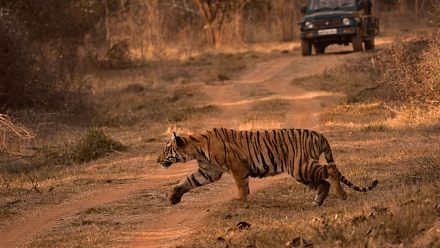
Tiger Season Is Back: 8 National Parks To Visit As Safari Gates Reopen In October
For wildlife enthusiasts, October marks the return of safari season at many of India’s big-name reserves. From tiger sightings against the ruins of Rajasthan’s forts to barasingha grazing in Kanha’s meadows, these parks
লেখক Lifestyle Desk··25K বার পড়া
Tiger Season Is Back: 8 National Parks To Visit As Safari Gates Reopen In October
For wildlife enthusiasts, October marks the return of safari season at many of India’s big-name reserves. From tiger sightings against the ruins of Rajasthan’s forts to barasingha grazing in Kanha’s meadows, these parks offer everything from big-cat encounters and birdwatching to gorgeous landscapes and conservation stories.
If a wildlife holiday is on your travel calendar, here are eight national parks and tiger reserves to know about this October.
Pench National Park, Madhya Pradesh and Maharashtra
Reopens: October 15, 2026
Spread across Madhya Pradesh and Maharashtra, Pench is known for its teak forests, open meadows and winding streams. The landscape is also closely associated with Rudyard Kipling’s The Jungle Book, although the real-life forest has plenty of stories of its own.
Tigers remain a major draw, while wild dogs, leopards, jackals, gaur and several species of deer can also be spotted. For birdwatchers, the park offers plenty to look out for as well.
Jim Corbett National Park, Uttarakhand
Reopens: October 15, 2026
India’s oldest national park remains one of the country’s most recognisable wildlife destinations. Established in 1936, Corbett is spread across forests, grasslands and riverine habitats in Uttarakhand and is particularly famous for its tiger and elephant sightings.
It is also a major destination for birdwatchers, with hundreds of species recorded across the park. An early morning safari can take visitors through misty sal forests and along the Ramganga landscape, where elephants, deer and other wildlife may appear along the route.
Jim Corbett Tiger Reserve, UttarakhandEstablished in 1936, Jim Corbett is India’s oldest national park and the first to come under Project Tiger. Its rich mix of forests, rivers and grasslands makes it one of the country’s most popular destinations for spotting tigers, elephants and hundreds of bird species.
Ranthambore National Park, Rajasthan
Reopens: October 1, 2026
Few wildlife destinations in India combine history and wilderness quite like Ranthambore. The Rajasthan reserve is known for its tiger sightings, but the setting is part of the experience too. Safaris take visitors through dry forests, lakes and ancient ruins, with the imposing Ranthambore Fort rising above the landscape.
Tigers are the star attraction, but the reserve is also home to leopards, sloth bears, sambar, chital and a variety of bird species. If luck is on your side, a safari could mean spotting a tiger near a waterhole or a leopard moving through the forest, with centuries-old ruins in the backdrop.
Sariska National Park, Rajasthan
Reopens: October 1, 2026
For travellers looking for a wildlife escape from Delhi, Sariska is one of Rajasthan’s more accessible options. Set in the Aravalli hills, the reserve has a rugged landscape of dry forests, rocky terrain and grasslands.
Sariska is home to tigers, leopards, striped hyenas, chital, sambar and wild boar. The reserve has also become an important conservation success story following the reintroduction of tigers. Its proximity to Delhi makes it particularly suited to a quick weekend escape into the wild.
Tadoba-Andhari Tiger Reserve, Maharashtra
Bandhavgarh National Park, Madhya Pradesh
Reopens: October 15, 2026
Bandhavgarh has long been a favourite among travellers chasing tiger sightings. The reserve is known for its relatively high tiger density, although wildlife sightings can never be guaranteed.
Beyond the big cats, the park is home to leopards, sloth bears, gaur, deer and a wide range of birdlife. Its dramatic setting is another attraction, with the historic Bandhavgarh Fort overlooking the forest and adding a layer of history to the safari experience.
Kanha National Park, Madhya Pradesh
Reopens: October 15, 2026
Kanha is the kind of forest that can make the journey feel as memorable as the wildlife sighting itself. Vast grasslands sit between sal forests, while streams and water bodies cut through the landscape.
The park is particularly significant for its hard-ground barasingha, a subspecies that once came dangerously close to extinction. Conservation efforts helped bring the population back, and today visitors can spot herds grazing across Kanha’s meadows. Tigers, leopards, wild dogs, gaur and several species of deer are among the other wildlife found here.
Tadoba Andhari Tiger Reserve, Maharashtra
Reopens: October 1, 2026
Tadoba is one for travellers who want a less polished, more rugged wildlife experience. The Maharashtra reserve is characterised by bamboo forests, dry deciduous woodland and waterholes that attract wildlife.
Tigers are the biggest draw, but safaris can also bring sightings of sloth bears, leopards, wild dogs, sambar and chital. The changing light across Tadoba’s forests also makes it a popular destination for wildlife photographers.
Panna National Park, Madhya Pradesh
Reopens: October 1, 2026
Panna’s story is as much about conservation as it is about wildlife. After the local tiger population disappeared, the reserve became the focus of a tiger reintroduction programme. The effort eventually brought tigers back to Panna, turning the park into an important example of wildlife recovery.
The Ken River adds another dimension to the landscape, with gharials and several species of birds found along its waters. The park’s cliffs and surrounding forests are also home to vultures and other wildlife.