‘Why Should UPI Be Free?’: PhonePe CEO Backs 0.4% MDR, Says Industry Needs Revenue Model
PhonePe Founder and CEO Sameer Nigam has backed the government’s move to impose a 0.4% Merchant Discount Rate (MDR) on certain UPI merchant transactions above Rs 2,000, arguing that the digital payments ecosystem needs a
مصنف Saurabh Verma··27K بار پڑھا
‘Why Should UPI Be Free?’: PhonePe CEO Backs 0.4% MDR, Says Industry Needs Revenue Model
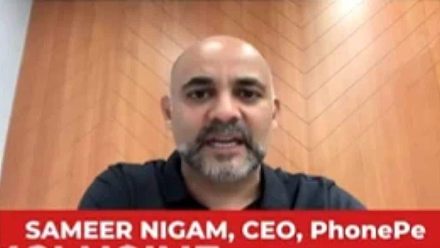
PhonePe Founder and CEO Sameer Nigam has backed the government’s move to impose a 0.4% Merchant Discount Rate (MDR) on certain UPI merchant transactions above Rs 2,000, arguing that the digital payments ecosystem needs a sustainable revenue model to fund its continued expansion.
Speaking to CNN-News18, Nigam questioned why UPI should remain free for merchants when other payment instruments attract charges and the industry continues to incur significant costs related to cybersecurity, fraud prevention, risk management, KYC and compliance.
“Why should UPI be free to merchants?” Nigam said, adding that the industry has been seeking a sustainable revenue model “in line with the rest of the world” and other payment instruments in India.
Nigam also rejected the argument that zero MDR was the primary reason behind UPI’s success, pointing out that UPI had an MDR of 0.65% between 2016 and 2020.
“The single most popular use case in UPI for the last 10 years is actually peer-to-peer money transfer, which was, is, and will continue to be completely exempted from any kind of MDR,” he said.
He added that large enterprise merchants, including malls, major stores and premium outlets, were already accepting credit cards, digital wallets and UPI through POS machines by 2020 and were paying MDR on transactions.
Why UPI Needs A Sustainable Revenue Model
Nigam said maintaining the UPI ecosystem involves significant investments in cybersecurity, fraud prevention, risk management, chargebacks and KYC, while compliance requirements continue to rise.
“A significant capex is investment behind cybersecurity, risk, fraud, chargebacks, KYC. The compliance burden on the industry is increasing every passing year, and now AI-related threats,” he said.
“The dream was never 500 million Indians. The dream is a billion Indians on UPI, and that requires more capital.”
Also Read | UPI Charges From October 15: Who Pays, How Much And What Stays Free?
Nigam claimed that the industry has invested nearly $5 billion in equity over the past five to six years, while fintech companies and banks have continued to report losses on their UPI businesses. “That’s why we have all been actively lobbying, saying we need a sustainable revenue model in line with the rest of the world,” he said.
He also questioned why UPI should remain free when other payment instruments attract charges. “Even any of the RTGS are not free. Why should UPI be free to merchants?” he asked.
Can Govt Subsidies Sustain UPI?
Nigam cited government compensation to the industry for the loss of MDR revenue, saying the government paid Rs 3,900 crore in FY24 and that the figure had crossed Rs 7,800 crore by FY25-26.
He said fully compensating banks and fintech companies for their investments could require Rs 10,000 crore to Rs 14,000 crore.
“So neither NPCI’s life will bear profits, nor what the government was paying as subsidy can support the scale at which this intersection runs,” he said.
#EXCLUSIVE | UPI's Future: Balancing Sustainability and Innovation Amid MDR Changes 'UPI was successful precisely because of zero MDR. Fact of the matter is UPI had an MDR of 0.65% from 2016 till 2020' @_sameernigam @RShivshankar | #UPI pic.twitter.com/qBF17f0ffT
— News18 (@CNNnews18) September 16, 2026
UPI vs Visa, Mastercard
Nigam also addressed concerns that MDR could narrow UPI’s advantage over card networks such as Visa and Mastercard.
He argued that UPI’s success was driven not simply by pricing but by its low-cost QR-based acceptance network.
“UPI’s spectacular success is precisely because they are actually incredibly innovative in recognizing that India is a phone-first economy,” he said.
Nigam said traditional card networks relied on expensive POS infrastructure, while UPI’s QR system enabled even small vendors to accept digital payments.
“10 years ago nobody in India had heard of the word QR code,” he said, adding that the industry had created a low-cost solution that turned “every little thela and bhajiwala into a merchant that accepts digital payments.”
How Will 0.4% MDR Affect Merchants?
Nigam argued that the impact of MDR will be limited because the charge does not apply uniformly across sectors.
“As you correctly said, 96% of the time when a customer walks into the shop, there is no MDR getting applied. So it is in the rarest of rare, the 4%,” he said.
He highlighted sector-specific caps, saying petrol transactions have a maximum charge of Rs 5, while insurance and agriculture transactions are also capped at Rs 5.
For broking and capital markets, Nigam said the MDR is 0.02%, compared with 0.4% for e-commerce or retail.
On retail transactions, he said the MDR is capped at Rs 300 per transaction above a certain threshold.
“If I buy a one-and-a-half lakh iPhone, effectively I’m paying 20 basis points, not 40 basis points,” he said.
Nigam also compared the proposed MDR with RuPay credit cards on UPI, where he said the MDR is close to 2%.
“It works on every UPI QR code in the country, and 98% of our merchants are accepting RuPay credit cards today,” he said.
“So 0.4 is nothing,” Nigam added, arguing that the focus should be on creating a sustainable revenue model that allows the UPI ecosystem to continue investing and expanding.