PhilHealth eyes reducing out-of-pocket health expenses to 37.8% in 2028
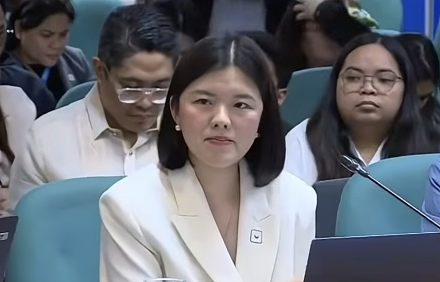
Philippine Health Insurance Corp. President and Chief Executive Officer Dr. Beverly Ho said PhilHealth is looking to reduce the out-of-pocket health expenditures of Filipino families to 37.8% in 2028.
مصنف LYJAH TIFFANY BONZO,GMA News··31K بار پڑھا
PhilHealth eyes reducing out-of-pocket health expenses to 37.8% in 2028
Philippine Health Insurance Corp. President and Chief Executive Officer Dr. Beverly Ho said PhilHealth is looking to reduce the out-of-pocket health expenditures of Filipino families to 37.8% in 2028.
Ho said this during the hearing on the Department of Health and PhilHealth's proposed allocations in 2027. Sen. JV Ejercito, the chairman of the Senate Committee on Finance, had asked about the government’s plan to reduce household (OOP) health expenditures from the current 41.2%.
Ho said lowering the OOP expenses to 37.8% in 2028 would depend on the government’s capacity to allocate a sufficient budget, which they estimate at around P800 billion.
“It really depends on the budget that’s allowed, or that’s allocated to us. In our current estimates in 2028, the PhilHealth budget needed under the PDP budget to reach this is actually P800 billion,” Ho said.
“It’s really dependent on our ability to fund, to increase the budget and so consummate din po don ‘yung pagbaba ng OOP po,” she emphasized.
(It’s really dependent on our ability to increase funding, which would then correspond to a reduction in out-of-pocket expenses.)
Ejercito asked PhilHealth to present concrete proposals on how they plan to increase their coverage of hospital bills—especially for direct contributors in the middle class, who have expressed feeling shortchanged.
Ho presented three measures, which include standardizing professional fees, providing advance payments, and collaborating with Health Maintenance Organizations (HMOs).
“So our goal is to be able to negotiate more directly with hospitals, and that would mean the hospitals needing to work with their physicians,” Ho said.
(Our goal is to be able to negotiate more directly with hospitals, which means hospitals will need to work closely with their physicians.)
“In parallel, we are working with the medical societies to look at how much we may be able to work with them to sort of standardize some of the professional fees, at least for the most common rates. So that would be the first one,” she added.
(In parallel, we are working with medical societies to see how we can standardize professional fees, at least for the most common procedures. So that would be the first initiative.)
Ho added that PhilHealth is also considering a global budget system for both public and private hospitals that comply with or exceed the required allocation of No Balance Billing beds.
“Second, for hospitals that agree to increase their no balance billing beds. Ngayon naman po required nang ‘yung government hospitals ng 90% and ‘yung private ng 10%. Those who will abide by those numbers or even increase more, we’re contemplating doing a global budget for them or advance payments,” Ho said.
(Second, for hospitals that agree to increase their No Balance Billing beds—currently government hospitals are required to allocate 90% and private hospitals 10%—we are contemplating providing a global budget or advance payments for those that comply or expand further.)
She explained that the Universal Health Care (UHC) Law specifically mandates the use of Diagnosis-Related Groups, noting that even with increased case rates, patients with comorbidities or older age groups would have higher case rates.
Ho said they have started collecting data for this framework, which will serve as modifiers to increase case rates for specific patient profiles.
For its third proposal, PhilHealth is working with HMOs for benefit complementation.
“Then lastly, we also have a workstream currently to work with HMOs, and that's partly for benefit complementation as well as future plans for a PhilHealth plus or ‘yung supplementary insurance which is also under the UHC Act,” Ho said.
During the hearing, Ho admitted that the agency’s hospital bill coverage remains insufficient to fully cover patient expenses.
During the Department of Health’s (DOH) budget deliberations before the Senate Committee on Finance, Senator Bong Go asked Ho and DOH Secretary Edwin Mercado if they believe that PhilHealth coverage is too small.
“Na-avail ninyo na ho ba ‘yung, before po kayo na-appoint, na-avail ninyo na po yung Philhealth services? Maliit ho ba? Naniniwala po ba kayo na maliit?” Go asked.
(Have you used PhilHealth services before you were appointed? Is the coverage small? Do you agree that it’s small?)
Ho answered in the affirmative, adding that while coverage has increased, it is still not enough to cover the total bill.
“Chair, yes po, majority. I mean tumaas na po pero hindi pa rin po niya fully naco-cover 'yung kailangan,” Ho said.
([Mr.] Chair, yes, for the majority of cases. I mean, coverage has increased, but it still does not fully cover what is needed.)
When the question was directed to Mercado, he answered that coverage was sufficient when he used it, noting that he availed of the benefits after rates had already been increased.
Nung pagkakataon na ako ay na-confine ay substantial naman kasi pumatak po don sa bagong,” Mercado said.
(When I was confined, the coverage was substantial because it fell under the new rates.) –NB GMA News