World Samosa Day 2026: Did You Know Samosa Wasn’t Originally From India?
World Samosa Day Facts: Few snacks are as instantly recognisable in India as the humble samosa. From roadside tea stalls and railway stations to office canteens, restaurants and festive gatherings, the crisp, triangular
مصنف Nibandh Vinod··5K بار پڑھا
World Samosa Day 2026: Did You Know Samosa Wasn’t Originally From India?
World Samosa Day Facts: Few snacks are as instantly recognisable in India as the humble samosa. From roadside tea stalls and railway stations to office canteens, restaurants and festive gatherings, the crisp, triangular snack has become part of everyday Indian food culture.
But there is a surprising twist to its story: the samosa was not originally an Indian creation. Its early history is linked to West and Central Asia, where similar stuffed pastries were known by names such as sanbosag and sanbusak.
Over centuries, the snack travelled through trade routes and cultural exchanges before becoming firmly established in the Indian subcontinent. Today, India has given the samosa countless regional interpretations, with the spicy potato-and-pea version becoming particularly iconic.
As World Samosa Day is celebrated today, on September 5, here are 10 fascinating facts about its journey.
The samosa did not originate in India
This may be the biggest surprise for anyone who considers samosa an unmistakably Indian snack.
Food historians generally trace the samosa’s early relatives to West and Central Asia, rather than the Indian subcontinent. Similar stuffed pastries existed centuries before the samosa became popular in India.
The snack travelled across regions through merchants, travellers and cooks, eventually making its way into South Asian cuisine.
So while today’s samosa is deeply associated with India, its culinary ancestry is considerably more international.
It had several names before becoming “samosa”
The snack has travelled under several names.
Historical references include sanbosag, sanbusak, sanbusaq and sanbusaj, among other variations. These names are linked to the Persian sanbosag, generally associated with a triangular pastry.
The different names themselves offer a glimpse into how the food travelled between languages and cultures.
Early samosas were very different from today’s aloo samosa
If you imagine the familiar Indian samosa filled with spicy potato and peas, the earliest versions would look rather different.
Historical accounts describe samosa-like pastries filled with minced meat, onions, nuts and spices. The fillings varied depending on the region and period.
The potato-heavy version that many Indians know today developed much later.
Amir Khusrau mentioned samosa-like food
One of the fascinating historical references comes from Amir Khusrau, the celebrated poet and scholar associated with the Delhi Sultanate.
Around 1300 CE, Khusrau wrote about a samosa-like preparation enjoyed by princes and nobles. The description included meat, ghee, onions and other ingredients.
This provides an important clue that the dish had already entered elite food culture in the Indian subcontinent centuries ago.
Ibn Battuta also wrote about it
The famous Moroccan traveller Ibn Battuta encountered a samosa-like dish at the court of Delhi Sultan Muhammad bin Tughluq in the 14th century.
His account describes a pastry called sambusak, filled with minced meat, almonds, pistachios, walnuts, onions and spices, and served during a royal meal.
This is a fascinating contrast with today’s inexpensive street-side samosa.
What is now an everyday snack once appeared on royal menus.
The potato came much later
Here’s another historical twist: the potato is not native to India either.
Potatoes originated in South America and reached other parts of the world after the Columbian exchange.
That means the classic aloo samosa could not have been the original samosa.
Once potatoes became established in India, however, they proved to be an ideal filling. Their affordability, texture and ability to absorb spices helped turn them into one of the defining ingredients of the Indian samosa.
India reinvented the samosa
The most interesting part of the samosa’s history is perhaps not where it started, but how India transformed it.
Indian cooks adapted the pastry to local ingredients and preferences. Potatoes, peas, chillies, coriander, cumin, ginger and other spices gradually became associated with popular versions of the snack.
This adaptation helped turn a travelling stuffed pastry into something that feels completely at home in Indian cuisine.
Not every samosa is triangular
The triangular shape may be the version most Indians immediately recognise, but samosas and related pastries can appear in different shapes and sizes depending on the region.
Some versions are cone-shaped, crescent-shaped or shaped differently according to local culinary traditions.
This variety is another reminder that the samosa has never been a single fixed recipe.
India has many regional versions
The basic idea of a crisp pastry surrounding a savoury filling has produced numerous regional interpretations.
In Bengal, for example, the related shingara has its own identity and fillings. Hyderabad is known for lukhmi, while Goa has chamuça, reflecting the region’s Portuguese and Indian Ocean culinary influences.
The ingredients, shape and seasoning can vary dramatically, even though the underlying idea remains recognisable.
The samosa has become a global snack
The samosa’s journey did not end in India.
Today, versions of the snack can be found across South Asia, the Middle East, Africa and Western countries, often under different names and with locally adapted fillings.
Indian restaurants and diaspora communities have helped make the samosa particularly recognisable internationally.
From a portable pastry eaten by travellers to an Indian tea-time favourite and global snack, its journey spans centuries and continents.
So, is the samosa Indian or not?
Historically, its earliest roots are not considered exclusively Indian.
The samosa belongs to a wider family of stuffed pastries associated with West and Central Asia. It travelled to the Indian subcontinent centuries ago and was gradually adapted to local ingredients and tastes.
But saying that the samosa is “not Indian” misses the bigger story.
India adopted, adapted and reinvented the snack so thoroughly that the aloo samosa is now an integral part of Indian food culture.
In other words, the samosa may have travelled to India, but India gave it a new culinary identity.
Why do Indians love samosas so much?
Part of the samosa’s appeal is its versatility.
It is inexpensive, portable and filling. It works as a quick snack with tea, an appetiser at a gathering or a street-food treat.
The crisp outer layer contrasts with a soft, spicy filling, while chutneys add sweet, sour, spicy and fresh flavours.
And unlike many elaborate dishes, the samosa can be adapted easily to local preferences.
Vegetarian, meat-filled, spicy, mildly seasoned, sweet or experimental versions can all exist under the broad samosa umbrella.
What is traditionally served with a samosa?
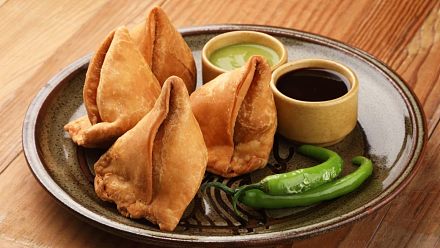
The classic Indian combination is usually samosa with chutney.
Depending on the region and personal preference, it may be served with:
Green coriander-mint chutney
Tamarind chutney
Sweet-and-spicy chutney
Yogurt
Chole or chickpeas
Chopped onions
Fresh coriander
And, of course, many Indians would argue that a hot samosa is incomplete without a cup of chai.
When is World Samosa Day 2026?
World Samosa Day is celebrated on September 5. The annual observance celebrates the popular snack and encourages people to enjoy and learn about its history and variations.
The date also creates an interesting coincidence for Indian readers because September 5 is widely associated with Teachers’ Day in India.
The fascinating journey of a humble snack
The samosa’s history is ultimately a story of food travelling across borders.
What began as a stuffed pastry associated with West and Central Asian culinary traditions travelled through trade, migration and cultural exchange. Once it reached the Indian subcontinent, local cooks adapted it using ingredients and flavours that suited Indian tastes.
The result is the snack millions of people now associate with India.
So the next time you bite into a hot aloo samosa with green chutney, remember: you’re eating a snack with a history that stretches far beyond India’s borders.