The Camera Eats First: Restaurants Are Cooking For Two Audiences At Once, But Is Instagram Ruining Good Food?
I hate photographing my food. My parents told me it wasn’t polite to make people wait to eat, and that good food is an experience reserved for your palate. I have hated it consistently and without exception for years (ev
مصنف Mallika Bhagat··14K بار پڑھا
The Camera Eats First: Restaurants Are Cooking For Two Audiences At Once, But Is Instagram Ruining Good Food?
I hate photographing my food. My parents told me it wasn’t polite to make people wait to eat, and that good food is an experience reserved for your palate. I have hated it consistently and without exception for years (even though my job demands otherwise), long before it became fashionable to say so out loud. I do not enjoy the fifteen seconds of negotiating a plate under a pendant light, tilting my phone at an angle that makes the dal look “more Instagrammable”.
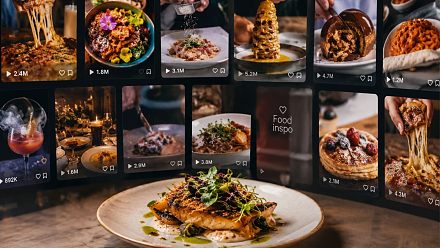
And yet, my quirk soon became the restaurant’s assumption. With every dish arrives the question: would you like to take a photo first? Nobody asked me this a decade ago. Waiters simply put the plate down and walked off to attend to someone else’s crisis. Now everyone understands that eating is the second event of the evening, not the first.
I wanted to know if I’d imagined this, or if the people actually cooking the food felt it too. So I asked experts, and everyone, without exception, thinks Instagram has changed the order in which things happen, and a surprising number of them are still arguing about whether that’s a problem or just a fact of life now.
The Cheese Pull Problem
Chef Harsh Parikh runs the kitchen at Olive Bar & Kitchen in Mumbai, and he did not hedge when I asked him this. “Somewhere along the way, the pressure to go viral has made the way a dish looks almost as important as how it tastes,” he told me. “But a plate shouldn’t be designed for the camera at the expense of the food itself.” He has a whole taxonomy of what he calls camera-first cooking. “Drowning burgers or pasta in molten cheese might make for a great frame, but it can throw off the balance of flavours and turn good food into a textural mess. A dramatic cloud of smoke under a glass dome makes for an impressive tableside moment, but when overdone, it can overpower delicate dishes and leave behind unwanted bitterness,” he explains.
What struck me really was how physical his objections are. This isn’t an aesthetic complaint; he’s describing how random experiments can actually influence flavours. Crisp textures turn soggy while the dish sits for its close-up. Sauces thicken. “By the time the camera is done,” he said, “the food isn’t at its best anymore.” His summary of the whole business is the sort of line that makes for a good column: “Instagram food peaks five seconds before the first bite. Real food catches your eye, but wins you over when you taste it.”
Chef Sandeep Singh, who heads the kitchen at Mumbai’s BlueBop Cafe & Bar, has roughly the same idea. “A photograph may bring someone to a restaurant for the first time,” he said, “but only good food will bring them back.” He flags the same offenders: flowers, smoke, garnish for garnish’s sake, and then says how “everything on a plate should contribute to either the flavour or the eating experience.”
The two chefs are almost forensic in describing what happens to the food when it’s being arranged for a photo. Parikh calls the height-obsessed plating trend “imbalance,” and describes diners “dismantling the plate just to bring its components together”, which, if you’ve ever eaten one of those towering degustation plates where nothing is meant to be eaten in the order it’s stacked, you will recognise immediately. “It comes down to intent,” Parikh says. “Are you feeding a diner or a phone? If an element doesn’t make the dish taste better, it gets scrapped.”
But Is Instagram Really The Problem?
Not everyone we spoke to treats the camera like an occupying force in the kitchen, though. Chef Balwant at Cosy Box in Delhi was honest about designing dishes with a phone screen in mind, and refuses to be embarrassed about it. “Instagram definitely influences how we think about presentation today,” he said. “But I wouldn’t say we plate for Instagram. We plate for the guest, and if it also happens to look beautiful on a phone, that’s a bonus.”
He went further than either Mumbai kitchen was willing to. “I absolutely believe presentation can improve the dining experience,” he tells us. “We eat with our eyes first, and a beautifully presented dish creates anticipation.” And he admitted, more openly than most chefs bother to, that a dish sometimes gets built backwards from how it’ll photograph. “Sometimes we’ll play with colour, contrast, texture or the way a dish is finished because we know those details create a stronger visual moment.” What saves this from sounding cynical is where he takes it next: “The goal is to create that moment where a guest sees the dish, wants to take a picture, and then puts the phone down because the food is actually worth talking about.”
Joy Singh, who founded Cafe Loco, Raasta and Yeti, made a version of this argument from the business side of things, and honestly, it’s hard to argue with the economics of it. “Today, people often discover a restaurant through a 10-second reel before they ever walk through its doors,” he said. He isn’t mourning this. “Social media can actually push chefs and restaurants to be more creative. It encourages experimentation with plating, colour, formats and storytelling.” His worry is narrower and, in all likelihood, correct. “The danger is when virality becomes the objective rather than a by-product of good food. You can engineer a dish to get likes, but you cannot engineer a repeat customer if the food doesn’t deliver.”
“Our experiences aren’t created or curated for Instagram,” Vernika tells us about Ikk Panjab’s Provenance Dinners. “It’s simply a platform to showcase what we do.”
Experience Is Bigger Than The Feed
A very interesting answer to how Instagram is influencing food came from someone who’s built a dining format around ignoring Instagram almost completely. Vernika Awal is a food writer and brand lead behind Ikk Panjab, and the label’s Provenance Dinners are exactly the kind of experience that should, in theory, live or die by social media. There’s food tied to specific regions, specific harvests, specific family histories, paired with live music and long-form storytelling around the table. It’s an experience that takes hours and asks for your attention rather than your scroll. But they are, for all intents and purposes, resisting being reduced to a fifteen-second clip.
“Our experiences aren’t created or curated for Instagram,” she tells us. “It’s simply a platform to showcase what we do.” But can this platform, built for the quick hit, risks flattening something this layered? Can a dinner that’s trying to hold three or four generations of culinary memory at once be affected by the ‘algo’? Awal doesn’t think Instagram has no place in the experience.”The depth of an experience can’t be captured in one post, and it was never meant to be. Instagram is a window, a peek into the experience. The pretty picture is just a conversation starter to the far more complex culinary culture we’re trying to represent,” explains Awal.
Even the plating, she said, answers to the communal table before it answers to the camera. “The focus is always on flavour, context, and storytelling, never on Instagram,” she said of how menus get curated. “How a dish would be shared and eaten at a communal table, not just how it photographs.” And on the bigger question of whether social media cheapens heritage cooking, she is almost dismissive, in a good way: “Instagram isn’t something that even comes into play when we talk about memory and heritage, these are larger conversations, and social media is, at best, a by-product, never the main thing.”
Not every restaurant is having this debate. Some of India’s best culinary experiences and restaurants are not relying on Insta reels, but good, authentic food to survive in the long run. But for some, Instagram is simply another way of getting people through the door.
“Good plating or presentation makes me think about the talent of the chef and the kitchen team, but that is secondary. Taste always comes first,” says Vishakha Talreja
What The Feed Actually Rewards
If anyone gets to play villain in this story, it should logically be the influencer. Vishakha Talreja, a Delhi-based writer and influencer refuses the blame, and makes a better case for herself. “As somebody who consumes a lot of content online, visual appeal does make me stop, like and share content,” she admitted straight off. “However, as a restaurant reviewer and influencer, taste is paramount.” For her, a good-looking dish is really just evidence, proof that a kitchen knows what it’s doing, rather than a reason to book a table herself. “Good plating or presentation makes me think about the talent of the chef and the kitchen team, but that is secondary. Taste always comes first. The second consideration is the story—is the dish unique?”
Her best line (the one I keep thinking about) was on who the algorithm actually rewards, and why it has nothing to do with skill. “The humble chole bhature might be visually appealing to a mass audience when they see fluffy bhaturas being served to Rahul Gandhi at CP’s iconic Kwality Restaurant,” she said. “On the other hand, a walnut-looking jhal muri at RAGA, Gaggan Anand’s new restaurant in Delhi, might appeal to a luxury, premium audience but could be completely missable for many people scrolling through Instagram.” Two dishes, two totally different audiences, both getting the exact same feature engagement metrics probably wouldn’t tell you anything useful.
She was also the only person who’d actually name the clichés out loud. “One of the biggest Instagram clichés, in my opinion, is calling a dish ‘fresh’ when the ingredients are neither seasonal nor Indian and have actually been imported,” she said—and then went after the matcha-and-ube crowd, dishes chased “simply because of their fascinating colours and how they photograph,” where, in her words, “the visual appeal can sometimes end up overshadowing the actual food and its context.” On the murkier subject of paid promotion, she didn’t dodge either: “That balance is possible only when you retain your editorial independence and are transparent about commercial relationships. For me, credibility ultimately matters more than a visually spectacular post.”
What nearly everyone I spoke to agrees on, whether they’ve made peace with the camera or not, is that it’s allowed to go first as long as it doesn’t get to stay.
Is Instagram Ruining Good Food?
Honestly, not always. But it has absolutely changed the order of operations at the table, and that waiter asking me if I’d like to take a photo first is proof of it—a tiny, completely unasked-for ritual that didn’t exist ten years ago and now exists everywhere. What nearly everyone I spoke to agrees on, whether they’ve made peace with the camera or not, is that it’s allowed to go first as long as it doesn’t get to stay. Even if you take the first bite with your camera lens than your mouth, the food still has to do its job.