Teachers Spend Hours Standing In Classrooms: How To Protect Their Knees & Back?
Teaching is a noble profession. For many people, it is rewarding to teach young children, enlighten their minds and expose them to so much of what life can offer. But it is also a highly demanding and physically laboriou
مصنف Abigail Banerji··22K بار پڑھا
Teachers Spend Hours Standing In Classrooms: How To Protect Their Knees & Back?
Teaching is a noble profession. For many people, it is rewarding to teach young children, enlighten their minds and expose them to so much of what life can offer. But it is also a highly demanding and physically laborious career. Educators spend the majority of their workdays toggling between long stretches of standing at the whiteboard and sitting at desks to grade assignments. Over time, this constant strain takes a hidden toll on the musculoskeletal system.
We speak to Dr Krunal Thakkar, Consultant Orthopaedic, Trauma, Arthroplasty Surgeon, Sterling Hospital, Gandhidham, who shares how this profession can impact teachers and what steps they should take for their long-term health.
Physical Impact of Prolonged Standing and Sitting
The human body is built for movement, not for remaining static. When teachers spend hours standing or sitting continuously, it compromises several key areas:
The Heels: Continuous standing puts immense pressure on the calcaneus (heel bone) and the plantar fascia (the thick band of tissue running across the bottom of the foot). This can cause micro-tears and inflammation, a condition known as plantar fasciitis, leading to sharp heel pain.
The Knees: Static standing forces the knee joint to bear weight constantly without relief, wearing down the shock-absorbing cartilage. Conversely, prolonged sitting keeps the knees bent at restrictive angles, reducing blood circulation and causing the joint capsule to tighten and ache when standing up.
The Back and Spine: Standing for hours can cause muscle fatigue in the lower back, leading to a dull ache and sitting for too long compresses the intervertebral discs (the cushions between your spinal bones). This static pressure reduces fluid exchange in the spine, leaving it stiff, less flexible, and prone to chronic lower back pain.
Common Classroom Habits That Trigger Pain
For many teachers, they might unknowingly be making matters worse with these everyday habits in the classroom that subtly trigger or worsen musculoskeletal pain:
Locking the Knees: Standing with completely rigid, locked knees shifts the burden of body weight from the muscles directly onto the joint ligaments and cartilage.
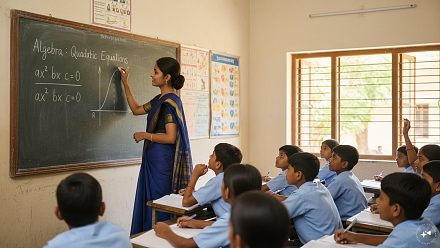
The “Board Twist”: Frequently twisting the neck and upper spine to look back at students while writing on a whiteboard creates uneven muscle strain and spinal misalignment.
The Screen Slouch: Hunching forward over a laptop to grade papers or looking down severely at a phone shifts the head’s center of gravity. This places excessive structural stress on the cervical spine (neck), leading to a condition often called “text neck” or upper back strain.
Unsupportive Footwear: Wearing flat shoes without arch support (like ballet flats) or high heels forces the body into abnormal alignment. This alters your gait and ripples impact up through the heels, shins, knees, and lower back.
Simple Posture and Movement Changes for the Workday
Small, intentional micro-adjustments throughout the day can significantly protect your joints:
Active Standing: Keep knees slightly soft (never locked). Shift your weight from leg to leg every 15–20 minutes.
Ergonomic Sitting: Sit with feet flat on the floor and knees bent at a 90-degree angle. Avoid crossing your legs
Visual Triggers: Face the whiteboard directly when writing rather than twisting your torso to talk to the class.
Anti-Fatigue Zones: Place a cushioned anti-fatigue mat right where you stand the most, such as next to the whiteboard.
Smart Footwear: Wear shoes with good shock absorption and arch support.Consider custom orthotic insoles.
The 50/5 Rule: Try not to stay in one position for too long. For every 50 minutes of sitting or standing, take a 5-minute movement break to stretch your calves or walk around the room
When Everyday Pain Requires a Specialist
While standard muscle fatigue from a long day can usually be managed with rest and stretching, certain “red flag” symptoms mean it is time to consult an orthopaedic specialist:
Radicular Pain (Sciatica): Sharp, shooting pain, numbness, or a “pins and needles” sensation that travels down from your lower back into your buttocks or legs.
Persistent Morning Pain: Intense, sharp heel pain during your very first steps out of bed that doesn’t ease up after moving around.
Joint Instability or Swelling: Knees or ankles that visibly swell, feel hot to the touch, or feel like they might “give way” or lock up entirely while walking.
Chronic Pain Unresponsive to Rest: Pain that progressively worsens over a span of two to three weeks and does not improve with rest, over-the-counter anti-inflammatories, or better footwear.