J&K FDA Bans 10 Ghee Batches Over Quality Violations: From FSSAI Number To Ingredients, What To Check On The Pack
Ghee goes into your tadka, parathas and mithai almost without a second thought. But before you scoop another spoonful, take a closer look at the pack. A food-safety crackdown in Jammu and Kashmir has flagged 10 ghee batc
مصنف Lifestyle Desk··11K بار پڑھا
J&K FDA Bans 10 Ghee Batches Over Quality Violations: From FSSAI Number To Ingredients, What To Check On The Pack
Ghee goes into your tadka, parathas and mithai almost without a second thought. But before you scoop another spoonful, take a closer look at the pack. A food-safety crackdown in Jammu and Kashmir has flagged 10 ghee batches over quality violations. Could yours be one of them?
The J&K Food and Drugs Administration (FDA) has prohibited the sale, storage, distribution and display of 10 identified ghee batches after laboratory analysis found them non-conforming to prescribed food-safety standards. Tests detected foreign vegetable fat and other quality violations.
The order was issued under the Food Safety and Standards Act, 2006, following analysis by the National Food Laboratory in Ghaziabad and the Food Testing Laboratory in Kashmir. Samples had been collected from areas including Anantnag, Shangus, Larnoo, Bijbehara, Samba, Kathua, Jammu, Tral and Pampore.
Which Batches Have Been Banned?
Analysis detected beta-sitosterol, a marker of foreign vegetable fat, positive Baudouin test results, abnormal fatty-acid profiles and deviations from prescribed physicochemical parameters. Under food safety rules, ghee must be derived exclusively from milk or milk products; any added non-milk fat is not permitted.
The prohibited products and their batch numbers are:
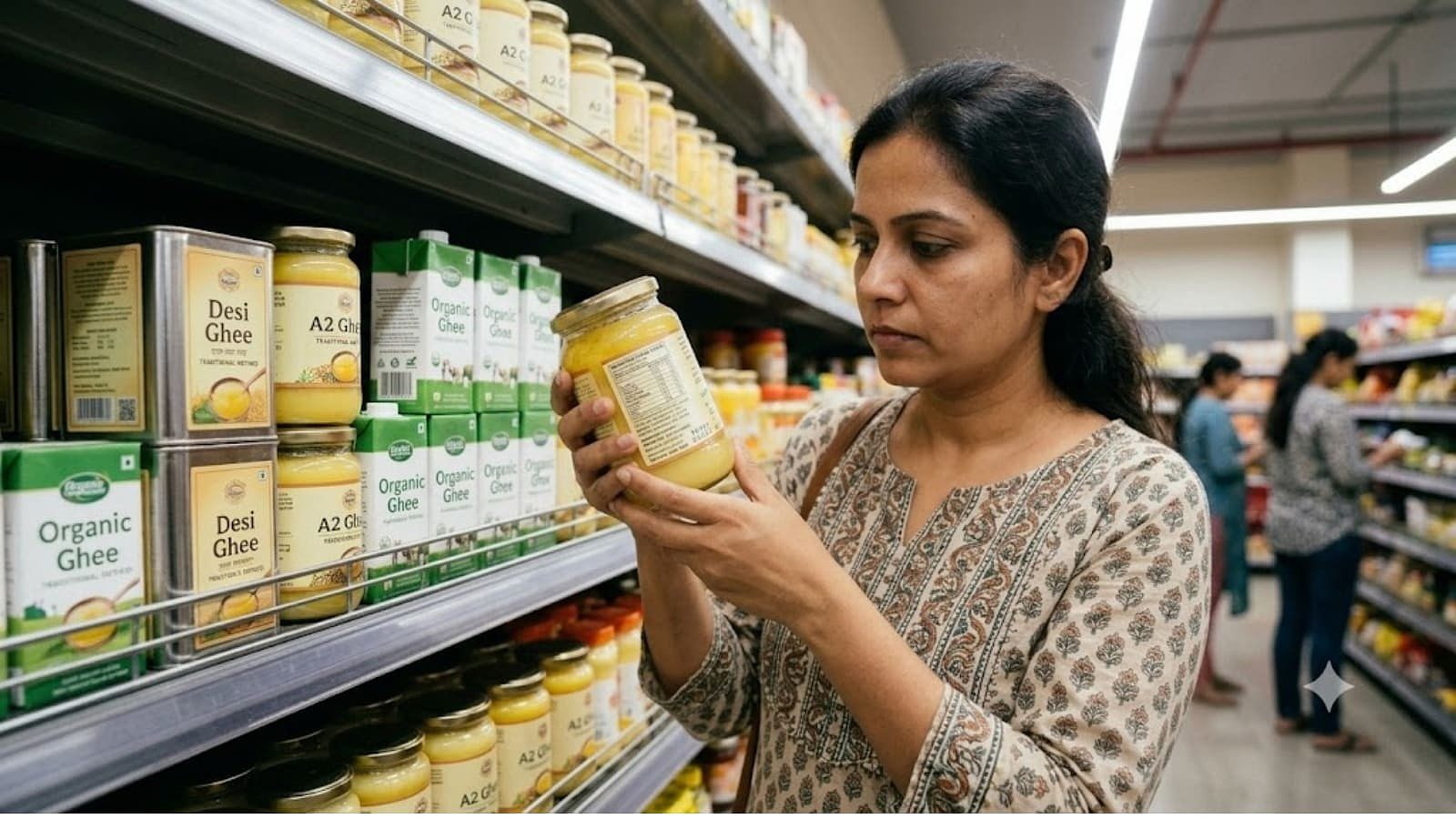
The J&K FDA action is a useful reminder that checking the label can tell you more than simply recognising a familiar brand. Before buying ghee, run through these seven checks:
1. Check The FSSAI Licence Number
Look for the FSSAI licence number on the pack. It is an important indicator of regulatory compliance and helps identify the food business responsible for the product. However, an FSSAI number alone does not guarantee that every batch is free from quality violations.
2. Read The Ingredient List
Ghee should be derived from milk or milk products. Check the ingredient declaration and be cautious if a product sold as ghee mentions vegetable oil, vegetable fat or other non-milk fat.
3. Match The Batch Number
This is particularly important following a recall or prohibition. Check the batch or lot number printed on your pack and compare it with official food-safety notices. The J&K FDA has specifically asked consumers to verify batch details.
4. Check The Manufacturing Or Packing Date
Look at the date of manufacture or packing before purchasing. This can help you identify whether your product corresponds to a particular batch mentioned in a food-safety alert.
5. Look At The Best-Before Or Expiry Date
Do not buy ghee simply because the packaging looks new. Check the best-before or expiry information and avoid products that have crossed the stated date.
6. Check The Manufacturer And Product Details
The pack should clearly mention the manufacturer or marketer’s name and address, net quantity and other mandatory labelling details. Unclear or incomplete information is a reason to be cautious.
7. Inspect The Pack Before Opening It
Finally, look at the physical condition of the container. Avoid ghee with broken seals, damaged packaging, leakage, unusual bulging or signs of tampering. If the label or batch information is difficult to read, consider choosing another pack.