Hosting A Durga Pujo Dinner At Home? These Bengali Dishes Belong On Your Table
Durga Pujo plans usually involve pandal hopping, meeting friends after months and, inevitably, discussing where to eat next. But if you’re hosting dinner at home this year, you have a pretty good excuse to bring the feas
مصنف Lifestyle Desk··10K بار پڑھا
Hosting A Durga Pujo Dinner At Home? These Bengali Dishes Belong On Your Table
Durga Pujo plans usually involve pandal hopping, meeting friends after months and, inevitably, discussing where to eat next. But if you’re hosting dinner at home this year, you have a pretty good excuse to bring the feast to you. Think a table full of Bengali favourites, a serving of adda between courses and enough mishti to make everyone consider cancelling their post-dinner plans.
The trick is to plan a menu that balances crisp appetisers, comforting vegetarian dishes, rich mains and something sweet to finish. You don’t need to cook an entire wedding-style spread, either. A handful of well-chosen dishes can bring the festive spirit home. Here’s what deserves a place on your Pujo dinner menu.
Start With Beguni And Bengali-Style Fish Fry
Every good dinner party needs something guests can reach for while the conversation gets going. Beguni, made by dipping slices of brinjal in a gram-flour batter and frying them until crisp, is a great place to start. Serve it hot, preferably straight from the kitchen, because nobody wants a soggy fritter.
Want to make the appetiser spread more substantial? Add Bengali-style fish fry, a crumb-coated fish fillet fried until golden and traditionally served with kasundi, sliced onions and a squeeze of lemon. It brings a familiar Kolkata snack-shop favourite to your dining table. Keep the kasundi handy; it adds the sharp mustard kick that makes each bite better.
Luchi, Cholar Dal And Aloor Dom Are A Must
If there’s one combination that belongs on a Bengali festive table, it’s luchi, cholar dal and aloor dom. Luchi arrives puffed and golden, ready to be torn apart and dipped into whatever is on the plate. Cholar dal, made with Bengal gram, often gets a festive touch from coconut pieces, whole spices and a hint of sweetness. Aloor dom brings spiced potatoes into the mix, with a gravy that begs to be mopped up with the last piece of luchi.
The beauty of this combination is that it works as a vegetarian course on its own, too. Serve it as a generous starter or let it share the table with your non-vegetarian mains. Either way, make extra luchis. They tend to disappear faster than expected.
Bhoger Khichuri And Labra For A Taste Of Pujo
No Bengali Pujo food list feels complete without khichuri. The bhog-style version typically combines rice and roasted moong dal with spices and ghee, creating a comforting dish that carries a strong association with community Puja celebrations. Pair it with labra, a mixed-vegetable preparation, and a crisp beguni for a meal that feels rooted in the festival.
If you want to bring a bhog-inspired course to your dinner, this is a lovely option, especially for vegetarian guests. Just remember that traditional bhog has its own ritual significance, so a home dinner inspired by its flavours is not necessarily the same as food offered during worship.
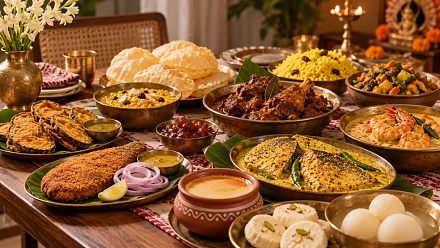
Hosting a Durga Pujo dinner at home? From crispy fish fry and fluffy luchi to kosha mangsho and mishti doi, here’s what to serve for a Bengali festive feast.
Shorshe Ilish Or Bhetki Paturi For The Fish Lovers
A Bengali feast and fish have a long-standing relationship, and this is where you can give your guests a choice. Shorshe ilish pairs hilsa with a pungent mustard-based gravy, often sharpened with green chillies and mustard oil. It’s bold, distinctive and best served with plain steamed rice, which lets the mustard flavour shine.
Prefer something with a different presentation? Try bhetki paturi, in which fish is coated in a spiced mustard mixture, wrapped in a banana leaf and cooked until tender. Unwrapping the parcel at the table adds a little drama to dinner, while the mustard marinade does the heavy lifting on flavour.
Both dishes have their own appeal, so you don’t need to serve them together. Pick one according to your guests’ preferences and what you can source fresh.
Kosha Mangsho For The Main Event
If your guests eat meat, kosha mangsho makes a strong case for being the centrepiece. This Bengali mutton preparation involves slow-cooking the meat with spices until the gravy turns dark, thick and deeply flavoured. It’s not a dish to rush, which makes it perfect for a dinner you’ve planned ahead.
Serve it with luchi for a traditional pairing or with basanti pulao, the fragrant, mildly sweet yellow rice preparation often associated with Bengali celebrations. The pulao offers a gentle contrast to the richness of the mutton, making the combination particularly satisfying.
Don’t Forget Chingri Malaikari
For those who prefer prawns to mutton, chingri malaikari is another celebratory favourite. Prawns simmer in a coconut-milk-based gravy flavoured with spices, creating a dish that feels rich without relying on the intensity of a mustard sauce.
Serve it with steamed rice and keep the accompanying sides simple. If you’re already preparing kosha mangsho, you may not need another elaborate main. But for a seafood-focused menu, chingri malaikari can easily take the spotlight.
Tomato-Khejur Chutney And Papad To Round Off The Meal
A Bengali meal often makes room for chutney towards the end, and tomato-khejur chutney is an excellent choice for a festive dinner. Made with tomatoes and dates, it balances sweetness with a gentle tang. Raisins and other additions may vary by recipe, but the result is usually a glossy chutney that pairs beautifully with crisp papad.
Mishti Doi, Sandesh And Rosogolla To Finish
You can plan every course perfectly, but dessert is where a Bengali dinner really gets to show off. Mishti doi, the sweetened fermented yoghurt traditionally served in an earthen pot, is a classic choice.
Add sandesh, made from chhena, for a dessert that can be delicate and lightly sweet, or bring out rosogolla for its soft, syrup-filled centre. You could also serve payesh, a Bengali rice pudding cooked with milk, sugar and aromatic ingredients.
Set the table before guests arrive, prepare what you can in advance and leave room for the best part of any Bengali gathering: second helpings, lively adda and a little debate over which mishti deserves the final bite.