Durga Puja Saptami 2026: Date, Time, Nabapatrika Puja And Significance, What Happens On Maha Saptami?
Durga Puja Saptami 2026 Date, Time, Nabapatrika Puja And Significance: Durga Puja Saptami 2026 will be celebrated on October 17 or October 18, depending on the regional panjika and the calendar convention followed. Also
مصنف Nibandh Vinod··16K بار پڑھا
Durga Puja Saptami 2026: Date, Time, Nabapatrika Puja And Significance, What Happens On Maha Saptami?
Durga Puja Saptami 2026 Date, Time, Nabapatrika Puja And Significance: Durga Puja Saptami 2026 will be celebrated on October 17 or October 18, depending on the regional panjika and the calendar convention followed. Also known as Maha Saptami, the day marks the beginning of the principal days of Durga Puja and is associated with Nabapatrika Puja, the ceremonial bathing of the Kola Bou and special worship of Goddess Durga.
According to Drik Panchang, Nabapatrika Puja falls on Saturday, October 17, 2026, with Saptami Tithi beginning at 5:54 AM and ending at 8:27 AM on October 18.
However, several Bengali panjikas, including the tradition followed by Belur Math, observe Maha Saptami on Sunday, October 18, based on their calendar calculations and sunrise-based observance rules.
Read More: Durga Puja 2026 Calendar: Dates, Schedule, Sandhi Puja Time And Significance
Durga Puja Saptami 2026: Date and Timings
According to Drik Panchang’s 2026 Navapatrika Puja calendar for New Delhi, the key timings are:
Nabapatrika Puja and Maha Saptami: Saturday, October 17, 2026
Dawn: 5:59 AM
Sunrise: 6:23 AM
Saptami Tithi begins: 5:54 AM on October 17
Saptami Tithi ends: 8:27 AM on October 18
These timings are based on the New Delhi calendar and are not universal. Sunrise, dawn and other location-dependent timings vary by city. The observance date may also differ according to the regional panjika and the rule used to determine the festival day.
In Bengal, the Bisuddha Siddhanta Panjika tradition followed by Belur Math places Maha Saptami on Sunday, October 18, in 2026. This is why devotees may encounter October 17 and October 18 as the date of Saptami in different calendars.
What Is Nabapatrika Puja or Kola Bou Puja?
Nabapatrika Puja is one of the defining rituals of Maha Saptami during Bengali Durga Puja. The word Nabapatrika refers to a collection of nine plants that are ritually bound together and worshipped as a sacred representation of divine feminine energy and nature.
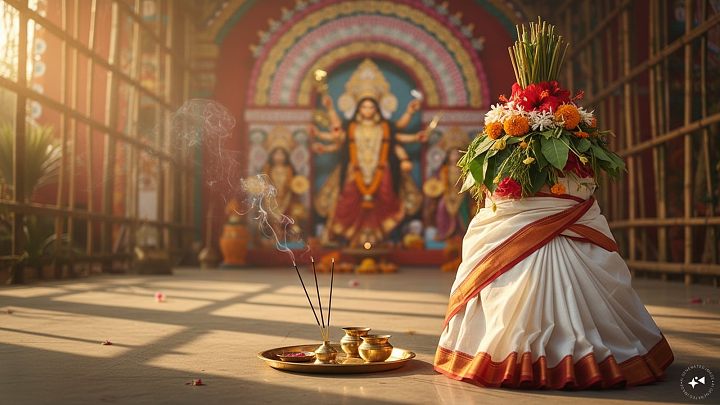
In Bengal, Nabapatrika is popularly known as Kola Bou, or the banana bride. The banana plant forms the most visible part of the arrangement. The sacred bundle is traditionally bathed in the early morning, dressed in a red- or orange-bordered cloth and installed beside the idol of Goddess Durga.
Although Kola Bou is sometimes popularly associated with Lord Ganesha’s wife, the traditional ritual represents the divine presence through the nine plants. It should not be understood simply as a decorative figure or an ordinary banana tree.
Nine Plants Used in Nabapatrika Puja
The nine plants are associated with different deities or forms of the divine in the traditional ritual.
Banana or plantain (Kola): Associated with Goddess Brahmani.
Colocasia (Kachu): Associated with Goddess Kalika.
Turmeric (Haridra): Associated with Goddess Durga.
Jayanti: Associated with Kartikeya in the commonly cited traditional list.
Bilva or bel: Associated with Lord Shiva.
Pomegranate (Dadima): Associated with Goddess Raktadantika.
Ashoka: Associated with the form Sokarahita.
Manaka, a type of arum: Associated with Goddess Chamunda.
Paddy or rice stalks (Dhan): Associated with Goddess Lakshmi.
Nabapatrika Puja Rituals on Maha Saptami
Kolabou Snan
The day traditionally begins with the ceremonial bathing of Nabapatrika, usually at dawn. The sacred plant bundle is taken to a river or another suitable water body and bathed according to the prescribed ritual.
After the bath, it is dressed in a red- or orange-bordered sari and brought to the puja mandap. The ritual symbolises purification and the ceremonial invocation of the divine presence in the plant arrangement.
Mahasnan
Mahasnan is an important part of the worship of Goddess Durga on Saptami. In this ritual, a mirror is positioned so that the reflection of the Goddess can be seen in it. The reflection is then ceremonially bathed using the prescribed ritual materials.
The observance symbolises purification and prepares for the subsequent worship of the deity.
Prana Pratishtha
Prana Pratishtha is the ritual through which the divine presence is formally invoked in the image of the Goddess. It marks an important stage in the consecration of the idol and its preparation for worship.
Shodashopachar Puja
Following the consecration, the Goddess is worshipped through Shodashopachar Puja, a traditional form of worship involving sixteen offerings or services. These may include flowers, incense, lamps, water, food offerings and other prescribed items.
Bhog and Aarti
The day’s worship continues with offerings of bhog and the performance of aarti. Devotees gather to offer prayers and seek the blessings of Goddess Durga for peace, prosperity, well-being and protection.
The precise sequence and timing of rituals may differ between households, temples and community puja committees.
What Is the Significance of Maha Saptami?
Maha Saptami marks a major transition in the Durga Puja celebrations. Following the preliminary observances associated with Maha Shashthi, devotees enter the principal period of worship dedicated to Goddess Durga.
The day is especially significant because of the Nabapatrika ritual, which places nature at the centre of the worship. The nine plants collectively symbolise the life-sustaining resources of the natural world and the divine feminine energy associated with fertility, growth, nourishment and abundance.
The ceremonial bathing and installation of Nabapatrika are also understood as acts of purification and invocation. Through these rituals, devotees welcome the sacred presence into the puja mandap and begin the central worship of the festival.
Maha Saptami is therefore important not only for its religious observances but also for its cultural connection to Bengal’s agricultural traditions, reverence for nature and community celebrations.
Why Is Maha Saptami Celebrated on Different Dates in 2026?
The difference between October 17 and October 18 arises from the way Hindu calendars determine ritual observances. A lunar tithi does not necessarily begin or end at sunrise, and a single tithi can extend across portions of two civil calendar days.
Drik Panchang lists Nabapatrika Puja on October 17, while the Bengali panjika tradition followed by Belur Math places Maha Saptami on October 18.
Devotees should follow the calendar used by their local temple or puja committee for the final timing of Nabapatrika Snan and other Saptami rituals.