Chandra Darshan September 2026: Date, Significance, Rituals And Moon Sighting
Chandra Darshan September 2026: Chandra Darshan, the first sighting of the crescent Moon after Amavasya, holds special significance in Hindu tradition. In September 2026, Chandra Darshan will be observed on Saturday, Sep
مصنف Nibandh Vinod··30K بار پڑھا
Chandra Darshan September 2026: Date, Significance, Rituals And Moon Sighting
Chandra Darshan September 2026: Chandra Darshan, the first sighting of the crescent Moon after Amavasya, holds special significance in Hindu tradition. In September 2026, Chandra Darshan will be observed on Saturday, September 12.
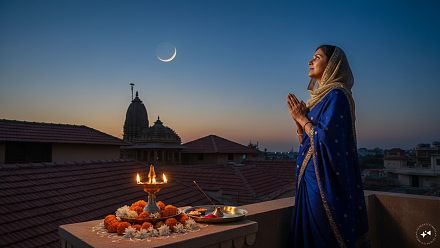
The occasion marks the beginning of a new lunar cycle and is considered an auspicious time for prayer, spiritual reflection and new beginnings. Devotees traditionally wait for the first visible crescent Moon after the dark night of Amavasya and offer prayers after sighting it.
Chandra Darshan September 2026 Date
Chandra Darshan falls on Saturday, September 12, 2026, following Amavasya. The exact Moon-sighting time can vary depending on the location.
What Is Chandra Darshan?
Chandra Darshan refers to the sighting of the Moon after Amavasya, or the New Moon. It is associated with the first visible crescent of the Moon that appears in the western sky after sunset.
The thin crescent Moon marks the beginning of the waxing phase of the lunar cycle. Since the young Moon is close to the horizon and remains visible for only a short period, devotees traditionally look for it soon after sunset.
Chandra Darshan Significance
Chandra Darshan is considered spiritually significant in Hindu tradition. The appearance of the first crescent after Amavasya is viewed as a symbol of renewal, hope and a fresh beginning.
The Moon is traditionally associated with the mind and emotions in Hindu beliefs. Sighting the crescent Moon is therefore believed to promote mental clarity, peace of mind and positive energy.
Devotees also believe that observing Chandra Darshan with devotion can bring good fortune and create an auspicious beginning for the new lunar cycle.
These beliefs are part of religious and cultural traditions and should not be considered scientifically established effects.
Chandra Darshan Rituals and Observances
Devotees may follow different rituals depending on their family traditions and regional customs. Some common practices associated with Chandra Darshan include:
Taking a bath and beginning the day with prayers.
Observing a day-long fast or following specific dietary restrictions.
Offering prayers to Chandra Dev after sighting the crescent Moon.
Offering water or arghya to the Moon, where customary.
Breaking the fast after catching the first glimpse of the Moon.
Donating food, clothes, money or other essentials as an act of charity.
Fasting is not mandatory for everyone, and practices can differ between communities. Devotees should follow their family tradition or seek guidance from their customary priest or Panchang.
Chandra Darshan Moon-Sighting Time
The Moon-sighting window for Chandra Darshan is location-specific. A timing that applies to one city may not necessarily apply to another because sunset, Moonset and the Moon’s position above the horizon vary by location.
According to Drik Panchang, the Moon-sighting window is between 6:29 PM to 7:31 PM. However, this should not be treated as a universal timing for September 12. Devotees should verify the exact timing for their city through a reliable Panchang, such as Drik Panchang.
How Is Chandra Darshan Observed?
Devotees generally wait until after sunset to look for the thin crescent Moon. Once the Moon becomes visible, they offer prayers and may perform a traditional Moon-worship ritual.
Those observing a fast may conclude it after the Moon is sighted and prayers are completed. Some devotees also choose to make charitable donations as part of the observance.
The exact procedure can vary according to regional customs and individual family traditions.
Spiritual Meaning of the Crescent Moon
The first crescent Moon after Amavasya carries a symbolic meaning of renewal. After the darkness of the New Moon night, the appearance of the crescent represents the gradual return of light.
For devotees, Chandra Darshan can therefore be a time to leave behind negativity, seek inner peace and begin the new lunar cycle with positive intentions.
Why Is Chandra Darshan Considered Auspicious?
The first sighting of the Moon after Amavasya is considered auspicious because it represents the beginning of a new lunar phase. Devotees use the occasion to pray for peace, prosperity, good health, clarity and positive energy.
The observance also encourages spiritual discipline through fasting, prayer, charity and reflection.