Opinion | Real Deal: Kareena Kapoor To Kiara Advani, Bollywood Heroine Gets To Have A Life
There was a time when a Bollywood heroine’s wedding came with an unspoken professional question: So, how long before she stops working?
مصنف Tavishi Paitandy··108K بار پڑھا
Opinion | Real Deal: Kareena Kapoor To Kiara Advani, Bollywood Heroine Gets To Have A Life
There was a time when a Bollywood heroine’s wedding came with an unspoken professional question: So, how long before she stops working?
Nobody said it out loud, naturally. Bollywood preferred its sexism dressed up as pragmatism. Producers talked about dates. Trade people talked about ‘market value’. Magazines wondered whether marriage would change her image. And, if a baby arrived, the speculation became sharper – ‘would she come back?’
The men though, rarely had this problem. A male star could marry, have children, disappear for a while, return with a new hairstyle and a suitably expensive action sequence, and nobody would suggest that fatherhood had compromised his ability to be a hero.
For women, however, marriage could be a speed breaker. Motherhood was often the exit ramp.
Which is why Kiara Advani’s second pregnancy is interesting beyond the congratulations and the inevitable Instagram frenzy.
Kiara and Sidharth Malhotra, who married in 2023 and welcomed their first child in 2025, announced their second pregnancy with a photograph of their daughter’s tiny hand holding a pair of little socks. “Our hearts are so full of love and gratitude,” they wrote. The response was warm, noisy and predictable.
What was missing was almost more interesting – nobody seriously wondered whether Kiara could still be a heroine.
A generation ago, that would have been the first question.
When marriage had an expiry date
For decades, Bollywood’s leading women operated under a strange professional clock. They had to arrive young, establish themselves quickly and remain desirable for as long as the industry thought appropriate.
Marriage was of course, not necessarily the end – it was simply when people started counting down. Motherhood though, could stop the clock altogether.
There were women who challenged the rules long before resistance became a talking point. Sharmila Tagore continued working after marriage and motherhood. Jaya Bachchan was pregnant around the making of Sholay. Waheeda Rehman continued acting after marriage.
But exceptions tell you what the rule was.
The industry had little trouble imagining a woman as a wife or mother. What it struggled with was imagining her as a wife or mother who still wanted to be the centre of a film.
The contradiction was especially glaring when you looked at the men.
Shah Rukh Khan became a father and continued playing the romantic hero. Aamir Khan had children and continued to headline films. Ajay Devgn became a husband and father without anybody announcing that his career had entered its “second innings”. Fatherhood was simply part of their lives.
But for their on-screen leading ladies, it was too often treated as a career event.
And then entered Kareena…
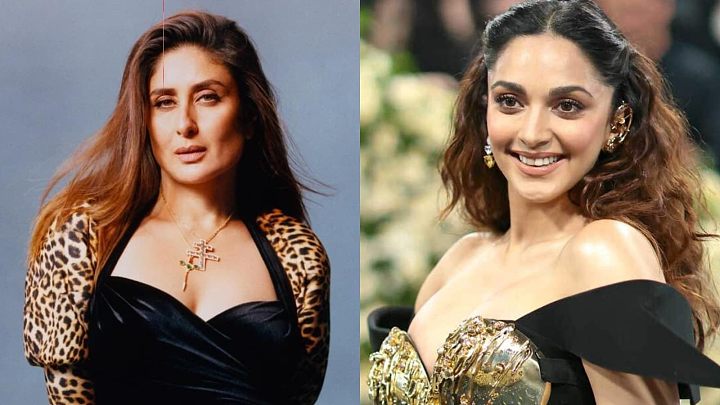
Kareena Kapoor Khan helped make that distinction harder to ignore.
She married Saif Ali Khan, had Taimur, returned to work, had Jeh and continued working. She shot Laal Singh Chaddha during her second pregnancy and returned to mainstream cinema after her first child with Veere Di Wedding.
What made her example important was not simply that she worked. It was that she refused to treat motherhood as a professional apology.
“When has anyone ever said that pregnant women can’t work?” she had once asked in an interview.
The question exposed the absurdity of the assumption.
Kareena could discuss her children in one interview and her films in the next. Neither conversation cancelled the other. More importantly, the industry had to get used to the sight of a woman who could be a mother without being moved to the margins of the frame.
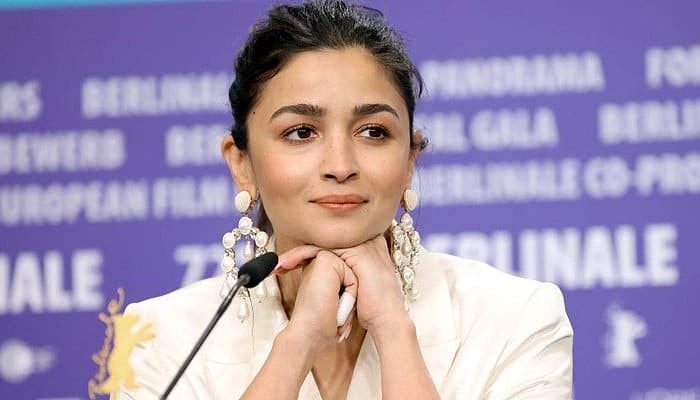
Alia Bhatt, Deepika Padukone, Yami Gautam and others have since made that sight considerably less unusual. Alia continued working during pregnancy, including on Heart of Stone, before returning with Rocky Aur Rani Kii Prem Kahaani. Deepika remained professionally active around Kalki 2898 AD. Yami continued her work around Article 370. Kajol had already worked while pregnant with her second child during We Are Family.
The point is not that these women worked through pregnancy. Pregnancy is not an endurance sport, and the ability to work until the last possible minute is hardly a feminist achievement.
The point is that the decision is increasingly treated as theirs.
Neha Dhupia put it in very simple words: “As a woman, you should be able to do all the things you wish to do after becoming a mom. The needle shouldn’t change too much.”
It is a useful distinction. The old industry asked whether a woman could remain a star after becoming a mother. The newer one is gradually learning to ask what she wants to do next.
And that brings us to the more interesting change.
Bollywood is finally learning what to do with women who age
Motherhood was never the whole problem – Age was!
For years, the heroine’s career followed a predictable route. She arrived young. She became a star. She fell in love with the hero. Then, somewhere around marriage and motherhood, the industry began quietly converting her into somebody’s mother.
There were plenty of mothers in Hindi films. But, there were far fewer women who were still allowed to be complicated, ambitious, desirable protagonists once they had crossed a certain age.
That is changing!
Rani Mukerji’s post-marriage career gave us Hichki and the Mardaani films, in which her authority comes from character rather than ingénue glamour. Vidya Balan built an extraordinary second phase around Kahaani, The Dirty Picture, Sherni and Jalsa, becoming increasingly difficult to fit into the conventional heroine mould.
Aishwarya Rai Bachchan returned to substantial roles after motherhood. Kajol continued moving between commercial films and performance-led parts. Madhuri Dixit returned to cinema and streaming without pretending that the only interesting version of her was the woman dancing through Hum Aapke Hain Koun..!
Then came Crew, with Kareena Kapoor Khan, Tabu and Kriti Sanon — three women at different stages of life, carrying a mainstream film without the story being about finding husbands.
It was a small but telling reversal.
The women were not waiting to be chosen. They were already the story.
The audience isn’t the same either
That change on screen has something to do with the women watching from the other side of it.
Of course, a Bollywood star is not an ordinary working mother. She has access to childcare, family support, assistants, drivers and an entire professional machine that most women don’t.
Kiara’s life cannot be presented as a template for the woman leaving an office at six and racing home before school pickup.
But celebrity culture does not work because people’s lives are identical. It works through familiarity. Things that once seemed unusual become ordinary because we see them often enough.
A young woman watching Kareena return after motherhood, Alia continuing building a career after having a child, Deepika remaining at the top of the industry, or Kiara announcing a second baby without treating it as a professional crisis is seeing a version of womanhood that would have been much harder to imagine twenty years ago.
It isn’t the fantasy of “having it all”. Let’s face it, that phrase has become another way of giving women an impossible to-do list.
It is something simpler – the right to decide which parts of life matter to you, and in what order.
The men never had to explain themselves
There is something almost comic about how long it has taken Bollywood to arrive at this point. Male stars never needed permission to combine fatherhood and stardom – they simply did it!
They could marry, have children, grow older, play romantic leads, play fathers, make action films, produce films, and disappear for three years if they felt like it. Their personal lives accumulated around their careers.
For actresses, of course, the expectation was often reversed. Their careers had to make room for their personal lives — and eventually one was expected to give way to the other.
That is the imbalance that is finally beginning to disappear.
Which brings us back to Kiara.
Her second pregnancy isn’t remarkable because she is proving that motherhood and a film career can coexist. Kareena, Alia, Deepika, Rani, Kajol, Aishwarya and many others have already helped establish that.
It is remarkable because nobody seems to need her to prove anything.
She can have another baby, she can return when she wants, she can make another film, or several… And, she can change her mind!
The little socks in that photograph are not a manifesto about working women. They are not a career strategy. They are certainly not an announcement about the future of Bollywood. They are just baby socks.
And perhaps that is what has changed most!
Once, an actress’s marriage or pregnancy came with a question mark hanging over her career. Today, the question mark is beginning to disappear.
Now, the heroine has a life. The movies can fit around it.