Lust Stories 3’s Sana Thampi On Being Seen Beyond The Kiss: ‘People Spoke About My Acting’ | Exclusive
Sana Thampi did not know she was auditioning for Kiran Rao. She did not know the short film would eventually become part of Lust Stories 3. And by the time the team had more or less decided they wanted her, she still had
مصنف Yatamanyu Narain··134K بار پڑھا
Lust Stories 3’s Sana Thampi On Being Seen Beyond The Kiss: ‘People Spoke About My Acting’ | Exclusive
Sana Thampi did not know she was auditioning for Kiran Rao. She did not know the short film would eventually become part of Lust Stories 3. And by the time the team had more or less decided they wanted her, she still had not quite understood that the audition process was over.
At her third meeting, while sitting across from Gurfateh Pirzada and discussing the project, Thampi finally interrupted proceedings with the most practical question available: “Did I get it?” The answer was a casual “Yeah.” Her response was equally restrained. “Oh… okay!”
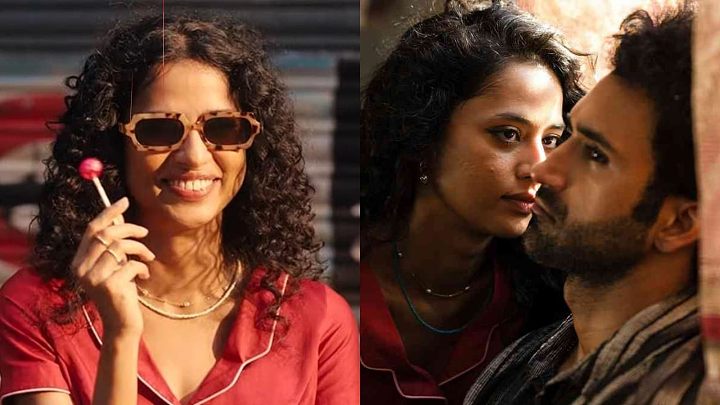
That slightly incredulous distance from the whole thing still colours the way she talks about her debut. Thampi had spent years modelling, a profession that had already taught her that five rejections can quietly sit behind the one campaign everybody eventually sees. Acting existed somewhere in the realm of possibility, but not quite in the category of plans. Then came Lisa, a young Malayali woman whose sexuality drives part of the story without becoming the sum total of who she is. For a debut built around desire and intimacy, Thampi is especially pleased that audiences have spoken to her about the performance rather than simply about the fact that she kissed someone on screen.
Much of that ease, she says, came from the way Rao constructed the world around her. Lisa was allowed interests, impulses and a life beyond the man in front of her. Intimate scenes were mapped down to individual movements with coordinators before filming began. Workshops were designed around places where Rao suspected her first-time actor might struggle. Even Thampi’s natural accent, something she might otherwise have become conscious of, was folded into the character rather than ironed out of her.
In an exclusive conversation with News18 Showsha, Sana Thampi looks back at stumbling almost accidentally into Lust Stories 3, working with Kiran Rao on her very first film set and discovering just how choreographed screen intimacy really is. She also speaks about the peculiar education that years of modelling rejection gave her, hearing her own voice on screen for the first time, growing up between Malayalam and Hindi cinema, and why the compliment that stayed with her most had nothing to do with how she looked.
View this post on Instagram
A post shared by Shreya Dev Dube (@shredevdube)
Here are the excerpts:
Q. First of all, I have to tell you that your segment was my favourite in Lust Stories 3. It didn’t even feel like this was your debut because you seemed so natural on screen. What kind of responses have you been receiving since the release?
Only positive responses so far, and I’m really happy about that.
I wouldn’t say I was extremely worried, but there was definitely a slight fear that I might receive bad reviews for my acting because this is my first project.
So, I’m very happy that the performance has been received so well.
Q. I read that when you initially auditioned, you didn’t know that Kiran Rao was directing the film or even that the project was Lust Stories 3. Is that true?
Yes. Someone from the casting director’s team reached out to me on Instagram, and the only information they gave me was that they were casting the lead for a short film.
So, there was absolutely no way I could have imagined that it would turn out to be a project of this scale.
But I really liked the script and the character.
My immediate reaction to her was, “Okay, I’m not necessarily her, but I feel like I could know someone like her.”
That made the audition process quite enjoyable for me.
Q. In hindsight, are you glad that you didn’t know what the project was? Knowing that Kiran Rao was directing Lust Stories 3 could perhaps have made you perform according to the perceived importance of the opportunity rather than simply approaching the character on her own terms.
I don’t know if it would necessarily have changed my performance.
When you’re modelling, you end up auditioning for advertisements fairly often. Once in a blue moon, you might also receive an audition for an OTT project or a feature film, but it’s rarely for a primary role.
I don’t think I had ever fully envisioned myself getting something like this before.
So, whenever I auditioned, I would always give it my full effort, but I would simply do what I was supposed to do without thinking too far ahead.
I don’t think I would have put additional pressure on myself even if I had known that it was for Kiran Rao and Lust Stories.
But I definitely would have wanted the role much more intensely right from the beginning.
Once I discovered the names attached to the project, I remember thinking, “Okay, now I 100 per cent want this. I have to get this right.”
Q. Your third meeting with Gurfateh Pirzada was apparently something you still thought was another audition, even though the team was essentially figuring out how the two of you worked together. When did you finally realise that you had actually got the part?
I first did a self-tape audition.
Then they called me for an in-person audition, where I performed with two different actors.
The only feedback I had received from the team by then was that they were keen on having me on board.
But I’m not the kind of person who will immediately start celebrating something before it is completely confirmed. I was consciously trying to play it safe with my emotions.
Then, during my third meeting, I met Gurfateh. At some point, I realised, “Wait, they’re not actually auditioning me anymore. I’m just sitting here talking about the project.”
So, I finally asked, “Did I get it?”
And they were like, “Yeah.”
And I was just sitting there thinking, “Oh… okay!”
Q. You have repeatedly spoken about Kiran Rao’s extraordinary attention to detail. Was there a particular direction she gave you that may have sounded almost insignificant at the time but ultimately changed the way you understood Lisa?
My God, that’s a difficult question!
I think what really helped me was that Kiran already had such a clear understanding of who this character was.
That made my life and my job significantly easier.
She already knew who this girl was, how bright-eyed she was, how new she was to the city, and all these little aspects of her personality that I, as a first-time actor, may not necessarily have thought about on my own.
There were so many reasons why the entire project went relatively smoothly for me.
I feel like everybody on the team ensured that every other aspect of my character and the world around her had been taken care of, so that I could simply plug myself into it and perform.
Q. There can sometimes be a danger with a female character who is introduced through desire, where the actor herself eventually gets reduced to desirability. Were you and Kiran conscious of ensuring that Lisa’s sensuality never became her entire personality? Because as an audience, we clearly see that there is much more to her than that.
I think even while we were shooting, Gurfateh was actually the object of desire much more often, including in the way certain moments were shot.
What I really liked about Lisa was that her life wasn’t revolving around a man.
She had her own interests. She had her own life.
Of course, the story itself is being driven by desire and lust, but I liked that her entire world wasn’t centred around this guy or around how he perceived her.
That was already very evident in the script.
So, I don’t think I consciously had to sit there thinking about whether she was being reduced to her desirability because the writing itself had already made sure that she existed beyond that.
Q. Kiran Rao has spoken about being unable to make films in which women aren’t properly represented. Did playing Lisa sharpen your own understanding of the difference between a female character who merely has screen time and one who actually possesses agency?
Once I finished reading the script, I remember thinking, “Oh!” because I hadn’t expected it to go where it eventually did.
And Kiran was just like, “Yeah, I wouldn’t have it any other way. I would always have the girl win at the end.”
I really liked that.
But honestly, this was my first project, and I don’t think I had the time or even the mental capacity to overthink a lot of these things at that point.
I was simply extremely excited to have got the project. The script was good, the team was good, and everything happened over such a short period of time.
From the auditions to the workshops we did to prepare for the role and then the actual shoot, it all happened very quickly.
Kiran also did some one-on-one workshops with me where we worked specifically on certain scenes that she had anticipated might be difficult for me.
And she was right.
Doing those workshops beforehand made me feel significantly more comfortable when I eventually came onto the set to shoot those scenes.
Everything happened in less than a month. The auditions, about a week of workshops and then eight days of shooting, all of it was completed within that period.
Q. Gurfateh Pirzada plays both Karan and Arjun. From your side of the scene, how differently did he play the two characters? Was the distinction something you could immediately sense as his co-actor even without the costumes or the editing doing part of the work?
I think it was pretty evident to me because those were things we had worked on during the process.
I had also seen Kiran work with him specifically on those aspects.
There was a difference in his body language, in the way he spoke and simply in his overall demeanour.
Now, could I, as Sana, immediately figure everything out? I don’t know. I’m not going to go as far as saying that I was two steps ahead of everything!
But purely in terms of his performance, I could very clearly tell the difference.
Even without the costumes, while we were rehearsing, I could tell, “Okay, he’s playing Karan now,” or, “He’s playing Arjun now.”
So, that distinction was definitely present in the performance itself.
Q. Actors often say that intimate scenes are far more technical than sexy when they are actually being filmed. Since you were doing them on your very first film set, what surprised you about just how unromantic the mechanics of creating intimacy on camera can be?
I don’t know if I would say I was surprised because the intimacy coordinators were involved in the project even before we came on board, I think.
In fact, before we did any acting workshops or scene work, one of the first workshops Gurfateh and I had was with the intimacy coordinators.
Aastha was one of them, and I think she is among the first people to have done this kind of work in India.
They were lovely.
That workshop essentially introduced us to how the entire process would work and what their involvement would be.
Even Kiran wasn’t present for that workshop. It was just Gurfateh, me and the two intimacy coordinators in the room.
I think that was important because, before anything else, they wanted us to understand that we had agency.
If at any point either of us felt uncomfortable, we could say it out loud.
And rather than waiting for an uncomfortable situation to arise on set, they took those precautions beforehand. They asked us what we were comfortable with, what our boundaries were, what constituted a yes and what constituted a no.
That allowed them to choreograph the intimate scenes accordingly.
Because those scenes really are choreographed down to the smallest detail.
It could be something as simple as me holding his hand or something like lifting someone’s shirt. Every minute movement is choreographed.
I actually found one part of the process quite funny. The coordinators had recordings demonstrating the choreography to us, and later there was a side-by-side of their demonstration and us performing the scene.
We were doing almost exactly what they had shown us.
That’s how precisely choreographed the whole thing was.
Q. As an addendum to the previous question, you entered Hindi cinema through an anthology centred on sex and desire. Did you encounter people warning you that making a bold debut might define how the industry subsequently sees you?
Other than my mother, no!
Thankfully, after the film came out, there haven’t really been any bad reviews around that aspect either.
I don’t know if this is an anomaly, and I don’t know if saying this out loud is going to somehow jinx it, but I’m genuinely happy that people have mostly spoken to me about my acting and my screen presence.
The conversation hasn’t really been, “Oh, I saw you kiss someone,” or focused only on the intimacy in the film.
People have appreciated the performance itself, and I’m very grateful for that.
Q. When you finally watched the completed film, was there any moment of yours that landed completely differently from how you remembered playing it on set?
Honestly, almost everything felt different.
I remember that while we were shooting, sometimes someone would ask, “Do you want to see the shot?”
On the first day, we were filming Lisa’s introductory scene, and I remember watching it back.
My first reaction was basically, “Oh, okay.”
It was strange hearing my own voice because I’m not used to hearing myself like that.
After that, whenever Kiran said, “Yeah, okay, we have it,” I just believed her.
I thought, “Okay, if you say you have it, then you have it.”
She doesn’t seem like someone who would say that unless she was genuinely happy with the shot.
Then there was almost a year between us shooting the film and it eventually releasing.
And because this was my first project, I had no idea how something transforms from what you shoot on set into the finished product.
Editing, lighting, colour grading, music, all of these things make such a huge difference to how you eventually perceive a scene.
I don’t think it is ever just the actor who determines how a scene turns out.
During that year, I definitely started thinking, “Oh my God, everything happened so quickly. Did I even properly think about how I performed some of those scenes?”
But when I finally watched the film, I was very happy with how it turned out.
I’m genuinely very happy with it.
Q. Speaking objectively, apart from your own film, which was your favourite segment in Lust Stories 3?
I really loved the first one.
I absolutely cracked up watching it.
I think I ended up seeing it three times because of the order in which the films played, and then there was also the screening.
Every single time, I caught myself laughing out loud.
I remember thinking, “Damn, these guys are really good.”
Q. You grew up in Kerala and eventually built a career in fashion before Hindi cinema came along. When you were younger, was acting actually part of the plan, or did modelling gradually make that possibility feel more imaginable?
To be honest, I don’t think even modelling made acting feel realistically imaginable.
When I was growing up, I would obviously daydream the way children do.
You think, “If I were in that position, would I enjoy it?”
And whenever I imagined myself as an actor, I liked the idea of it.
But it wasn’t something I allowed myself to seriously believe could happen or something that I consciously pursued because, to me, it simply didn’t seem realistic.
Of course, modelling for so many years made me very comfortable in front of the camera.
And once you begin receiving acting auditions occasionally, you start feeling a little closer to that world.
Even getting an audition call makes you think, “Okay, there is at least some bridge between these two industries.”
So, yes, I always felt that I would love to act.
But did I realistically believe it would actually become my career?
No. Not until I got this project.
Q. Modelling teaches people to live with enormous amounts of rejection, often without ever knowing why they weren’t selected. Has that made you unusually patient with the uncertainty that comes with an acting career?
I think I’m still a little too early in my acting career to talk about how patient I am with it.
But yes, modelling definitely prepares you for rejection to a completely different degree.
Even if you’re perceived as a busy model who’s appearing in multiple campaigns, and your friends, family or even strangers are constantly seeing your work on social media, what people don’t realise is that for every one job you book, you may have been considered for five others that didn’t work out.
I think most models understand that fairly early in their careers.
You eventually come to terms with the fact that it isn’t personal.
Sometimes you simply don’t fit the project. Sometimes you don’t fit the budget. Sometimes you literally don’t fit the clothes!
There can be so many reasons behind it.
So, modelling definitely teaches you not to take every rejection personally.
Q. When you began pursuing acting, did you suddenly find yourself having to think consciously about things such as language, accent and diction in a way modelling had never required?
Definitely. I think I became particularly conscious of it when I watched myself for the first time because, as I said, I’m not used to hearing myself speak on screen.
Modelling is largely static. Even now, when there is video involved, I’m rarely expected to actually speak.
There may have been one or two advertisements where I had a tiny role, but even there, my own voice wasn’t used.
So, apart from WhatsApp voice notes, I wasn’t really used to hearing myself!
With this project, though, Kiran worked around who I naturally was.
She said, “Okay, she can be a Malayali character.”
So, however I naturally sounded would actually work for Lisa rather than become something I had to consciously hide.
That definitely helped me feel less self-conscious and much more confident while stepping into my first acting project.
Having said that, over the last couple of years, I have worked quite a bit on my Hindi.
I’ve consciously tried to become better at learning dialogues, pronouncing words correctly and sounding a little less obviously South Indian when a role requires that from me.
Q. Kerala has an extremely strong cinema culture of its own. Did Malayalam cinema shape your understanding of acting before Hindi cinema did?
I don’t know if I would divide it into a clear before and after.
Growing up, I loved watching Bollywood films just as much as I loved watching Malayalam films.
There are still several older Malayalam films that I go back and rewatch quite often.
For me, though, there has traditionally been a fairly clear distinction in how projects are approached in the two industries.
I think that gap has narrowed considerably with OTT and with the emergence of projects that aren’t necessarily built around these larger-than-life, heroic characters.
That kind of storytelling feels comparatively newer in Hindi cinema than in some of the films I’ve grown up watching from the South.
So, I think I’ve absorbed something from all of it.
Everything I’ve watched has, in some way, shaped the way I understand acting.
Q. If opportunities from Malayalam, Tamil or Telugu cinema come your way now, would you be interested in exploring those industries as well?
Oh, 100 per cent. Absolutely.
Q. Being called a “promising newcomer” sounds complimentary, but it also means that every subsequent performance becomes evidence for or against that promise. Has the attention after Lust Stories 3 felt encouraging, or does it suddenly feel heavier than the relative anonymity you had while shooting the film?
So far, it has only felt encouraging.
I genuinely didn’t expect so many people to say positive things about my acting or my screen presence.
For me, probably the best compliment I could have received was somebody talking about my performance rather than simply saying that I looked pretty on screen.
So, more than anything else, the response has been encouraging.
I haven’t reached a headspace yet where I’m sitting around worrying about how I’m going to perform in my next project or whether I’m going to live up to some expectation.
Right now, I’m simply thinking, “Okay, let the opportunities come, and then I’ll see what happens.”
Q. After watching yourself in Lust Stories 3, what is the one aspect of your craft that you are now determined to work on before your next project?
Even while we were shooting, I was aware that my range was obviously still at a very beginner stage.
So, after completing the film, I was quite keen to do a few more workshops.
My thought was that whenever my next project comes along, I want to be better prepared for it.
I want to understand more about how to prepare for a role, how to work on my lines and how many different ways there can be of approaching the same character or scene.
I think that awareness is something I’m actively trying to build now.