Beyond Lucknow, Kanpur: Are Smaller UP Towns Becoming India's New Pollution Hotspots?
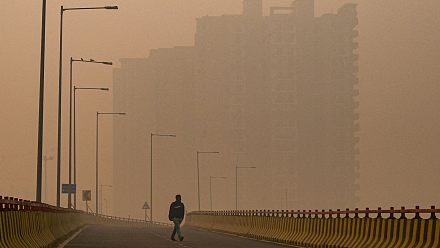
Delhi’s air pollution dominates the national conversation every winter but a recent assessment has drawn attention to a wider air-quality crisis unfolding across Uttar Pradesh.
By Oliver Fredrick··104K reads
Beyond Lucknow, Kanpur: Are Smaller UP Towns Becoming India's New Pollution Hotspots?
Delhi’s air pollution dominates the national conversation every winter but a recent assessment has drawn attention to a wider air-quality crisis unfolding across Uttar Pradesh.
Smaller towns and industrial centres are increasingly featuring among the country’s most polluted urban locations, suggesting that the state’s challenge extends well beyond Lucknow, Kanpur and Ghaziabad.
A monthly assessment by the Centre for Research on Energy and Clean Air (CREA), released on November 5, found that six of India’s 10 most polluted cities in October were in Uttar Pradesh. Baraut in Baghpat district topped the national list with a monthly average PM2.5 concentration of 87 micrograms per cubic metre (µg/m³), followed by Khora in Ghaziabad district at 85 µg/m³. Gajraula in Amroha also figured among the three most polluted cities.
Ghaziabad, Noida and Meerut were the other Uttar Pradesh cities in the national top 10. The assessment found that 13 cities in the state recorded monthly average PM2.5 concentrations above the national daily standard of 60 µg/m³.
The findings raise questions about the changing geography of air pollution in the state. While major urban centres face traffic congestion, construction dust and industrial emissions, smaller towns are also experiencing high particulate pollution. The challenge for authorities is to identify the sources in each location and ensure that pollution-control measures deliver improvements beyond the winter season.
The sources of pollution vary across Uttar Pradesh. Industrial emissions, transport activity, construction, road dust and open burning all require attention, but their contribution differs from one city to another.
Ghaziabad offers an example of the challenges involved in controlling pollution at the local level. The UP Pollution Control Board (UPPCB) has identified nine pollution hotspots for the 2026-27 winter season, including Sahibabad, Raj Nagar Extension, Loni, Indirapuram and Vasundhara-Vaishali.
The identified locations face a combination of industrial emissions, traffic congestion, road dust, open storage of construction material, illegal industrial units in non-conforming zones and unpaved roads.
Ankit Kumar, regional officer of UPPCB in Ghaziabad, acknowledged the role of construction activity in worsening dust pollution at newly identified hotspots. “The newly added hotspots suffer from dust pollution due to construction activities,” he said, adding that anti-smog machines and water sprinkling would be intensified at the identified locations.
Kumar also said: “There will be strict enforcement and regular monitoring by the UPPCB teams.”
However, environmentalists question whether the enforcement measures are adequate to address the scale of the problem.
Sushil Raghav, an environmentalist based in Ghaziabad, said winter brings higher pollution levels because of road dust and industrial emissions, among other sources. “The enforcement drives lack the required enforcement, and pollution remains one of the major concerns for residents throughout the year,” he said.
His assessment points to a recurring concern: pollution-control measures are often intensified when air quality deteriorates, but their impact depends on consistent monitoring and action throughout the year.
The increase in particulate pollution also raises questions about whether seasonal measures are addressing the underlying sources.
According to a report on Ghaziabad’s winter action plan, the city’s average PM10 concentration between January and August 2026 stood at 205 µg/m³, compared with 137 µg/m³ during the corresponding period in 2025. Its average PM2.5 concentration across four monitoring stations rose from 67 µg/m³ to 82 µg/m³ over the same period.
The figures indicate that the pollution burden can remain high even before the winter peak. They also highlight the importance of tracking PM2.5 and PM10 separately. While PM10 is often associated with road dust and construction activity, finer PM2.5 particles can penetrate deep into the respiratory system and are linked to serious health risks.
CREA’s October assessment also highlights the need to look beyond individual city boundaries. Pollution can travel across districts and regions, making it difficult for a single municipal body to address the entire problem.
Its analysis of research covering 143 Indian cities estimated that sources outside city boundaries contributed 82-89 per cent of PM2.5 concentrations in those urban areas. This suggests that city-level interventions need to be supported by coordinated action across wider airsheds.
The Uttar Pradesh government has outlined measures to address several sources of pollution, including road dust, construction and demolition activity, open biomass burning, vehicular emissions, industrial pollution and paddy stubble management.
At a review meeting on October 23, Union Environment Ministry Secretary Narendra Bhooshan examined the state’s action plans and winter preparedness with officials from the state government and urban local bodies.
The review covered road redevelopment, traffic decongestion, electric buses, solid-waste processing, construction-site monitoring and enforcement of pollution-control measures in industries. Officials were also asked to accelerate the installation of automatic number plate recognition cameras at fuel stations to implement the ‘No PUCC, No Fuel’ policy.
The UPPCB has also developed a Dust Portal to monitor construction and demolition sites through self-assessments, air-quality sensors, site cameras and field verification by regional officers.
These measures provide an institutional framework for monitoring pollution sources. The larger question, however, is whether inspections, penalties and compliance checks are sufficiently frequent to prevent violations from recurring.
The October findings by CREA suggest that the challenge is not confined to a handful of major cities. The presence of Baraut, Khora and Gajraula among the country’s most polluted urban centres makes a case for closer scrutiny of smaller towns and industrial clusters.
The pollution figures have also triggered a political response in Uttar Pradesh. State Congress president Aradhana Mishra ‘Mona’ criticised the government over the latest findings, saying: “The fact that the country’s three most polluted cities are in UP reflects the gravity of the situation.”
She demanded time-bound measures to address the problem and accused the government of focusing on publicity instead of tackling the pollution crisis.
For Uttar Pradesh, the challenge is to ensure that pollution-control efforts are not limited to emergency responses during high-pollution days. Industrial compliance, construction-site monitoring, public transport, waste management and control of open burning require sustained attention.
As winter sets in, the question is no longer simply how polluted Lucknow, Kanpur or Ghaziabad become on a particular day. It is whether the state’s clean-air strategy can deliver measurable and lasting improvements across its smaller towns, industrial centres and major cities.