Air Purifier And A Secret Antioxidant: How A Lung Scientist With Asthma Survives Delhi’s Smog
Every winter, as Delhi’s air turns toxic, one of India’s leading lung scientists who has asthma himself, rolls up the car windows, switches on air purifiers and keeps a supplement from his own laboratory’s research close
By Himani Chandna··100K reads
Air Purifier And A Secret Antioxidant: How A Lung Scientist With Asthma Survives Delhi’s Smog
Every winter, as Delhi’s air turns toxic, one of India’s leading lung scientists who has asthma himself, rolls up the car windows, switches on air purifiers and keeps a supplement from his own laboratory’s research close at hand.
Dr Anurag Agrawal, a pulmonologist by training and dean of BioSciences and Health Research at the Trivedi School of Biosciences, Ashoka University, spoke to CNN-News18 about how he looks after his own lungs during the pollution season. Before joining Ashoka in 2022, he headed the Union government’s Council of Scientific and Industrial Research’s Institute of Genomics and Integrative Biology (CSIR-IGIB) in Delhi. His primary research has been in respiratory biology, including asthma.
Asked how he manages his own asthma, he answered with a touch of sarcasm. “Well, we use the rich person’s way of using air purifiers,” he said.
Purifiers At Home, Recirculation In Car
The first line of defence is keeping polluted outdoor air out of the spaces where he spends most of his time. In his car, that means not letting outside air in at all.
Dr Anurag Agrawal, a pulmonologist by training and dean of BioSciences and Health Research at the Trivedi School of Biosciences, Ashoka University
“So pretty much my car’s always run with closed recirculation, you know, purifier plus AC running even in winters,” said Agrawal, who is trained in internal medicine, pulmonary disease and critical care, and is a recipient of the Shanti Swarup Bhatnagar Prize.
Recirculation mode on a car’s air conditioning (AC) system cycles the air already inside the cabin instead of drawing in air from the road, which is where vehicle exhaust and dust are most concentrated. Indoors, he said he spends most of his day in a room with an air purifier running.
But there is no way to avoid the outdoors completely. “You still have to step out; I mean you still will get exposed, but I can afford to do that,” he said, adding that N95 mask is always part of his kit while getting ready to step out.
A Supplement From The Lab, With A Caveat
Dr Agrawal also takes “mitochondrial antioxidants”, compounds meant to protect mitochondria, the tiny energy-producing structures inside cells. His research group at IGIB was among those that linked damage to mitochondria in the airways to asthma in laboratory mice.
He was careful to point out that the evidence is limited. “Without too much evidence for it, I do consume things like mitochondrial antioxidants because of our own research in mice, not humans,” he said, describing them as “relatively safe things and one feels that these things might work, but that’s not the solution at the end of the day”.
In other words, what has worked in mice has not been proven in people, and this is a personal choice by a researcher who knows the science, not a recommendation for patients.
Warm Fluids, Not Home Remedies
Asked whether he relies on any home remedy or decoction during the smog season, Agrawal said he does not.
“No real home remedies that I use, but warm fluids feel nice when you have an irritated throat,” he said. “Any warm fluid usually helps an irritated throat in the winter and reduces at least some of the cough.”
The type of drink matters less than its warmth, he said, with one exception: “Too much black coffee will probably be bad.”
‘Clean Air Is Almost A Right’
For all his own precautions, Agrawal was blunt that personal protection is a privilege that most people in the city do not have. “None of this is scalable and ultimately, to be very honest, clean air is almost a right,” he said.
He compared air to drinking water. “The rich can usually get away with things like water etc because they can cut themselves off from the water that other people drink. Here we can’t really cut ourselves off,” he said.
He said people should have understood this more and become more aware, because the air they pollute is the air their own families breathe. “It’s them, their children,” he said while pointing towards the fire-cracker bursting during festivals, especially Diwali.
His prescription for the city is not a pill or a purifier. “I think just more civic sense on the part of the citizens of the city would do a lot and more enforcement.”
Smog Season Brings More Patients To Hospitals
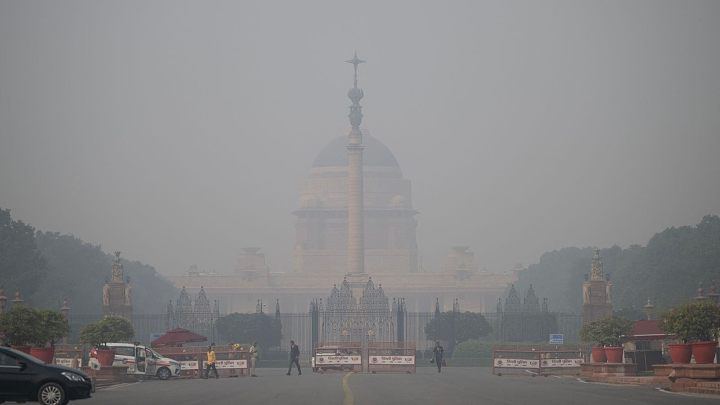
What Agrawal guards against at home is already showing up in hospitals, where doctors report more patients with breathing trouble since Diwali as Delhi and the National Capital Region (NCR) remain under thick smog.
The air has eased slightly since Diwali but remains unhealthy. On Diwali, Delhi’s 24-hour average Air Quality Index (AQI) was 376, in the “very poor” category, according to the Central Pollution Control Board (CPCB). On Tuesday, it stood at 299, “poor”. “Following Diwali, we are witnessing increased OPD consultations for respiratory complaints, eye irritation, and allergy-related symptoms, particularly among children, elderly individuals, and patients with pre-existing asthma or respiratory conditions,” said Dr Animesh Arya, director, pulmonary and respiratory medicine at Sri Balaji Action Medical Institute.
“Compared to last year, the pattern of complaints appears broadly similar, although any increase in patient numbers needs to be confirmed through hospital records,” he said.
The most commonly reported symptoms across and beyond Delhi-NCR include persistent coughing, breathlessness, wheezing, sore throat, nasal congestion, burning eyes, and headaches. “Exposure to firecracker smoke, elevated particulate matter, and seasonal weather changes can aggravate these conditions. People with existing respiratory illnesses may also experience worsening symptoms requiring medical attention,” said Dr Amir Nadeem, senior consultant, pulmonology at Regency Healthcare in Gorakhpur, Uttar Pradesh.
Like Dr Agrawal, Nadeem stressed keeping polluted air out, but added that patients should not stop their treatment.
“To minimise health risks, individuals should avoid unnecessary outdoor exposure during periods of poor air quality, wear well-fitted N95 masks when outdoors, maintain indoor air quality, and continue prescribed medications. Anyone experiencing persistent breathing difficulties, chest discomfort, or worsening symptoms should seek prompt medical evaluation.”