19 Years After Rampur CRPF Attack: From 8 Deaths And 4 Death Sentences To Acquittals And A Murder
Nearly 19 years after armed attackers stormed the Central Reserve Police Force (CRPF) Group Centre in Rampur, killing seven personnel and a civilian, the case has returned to the spotlight following the murder of Mohamma
By Oliver Fredrick··173K reads
19 Years After Rampur CRPF Attack: From 8 Deaths And 4 Death Sentences To Acquittals And A Murder
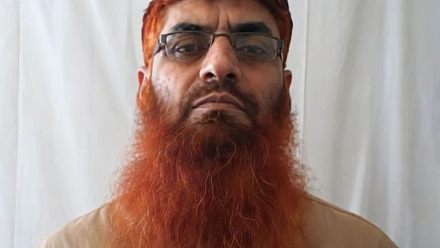
Nearly 19 years after armed attackers stormed the Central Reserve Police Force (CRPF) Group Centre in Rampur, killing seven personnel and a civilian, the case has returned to the spotlight following the murder of Mohammad Sharif, one of the men sentenced to death by a trial court before the Allahabad High Court overturned the principal convictions.
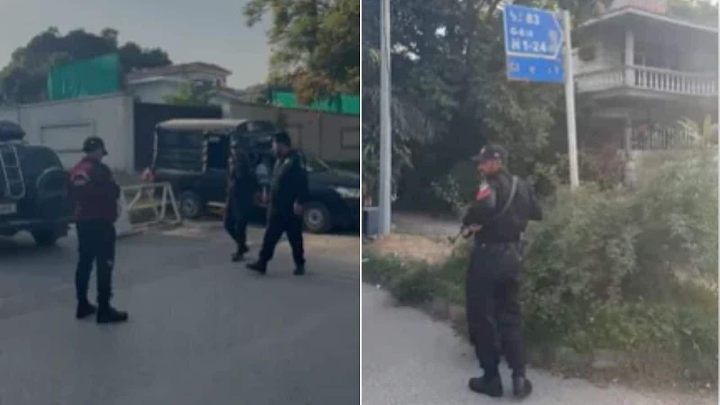
Sharif was shot dead by unidentified motorcycle-borne assailants in the Khajuria area of Rampur on November 10 while returning home with his 21-year-old son, Abu Wais Khan. The killing came almost exactly a year after he walked out of Bareilly Central Jail following the Allahabad High Court’s October 2025 judgment.
The circumstances preceding the murder have also raised questions, with Sharif’s family alleging that he had been repeatedly summoned to Khajuria police station for verification and was attacked shortly after leaving the premises.
His younger brother Shaheen said: “Sharif had gone to Khajuria police station with his son, Abu Wais Khan, on a motorcycle after being called by the police. The two were returning home after meeting police personnel and had travelled barely 200 metres when motorcycle-borne assailants approached from behind and opened fire on Sharif.”
He further alleged that police had summoned his brother on earlier occasions as well.
The family has questioned the circumstances surrounding these repeated visits. Police, meanwhile, have initiated an investigation into the murder and have not established any connection between the killing and the original CRPF attack case.
The development has brought renewed attention to the original attack, the investigation that followed, the evidence presented during the trial and the judicial findings that eventually overturned the death sentences.
The Night Of The Attack
The attack took place on the intervening night of December 31, 2007, and January 1, 2008, at the CRPF Group Centre in Rampur.
Armed assailants entered the premises and opened fire on CRPF personnel. Seven jawans and a rickshaw-puller were killed, while five others sustained injuries. The attack triggered a major security investigation, with agencies examining possible cross-border terror links. Pakistan-based Lashkar-e-Taiba (LeT) was reported to have claimed responsibility for the strike.
The investigation led to the arrest of several people from different parts of the country. These included Mohammad Sharif from Rampur, Jung Bahadur Khan from Moradabad, Mohammad Kausar from Pratapgarh, Gulab Khan from Bareilly and Sabauddin from Bihar. Two Pakistani nationals, Imran Shahzad and Mohammad Farooq, were also arrested.
Police claimed to have recovered AK-47 rifles, magazines, hand grenades and other material from the accused.
The prosecution alleged that the accused were involved in planning and executing the attack. The case subsequently went through a lengthy trial in Rampur.
After more than a decade of investigation and trial proceedings, a Rampur sessions court delivered its verdict in November 2019.
Mohammad Sharif, Sabauddin, Imran Shahzad and Mohammad Farooq were sentenced to death. The fifth accused, Jung Bahadur Khan, was awarded life imprisonment. Two other accused, Gulab Khan and Mohammad Kausar, had been acquitted by the trial court for lack of sufficient evidence.
The five convicted men challenged the verdict before the Allahabad High Court, questioning the evidence and the manner in which the investigation had been conducted.
On October 29, 2025, a division bench of the Allahabad High Court comprising Justices Siddhartha Varma and Ram Manohar Narayan Mishra set aside the death sentences awarded to the four men and the life sentence imposed on Jung Bahadur Khan.
The court acquitted all five of the principal charges relating to murder, terrorism and criminal conspiracy, observing that the prosecution had failed to establish its case beyond reasonable doubt.
The judgment raised serious questions about the investigation and preservation of evidence.
One of the major concerns was the absence of a Test Identification Parade (TIP). The court observed that prosecution witnesses had not known the accused beforehand and had not identified them through a proper identification procedure.
The court also questioned the handling of fingerprint evidence allegedly collected from glass panes at the CRPF premises. It observed that the prosecution had failed to establish where the fingerprints were kept between January 1 and April 3, 2008, raising concerns about the possibility of tampering.
The court further pointed out that the bullets recovered from the CRPF camp did not match the test bullets. It also questioned the failure to follow prescribed procedures for the safe custody of fingerprints, firearms and empty cartridges.
In one of its significant observations, the high court said: “The defect in investigation went to the root of the case.” The bench also observed that the case might have produced a different result had the investigation and prosecution been conducted by better-trained police personnel.
The court said the state government was at liberty to take appropriate action against police officers responsible for the lapses.
However, the high court did not acquit the five men of every offence. It retained their conviction under Section 25(1-A) of the Arms Act, 1959, relating to possession of prohibited firearms and ammunition, and sentenced each to 10 years of rigorous imprisonment with a fine of Rs 1 lakh.
The period already spent in custody was to be adjusted against the sentence, paving the way for their release after completion of the applicable term.
The high court judgment did not bring the legal proceedings to an end. The Uttar Pradesh government challenged the verdict before the Supreme Court, questioning the acquittal of the five accused on the principal charges.
On February 11, 2026, a bench of Justices Vikram Nath and Sandeep Mehta issued notice to the respondents on the state’s challenge.
The Supreme Court subsequently took up the state’s appeals for further consideration.
The proceedings have kept the legal dispute surrounding the high court’s acquittal alive, even as the murder of one of the respondents has added another development to the case.
Following the high court verdict, Sharif was released from Bareilly Central Jail on November 11, 2025, after the period spent in custody was adjusted against his 10-year Arms Act sentence. He returned to his native Badanpuri village in Rampur and was living with his family.
According to his family, he had been leading a relatively quiet life after his release. On November 10, 2026, he was travelling with his son when two motorcycle-borne assailants reportedly intercepted them near the Panwaria village crossing in the Khajuria area and opened fire. His son escaped unhurt.
Rampur Additional Superintendent of Police Anurag Singh said the exact sequence would become clear after the postmortem examination. “The picture will become clear after the postmortem examination,” Singh said.
He added that Sharif’s son had told police that the assailants had covered their faces and opened fire while their motorcycle was still moving. The district police subsequently constituted six teams to identify and arrest the attackers.
Rampur Superintendent of Police Anil Singh Sisodia said an FIR had been registered on the complaint of Sharif’s son and that forensic and field teams had collected evidence from the crime scene. He said: “Six teams have been constituted to apprehend the killers.”
The police are also examining CCTV footage from the surrounding area. According to Sisodia, preliminary inquiries had not revealed any known personal enmity or dispute involving Sharif. However, the family has raised questions over the repeated police summons. The allegations are being examined, and no evidence has so far established police involvement in the murder.
Sharif’s murder has brought the case back into public attention, but it also leaves several questions not only about the poor handling of evidence against the accused in the case but also a question that who killed Sharif and why.
For the families of the CRPF personnel who lost their lives in the 2007 attack, the judicial reversal and subsequent developments have added another chapter to a case that has remained in the legal system for nearly two decades.