Wedding Guest Dress Code: What to Wear to Haldi, Mehendi, Sangeet and the Wedding
An Indian wedding invitation rarely means dressing for just one occasion. There may be a haldi in the morning, a mehendi that spills into the afternoon, a sangeet that turns into a dance marathon and, finally, the weddin
By Consumer Trends Desk··11K reads
Wedding Guest Dress Code: What to Wear to Haldi, Mehendi, Sangeet and the Wedding
An Indian wedding invitation rarely means dressing for just one occasion. There may be a haldi in the morning, a mehendi that spills into the afternoon, a sangeet that turns into a dance marathon and, finally, the wedding ceremony itself, each with its own mood, dress code and sartorial expectations.
The challenge is to look dressed for the occasion without looking as though you’ve worn the same outfit to every event. A yellow lehenga that feels perfect for haldi may be too casual for the wedding ceremony; a heavily embellished ensemble that works beautifully for the sangeet could feel excessive at a daytime mehendi.
The secret is to think of wedding dressing as a wardrobe with different personalities. Daytime functions call for lighter fabrics, colour and comfort; evenings invite a little drama, sparkle and structure. And while there is no need to buy four entirely new outfits, choosing the right silhouette for each event can make all the difference.
Haldi: Think sunshine, but keep it practical
Haldi is perhaps the most relaxed of the wedding festivities, but it is also the one where outfit practicality matters most. Turmeric, flowers, water and plenty of enthusiastic relatives mean that your expensive silk or heavily embellished outfit may not be the wisest choice.
Yellow, mustard, buttercream, marigold and softer citrus shades naturally fit the occasion. A lightweight kurta set, a simple lehenga, a cotton-silk ensemble or a breezy Anarkali can all work. The idea is to look festive without worrying about every splash.
Keep jewellery light, opt for comfortable footwear and avoid anything with delicate embellishments that could snag or become damaged. Floral jewellery can add to the mood, but the outfit itself should remain easy to move in.
Mehendi: Colour, prints and a little playfulness
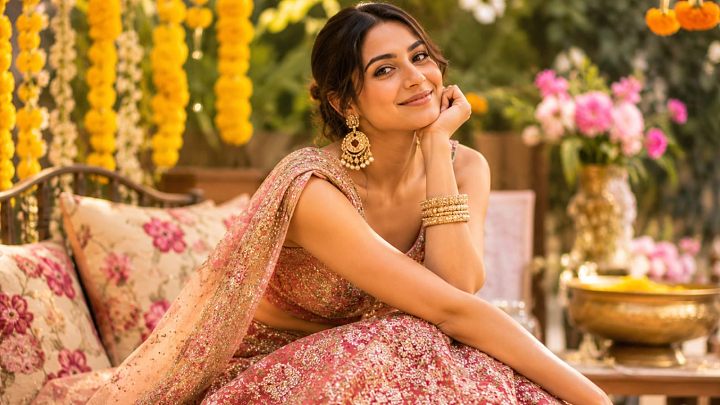
Mehendi is the perfect occasion to experiment with colour and playful silhouettes. Greens, pinks, oranges, lilacs and floral prints work particularly well for daytime celebrations, while shararas, skirt sets, printed lehengas and embroidered kurta ensembles offer the right balance of festive and comfortable.
Since you’re likely to spend a considerable amount of time getting your mehendi applied, think carefully about sleeves, jewellery and dupatta placement. Avoid bangles or rings that interfere with the application, and choose an outfit that allows you to sit comfortably for long stretches.
This is also the occasion to embrace a little whimsy, floral motifs, mirror work, playful tassels, lighter embroidery and unexpected colour combinations.
Sangeet: Dress for the dance floor
The sangeet is where the wedding wardrobe gets its evening makeover. Sequins, metallic embroidery, mirror work, dramatic dupattas and statement silhouettes all have their moment here. But the most important consideration is movement.
A lehenga with a good flare, a pre-draped saree, a sharara or a fluid Indo-Western ensemble can all work beautifully. Choose fabrics that move rather than weigh you down, and ensure your blouse, dupatta and footwear are secure enough to survive hours of dancing.
The sangeet is also the occasion to experiment with a more dramatic beauty look—smoky eyes, a statement lip, a sleek hairstyle or bold earrings. You can go all out, provided the outfit remains comfortable enough to dance in.
The wedding: Bring out the heirloom energy
The wedding ceremony is the occasion to dress with a little more intention. Rich silks, Banarasi-inspired weaves, embroidered lehengas, elegant sarees and traditional ensembles in jewel tones or sophisticated pastels are all appropriate, depending on the ceremony and the family’s dress code.
For a daytime wedding, lighter shades, floral embroidery and softer fabrics can feel elegant. For evening ceremonies, deeper hues, metallic detailing and more elaborate embellishment tend to work beautifully.
The golden rule is to respect the bride’s dress code and the ceremony’s traditions. Avoid outfits that compete with the bridal look, and remember that a beautifully tailored saree or understated lehenga can be just as memorable as a heavily embellished ensemble.
Ultimately, wedding dressing is about understanding the mood of each celebration. The best outfit is not necessarily the most expensive or the most elaborate; it is the one that feels right for the occasion, photographs beautifully and lets you enjoy the festivities without spending the evening adjusting your dupatta.
Haldi — Miss Ethnik Yellow Faux Georgette Anarkali
A sunshine-yellow embroidered Anarkali is a lovely alternative to a lehenga for haldi. The flowing silhouette feels festive, while the lighter fabric makes it a more practical choice for a daytime function.
Mehendi — Sakhiya Crafts Embroidered Sharara Suit Set
A more elevated sharara option with embroidered detailing, ideal for a mehendi celebration when you want colour, movement and a dressed-up silhouette without opting for a full lehenga.
Sangeet — Biba Festive Lehenga Set
For the night of dancing, a festive lehenga set offers the drama the occasion calls for. This Biba ensemble is a more dressed-up option, with a coordinated blouse, lehenga and dupatta that can be styled with statement earrings and heels.
Wedding — AG Clothing Georgette Embroidered Lehenga Choli
For the main ceremony, this embellished georgette lehenga offers a more elaborate festive look. The embroidery gives it occasionwear appeal, while the softer georgette silhouette makes it a versatile choice for a wedding guest wardrobe.