Israel Election Deadlock: What Happens After A Hung Parliament, How Herzog Picks Who Forms Govt
Israel’s government formation process centres on the country’s parliamentary system, in which the president formally tasks a politician with attempting to form a government after consultations with elected party represen
लेखक Aanchal Sinha··83K पढ़े गए
Israel Election Deadlock: What Happens After A Hung Parliament, How Herzog Picks Who Forms Govt
Israel’s government formation process centres on the country’s parliamentary system, in which the president formally tasks a politician with attempting to form a government after consultations with elected party representatives. The decision is not based on a direct presidential election for prime minister, but on which candidate appears best placed to secure the support of a majority in the 120-member Knesset, Israel’s parliament.
President Isaac Herzog plays a key constitutional role in this process, particularly when an election produces no clear majority for a single party. The process involves consultations with political parties, a formal mandate to a candidate and negotiations to assemble a governing coalition.
No Clear Winner In 2026 Election
The process has assumed significance following Israel’s October 27, 2026, parliamentary election, which has left neither of the main political blocs with a clear path to a majority, according to preliminary results.
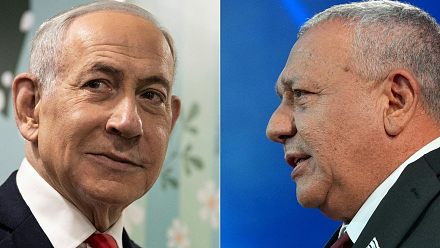
With nearly 90% of ballots counted, Prime Minister Benjamin Netanyahu’s right-wing bloc was projected to win 53 seats in the 120-member Knesset, while the opposition bloc led by former military chief Gadi Eisenkot was projected to secure 48 seats. Arab-led parties were projected to hold a combined 19 seats. These figures remain provisional as counting continues.
A party or coalition needs at least 61 seats to command a majority in the Knesset. Neither bloc has yet demonstrated that it can reach that threshold, making coalition negotiations central to the next stage of government formation.
Herzog has urged political leaders to approach negotiations with an open mind and make every effort to avoid another election. He is expected to begin consultations with representatives of the Knesset factions after receiving the official election results next week.
How Does President Isaac Herzog Choose A Candidate?
Under Israel’s Basic Law: The Government, the president assigns the task of forming a government to a member of the Knesset after consulting representatives of the parliamentary groups. The decision must be made within seven days of the official publication of the election results.
The president is not legally required to select the leader of the party that wins the most seats. Instead, the key consideration is which candidate appears most likely to assemble a coalition that can secure the Knesset’s confidence. While the leader of the largest party is often selected, the size and potential support of competing parliamentary blocs can also influence the decision.
Before making the appointment, Herzog consults representatives of the elected factions. These discussions allow party representatives to indicate whom they support and explain their positions on possible coalition arrangements. The president then selects a candidate who has agreed to undertake the task of forming a government.
What Happens After The President Selects A Candidate?
Once appointed, the candidate receives 28 days to form a government. The president can grant an extension of up to 14 additional days, bringing the maximum period for the first candidate to 42 days. During this period, the candidate negotiates with potential coalition partners to agree on a governing programme, ministerial positions and other terms of cooperation.
If the candidate fails to form a government within the allotted time, declines the task or presents a government that fails to secure the Knesset’s confidence, the mandate returns to the president.
Within three days, the president must either assign the task to another willing member of the Knesset or inform the Speaker that there is no possibility of forming a government. The president may consult the parliamentary factions again before deciding.
The second candidate receives 28 days to form a government, without an extension. If that attempt also fails, at least 61 members of the Knesset can submit a written request asking the president to assign the task to another candidate who has agreed to take it on. The president must make that assignment within two days, and the third candidate has 14 days to form a government.
If these efforts fail to produce a government, the Knesset is deemed to have decided to dissolve itself before the end of its term, triggering a new election within 90 days, subject to the procedure set out in the Basic Law.
Who Remains Prime Minister During The Process?
Netanyahu will remain caretaker prime minister while negotiations to form a new government continue. The outgoing government continues to perform its functions until a successor is formed, according to Israel’s government formation rules.
Once a candidate successfully forms a government, the new administration must present its composition and policy guidelines to the Knesset and seek a vote of confidence. The government formally takes office after receiving the Knesset’s confidence.
For Herzog, the immediate challenge is to determine which candidate has the strongest prospect of assembling a parliamentary majority amid the inconclusive election result. The outcome will depend not only on which party wins the most seats, but also on whether political leaders can negotiate agreements that secure the support of at least 61 lawmakers.