Ramayana Debate: Why Creative Liberty Is Nothing New For India’s Greatest Epic
It’s raining epics on screen. First came Christopher Nolan’s highly anticipated and shrilly debated version of Homer’s Odyssey. And now, the first trailer of Namit Malhotra and Nitesh Tiwari’s two-part film on the Ramaya
लेखक Entertainment Bureau··60K पढ़े गए
Ramayana Debate: Why Creative Liberty Is Nothing New For India’s Greatest Epic
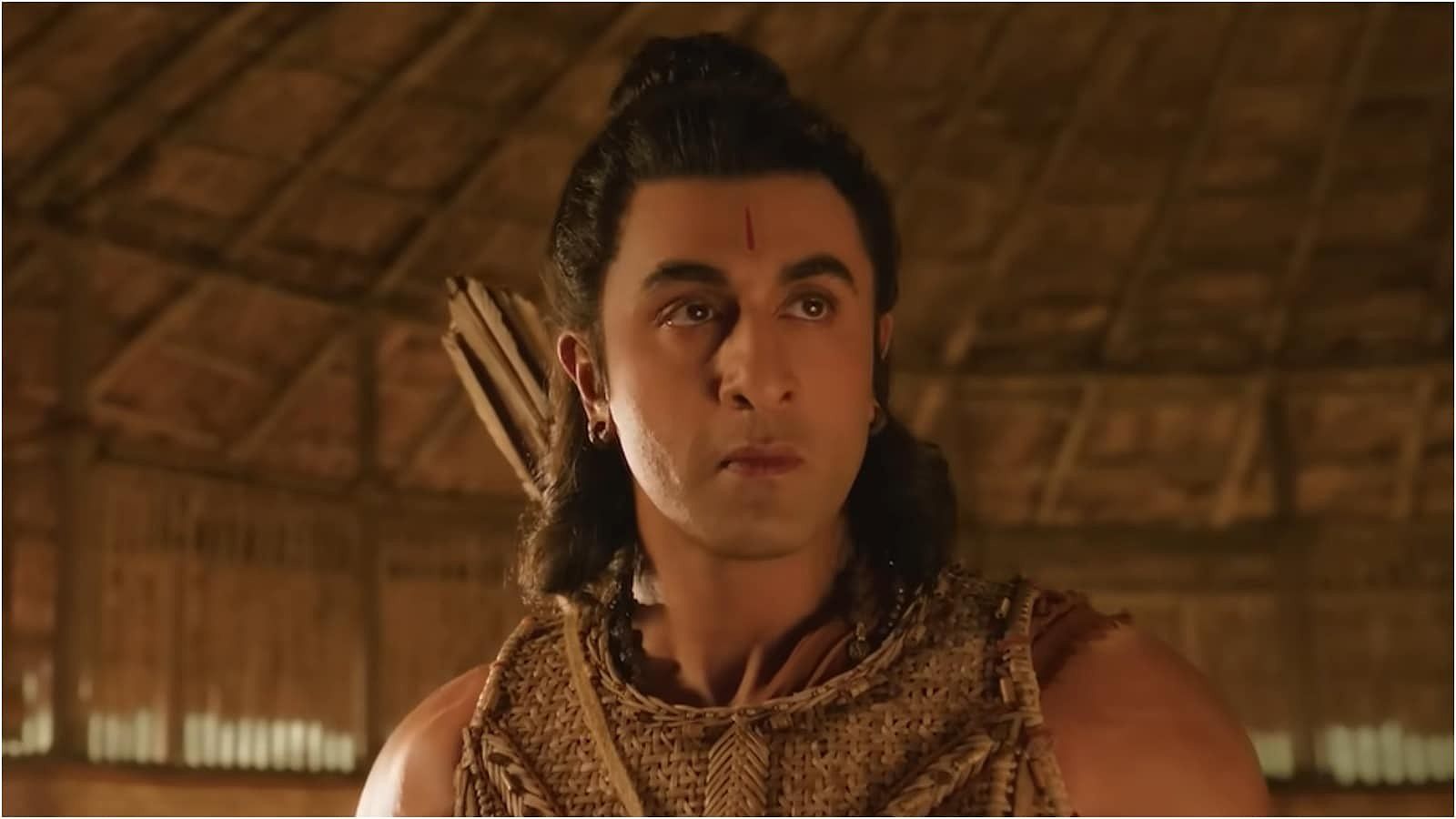
It’s raining epics on screen. First came Christopher Nolan’s highly anticipated and shrilly debated version of Homer’s Odyssey. And now, the first trailer of Namit Malhotra and Nitesh Tiwari’s two-part film on the Ramayana is dominating net-natter. There is endless debate on the choice of actors – with netizens divided on whether Ranbir Kapoor and Sai Pallavi are the right choice to play Lord Rama and Devi Sita – and the headbutting has now come down to whether Bollywood is incapable of appreciating beauty that is not stereotypically north Indian. The last bit is, of course, a stretch given that a bevy of south Indian beauties have ruled Bollywood through the ages from Vyjayanthimala and Waheeda Rehman to Hema Malini and Rekha, Sridevi and Jaya Prada to Aishwariya Rai, Vidya Balan, Deepika Padukone and more recently Rashmika Mandanna.
A larger section of the debate focuses on the look and feel of the characters and the choice of textiles and costumes that exude 21st-century couture rather than ancient Indian aesthetics. The controversy is not unlike what Nolan’s Odyssey faced, including questions about his multi-cultural cast and the somewhat disconcerting use of modern-day lingo in the dialogues.
But creative license did not start with screen retellings of ancient epics. One look at how the Ramayana has been treated by artists past and present will tell us just how vibrant this 4000-year-old source material truly is. And how much the look and feel of its sacred protagonists changed due to the cultural imprint of the artists who portrayed them.
For argument’s sake, let’s take two examples. The first: a 17th-century sculpture of Rama and Sita in the Ramaswamy Temple in Kumbakonam, Tamil Nadu. Beautifully languid, it shows the royal couple holding hands, wearing clothes and adornments typical of the Nayak period. This includes elongated crowns, multiple necklaces, bangles, armlets and anklets and a dreamy facial expression.
But when similar scenes are depicted on a wall frieze in Angkor Wat (12th century CE), Rama looks distinctly south-east Asian with his flat head gear and jewellery giving him a very different look. Both looks are historical. Both are legitimate. They depict a sacred subject through the cultural lens of their time and place. But neither match the earliest representation of Lord Rama so far discovered.
Currently displayed at the Los Angeles County Museum of Art, it is a small terracotta figurine dating back to the Gupta period (3rd/4th century CE). In this murti, Rama’s large eyes, plump lips, unibrow and simple head dress mark him out as quintessentially Indian. He is carrying a formidable bow and sports a channavira crossbelt across his chest but other than that there are no royal adornments and even his antariya/dhoti seems homespun and simple.
In features and fashion, he is completely distinct from his later representations. Clearly, three random samples spanning a millennia and a half, show wide variations in how artists depicted Lord Rama.
Even on-screen depictions of the epic have seen age-appropriate variations. The first time Ramayana made a splash on screen was in 1943. The film: Ram Rajya. Directed by Vijay Bhatt it featured Prem Adib and Shobhna Samarth in the lead roles and was the third highest grossing Indian film of 1943.
In this version, Rama and Sita conform to the 1940s costume-drama aesthetic with heavy jewellery, silk costumes and elaborate set pieces. In look and feel, the film is theatrical and stylized.
Cut to the 1960s and Sampoorna Ramayana (1961) feels very much rooted to its time and place. Full of bright pinks and greens, this colourful version features less face art than its 1940s predecessor and the jewellery too is less chunky.
In comparison, Ramanand Sagar’s television series is very 1980s. The costumes and makeup look and feel age appropriate as do the actors that play the lead roles.
Clearly the cultural imprint of the Ramayana through the ages has been as layered and varied as the epic’s numerous retellings and Indian cinema’s interest in this subject is not a recent phenomenon. Nor is this interest restricted to commercial cinema alone.
Art house and indie filmmakers repeatedly looked at and worked with this rich source material, giving it an entirely different intellectual patina. India’s 1970s art cinema movement featured one such masterpiece – the 1977 Malayalam film Kanchana Sita by legendary director G Aravindan.
The great Satyajit Ray himself had expressed his desire to make a film on a slice of the Mahabharata, particularly the dice game. Other high-brow outings on stage include Shaoli Mitra’s feminist take on Draupadi in her famous one-act, solo play Nathobati Anathobath. Indian literature has had innumerable retellings of stories from the Mahabharata and Ramayana down the ages.
Coming back to the current controversy on the look, feel and casting of the Ramayana, it seems premature to discuss and debate a two-part film based on a 4-minute trailer. For a story that’s as intrinsic to the Indian cultural DNA as the Ramayana, this debate is understandable and expected.
Nor is it necessarily unwanted. The Odyssey, for example, has flooded social media with classical literature and history specialists who are comparing the film with the source material and offering their POV on what’s right or wrong with Nolan’s retelling.
What this high-decibel discussion has done is, it has turned the spotlight back on a work that is 2000 years old. It has also made the film a worldwide hit. Making it attractive for more filmmakers to attempt their take on the Greek epic.
If that’s what the controversies bring home for Ramayana as well, it is most welcome. Unlike the Odyssey, this story never became a niche literary tomb, something only scholars and their students were interested in.
The Ramayana is a living, breathing tradition and if its latest Bollywood outing brings it back into the thick of social media chatter, that’s more a blessing than a bane.
So go ahead talk about the Ramayana. Cheer, carp, critique and comment, but don’t cancel the film without seeing it. Let there be more representations of our great epics. Many more retellings.
Each depicting the time and tenor of the age they cater to. If a film – good, bad, controversial or otherwise – encourages the audience to read and research for themselves, then that is no small victory.