Asha Bhosle Birth Anniversary: Remembering The Voice That Lives Forever
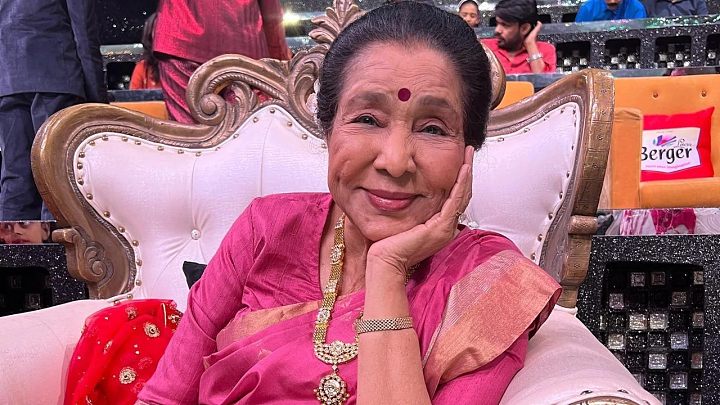
Asha Bhosle Birth Anniversary 2026: September 8 marks Asha Bhosle’s birth anniversary. This year, however, the occasion carries a profound sense of loss. It is the first birth anniversary of the legendary playback singer
लेखक Nibandh Vinod··36K पढ़े गए
Asha Bhosle Birth Anniversary: Remembering The Voice That Lives Forever
Asha Bhosle Birth Anniversary 2026: September 8 marks Asha Bhosle’s birth anniversary. This year, however, the occasion carries a profound sense of loss. It is the first birth anniversary of the legendary playback singer since her death on April 12, 2026, at the age of 92.
For more than eight decades, Asha Bhosle was not merely a playback singer but a defining voice of Indian popular music. Her extraordinary versatility allowed her to move effortlessly between film songs, ghazals, classical compositions, devotional music, folk, pop, qawwalis and experimental collaborations. She recorded thousands of songs in Hindi and several other Indian languages, building a body of work that crossed generations and musical boundaries.
Born Asha Mangeshkar on September 8, 1933, in Goar in present-day Maharashtra, she grew up in one of most influential musical families. Her father, Pandit Deenanath Mangeshkar, was a respected classical singer and theatre personality.
Read More: Late Legendary Singer Asha Bhosle’s Final Song As Playback Singer To Launch On THIS Special Day
Music became part of Asha’s life from an early age, as it did for her elder sister, Lata Mangeshkar. Following her father’s death in 1942, the family went through considerable upheaval before eventually moving to Bombay, where Asha’s singing career began to take shape.
Asha Bhosle began singing professionally as a child and went on to establish herself in an industry where she initially faced stiff competition and was often asked to sing for films and situations that other established singers had turned down. Instead of allowing those limitations to define her, she transformed them into opportunities, developing a distinctive style and an extraordinary vocal range.
Her career eventually encompassed virtually every shade of popular music. She could bring playfulness and sensuality to an upbeat film song, intimacy to a ghazal and emotional depth to a romantic ballad.
Songs such as “Piya Tu Ab To Aaja”, “Dum Maro Dum” and the music of Umrao Jaan became part of the cultural memory of generations. Her National Film Award-winning performances for “Dil Cheez Kya Hai” and “Mera Kuchh Samaan” also demonstrated the remarkable lyrical and classical dimensions of her voice.
One of the most important creative partnerships of her life was with composer Rahul Dev Burman, popularly known as R D Burman. Their professional collaboration became one of the most celebrated musical partnerships in Hindi cinema. Burman’s adventurous compositions and Asha’s willingness to experiment created a sound that pushed the boundaries of mainstream Hindi film music. They married in 1980 and remained together until Burman’s death in 1994.
Yet Asha Bhosle’s musical identity was never confined to one composer, one genre or one generation.
She worked with some of the biggest names in Indian music, including Khayyam, A R Rahman and numerous other composers. Her association with Umrao Jaan revealed a more restrained and poetic side of her artistry, while her work with younger musicians showed her ability to remain relevant as musical tastes evolved.
Her influence also travelled far beyond India.
Asha collaborated with international musicians including Boy George, Michael Stipe and the Kronos Quartet. She also became an important reference point for Western audiences discovering Indian film music. The 1990s song “Brimful of Asha” by British band Cornershop, later remixed by Fatboy Slim, brought her name into the British pop mainstream.
Asha Bhosle’s achievements were recognised with some of India’s highest honours. She won two National Film Awards and multiple Filmfare Awards, including a Lifetime Achievement Award. In 2000, she received the Dadasaheb Phalke Award, India’s highest honour in cinema.
In 2008, she was awarded the Padma Vibhushan, India’s second-highest civilian honour. In 2011, Guinness World Records recognised her as the most recorded artist in music history, acknowledging the extraordinary scale of her recording career.
But numbers and awards only tell part of the Asha Bhosle story.
Her life also contained periods of personal struggle and profound loss. She married Ganpatrao Bhosle at the age of 16, against the wishes of members of her family. The marriage was difficult and eventually ended, and she went on to raise three children.
Years later, she found both companionship and a remarkable artistic partnership with R D Burman. She also endured the deaths of her daughter Varsha and son Hemant, while continuing to remain active in music and public life.
Away from the recording studio, Asha Bhosle explored several other passions. She was known for her love of food and cooking and ventured into the restaurant business with the Asha’s chain, which began in Dubai and later expanded to other locations.
She also appeared on screen, making her acting debut in the 2013 film Mai. Her interests and ventures reflected the same curiosity and willingness to experiment that had characterised her musical career.
Even in her later years, Asha Bhosle remained connected to music. Her last live performance was in Dubai in 2024, and she continued to be celebrated by musicians and audiences across generations.
Her death on April 12, 2026, marked the end of one of the longest and most extraordinary careers in Indian music. Tributes poured in from across the country and around the world, reflecting the breadth of her influence and the emotional connection listeners had with her voice.
Now, on her first birth anniversary since her passing, that connection takes on a different meaning.
Asha Bhosle’s final recorded work for the upcoming drama-comedy Om Ka Hari, titled “Ae Meri Zindagi, Tu Chupi Hai Kahan,” is set to be released on September 8. The song is described as a heartfelt reflection on life, love, joy and the importance of expressing what we feel while we can.
Its release on her birth anniversary makes the moment particularly poignant. It offers listeners one more opportunity to hear a voice that spent more than eight decades becoming part of the soundtrack of Indian life.
Asha Bhosle may no longer be here to sing, perform or record another song. But the music she left behind ensures that her voice remains remarkably present.
On September 8, the world does not simply remember Asha Bhosle the legendary playback singer. It remembers Asha Bhosle the artist, the experimenter, the survivor and the woman who continually reinvented herself without ever losing the unmistakable identity of her voice.