‘We Now Count Peace in Years’: Omar Abdullah Recounts Mufti Sayeed-Narayana Murthy Exchange As J&K Eyes GCC Investments
Chief Minister Omar Abdullah’s recollection of a striking exchange between former Chief Minister Mufti Mohammad Sayeed, and Infosys co-founder N. R. Narayana Murthy has brought Jammu and Kashmir’s (J&K) past investm
Ni Rajan Vaid··41K nabasa
‘We Now Count Peace in Years’: Omar Abdullah Recounts Mufti Sayeed-Narayana Murthy Exchange As J&K Eyes GCC Investments
Chief Minister Omar Abdullah’s recollection of a striking exchange between former Chief Minister Mufti Mohammad Sayeed, and Infosys co-founder N. R. Narayana Murthy has brought Jammu and Kashmir’s (J&K) past investment challenges into focus, as the Union Territory seeks to attract Global Capability Centres (GCCs) and build new avenues of employment.
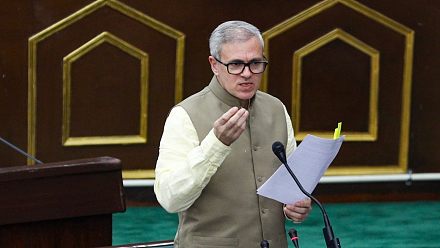
Speaking at the GCC Summit in Jammu, Omar recalled an investment event organised by NASSCOM in Srinagar during Mufti Sayeed’s first tenure as Chief Minister, between 2002 and 2005. Narayana Murthy, who was present at the event, had been invited by Mufti Sayeed to consider establishing an Infosys presence in Jammu and Kashmir.
According to Omar’s recollection, Murthy responded that if he were assured six days of peace and calm, he would come and invest on the seventh day.
The anecdote became a central point in Omar’s address, offering a historical reference against which he sought to explain the region’s changing circumstances and its present ambition to attract investment in emerging sectors.
“Thankfully today we don’t count our periods of calm in days, we don’t count them in weeks, we don’t even count them in months. I think it’s safe to say that we count them in blocks of years,” Omar said.
The remark placed the region’s earlier investment challenges alongside the government’s current efforts to position Jammu and Kashmir as a potential destination for global technology and business operations.
A POLITICAL CONTRAST BETWEEN TWO ERAS
Omar’s recollection drew attention to the different contexts in which investment opportunities have been discussed in Jammu and Kashmir over the past two decades.
During Mufti Sayeed’s tenure, the reported exchange with Narayana Murthy highlighted the importance investors attached to peace and stability. Today, Omar Abdullah is seeking to build on what he describes as a changed environment and encourage companies to consider the Union Territory for technology-led investment.
The Chief Minister did not present the anecdote as a personal criticism. Instead, he used it to illustrate the region’s evolution and the opportunity to move towards a new phase of economic development.
The political significance lies in the contrast: a past investment appeal shaped by concerns over stability is now being invoked in support of an ambition to attract global businesses and create local employment.
‘COMING LATE TO THE PARTY IS NOT ALWAYS A DISADVANTAGE’
Omar acknowledged that Jammu and Kashmir is entering the GCC sector later than established technology hubs such as Bengaluru, Hyderabad and Chennai. However, he argued that this need not prevent the region from finding its place in the industry.
Drawing an analogy with the evolution of Indian Railways, he referred to the progression from conventional trains to Mail and Express services, Rajdhani and Shatabdi trains, and eventually Vande Bharat.
His point was that late entrants can benefit from the experience of others and adopt newer models instead of repeating every stage of development.
“Coming late to the party is disappointing, but it’s not always disadvantageous. We can learn from the experiences of others. We don’t have to reinvent the wheel. We just have to use it better,” he said.
The Chief Minister identified emerging Tier 2 and Tier 3 destinations, including Jaipur, Pune and Mohali, as examples of the kind of markets alongside which Jammu and Kashmir could seek to compete.
Rather than attempting to replicate the scale of established metropolitan centres immediately, the region hopes to attract an initial investment base and gradually develop the supporting ecosystem.
ATAL DULLOO EMPHASISES INVESTMENT AND EMPLOYMENT POTENTIAL
Chief Secretary Atal Dulloo has also highlighted the importance of the GCC initiative, expressing confidence that the changing circumstances in Jammu and Kashmir could open new possibilities for investment and employment generation.
He has stressed the potential for GCCs to provide opportunities for local youth, strengthen economic activity and encourage major companies to consider establishing operations in the Union Territory.
His emphasis complements Omar Abdullah’s pitch for a gradual, industry-led expansion of the region’s economic base.
For the administration, the challenge is to translate investor interest into concrete projects, create conditions that support long-term business operations and ensure that local graduates are equipped to take advantage of the opportunities that emerge.
EDUCATED YOUTH AT THE CENTRE OF THE GCC PUSH
Omar identified Jammu and Kashmir’s educational institutions and young talent as important assets in its effort to attract GCCs.
He referred to IIT Jammu, Shri Mata Vaishno Devi University, the University of Jammu, the University of Kashmir and the Islamic University of Science and Technology as institutions producing educated and ambitious graduates.
However, many young people continue to look outside the Union Territory for opportunities in specialised technology and corporate services.
GCCs could potentially create local employment in software development, analytics, finance, research and business operations, depending on the functions companies choose to establish.
For Jammu and Kashmir, the larger objective is to ensure that its young people can build careers at home while contributing to businesses operating in national and international markets.
‘ONE CENTRE CAN LEAD TO FIVE’
Omar said the success of the summit should not be judged by whether Jammu and Kashmir immediately attracts a hundred GCCs.
Instead, he argued that even one centre could provide the foundation for future growth. “One will lead to five, five will lead to ten, and the story will grow from there,” he said.
He described the workshop as a learning opportunity for the government, allowing it to understand industry expectations, study successful models and identify what needs to be done to attract investment.
The Chief Minister also made clear that Jammu and Kashmir wanted to be considered on merit, rather than as a charity case because of its difficult history.
The message to investors was to visit the region, assess its capabilities and give it an opportunity to demonstrate its potential.
FROM POLITICAL MEMORY TO ECONOMIC OPPORTUNITY
The GCC initiative brings together two strands of Jammu and Kashmir’s current economic narrative: the political significance of changing circumstances and the practical challenge of creating employment through private investment.
Mufti Sayeed’s reported exchange with Narayana Murthy provides the historical backdrop. Omar Abdullah’s present-day pitch seeks to turn that contrast into an argument for a new economic direction, while Atal Dulloo has highlighted the administration’s expectations for investment and job creation.
Whether that ambition succeeds will depend on the region’s ability to attract actual investors, provide the infrastructure and skilled workforce they require, and establish sustainable business operations.
The summit marks an effort to open that conversation, but future GCC establishments and employment gains remain objectives to be realised rather than outcomes already secured.
From Mufti Sayeed’s reported appeal for six days of peace to Omar Abdullah’s ambition of attracting global capability centres, the political and economic question facing Jammu and Kashmir is whether changing circumstances can translate into lasting investment, local jobs and a stronger private sector.