Tiger Shroff Firing, A Screenshot And A Threat: How Lawrence Bishnoi Gang Plays The Social Media Game
When gunshots rang out near actor Tiger Shroff’s car in Mumbai’s Juhu area on Sunday, the immediate questions were about the shooters, their motive and whether the actor was the intended target. But soon, another detail
Ni Apoorva Misra··34K nabasa
Tiger Shroff Firing, A Screenshot And A Threat: How Lawrence Bishnoi Gang Plays The Social Media Game
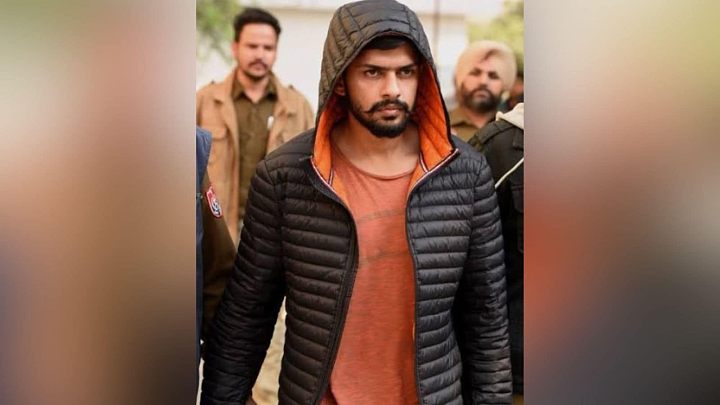
When gunshots rang out near actor Tiger Shroff’s car in Mumbai’s Juhu area on Sunday, the immediate questions were about the shooters, their motive and whether the actor was the intended target. But soon, another detail emerged—a social media post purportedly linked to the Lawrence Bishnoi gang claimed responsibility for the firing, with screenshots of the message circulating online.
The pattern is not new. From the firing outside actor Salman Khan’s residence in April 2024 to the shooting outside filmmaker Rohit Shetty’s home in February 2026, claims attributed to the Bishnoi gang have repeatedly surfaced on social media after attacks and threats against prominent personalities.
But why claim responsibility publicly if the idea is to avoid detection? And why circulate screenshots of posts that can be deleted as quickly as they appear?
ALSO READ | Tiger Shroff Firing: First Visuals Of Attackers Emerge, Gunshots Heard As Chaos Erupts
The answer lies in the peculiar balance organised crime groups seek between visibility and deniability. A claim can amplify fear, project influence and attract attention, while the manner in which it is published and circulated can make it harder for investigators to establish who actually posted it.
What Happened In The Tiger Shroff Case?
Unidentified assailants opened fire near Shroff’s car in the Juhu area on Sunday evening as the actor was leaving a park after playing football. Shroff escaped unhurt, but his driver and another person were injured. Police said five rounds were fired.
A social media post purportedly linked to the Bishnoi gang claimed responsibility. Also, US-based gangster Anil Pandit claimed responsibility in an audio clip and threatened members of the film industry, including Salman Khan.
This has left several questions unanswered:
1. Why Claim Responsibility At All?
In conventional criminal investigations, publicity can be a liability. A public claim may give investigators a lead, help establish a motive or create a digital trail. Yet for a gang seeking to intimidate a particular person or influence a wider audience, publicity can also serve a purpose.
ALSO READ | ‘Tiger Shroff Has Injury On Right Hand’: Eknath Shinde Says ‘Won’t Let Gang Wars Survive’ | Exclusive
By claiming an attack, a group can attempt to associate itself with the violence, demonstrate its “reach” and warn others against ignoring its demands. The intended audience may extend well beyond the immediate target to celebrities, businesspeople, rivals, potential recruits and the public.
The Bishnoi gang’s threats against Bollywood personalities have often carried a message beyond the individual targeted. In the case of the firing outside Rohit Shetty’s residence in February 2026, a post attributed to the gang warned the filmmaker against interfering in its affairs and issued a broader warning to the film industry.
According to The Indian Express, Mumbai Police chargesheets in the Salman Khan firing and Baba Siddique murder cases described the creation of fear as a possible means of facilitating extortion. So, the claim itself can become part of the intimidation. The objective is not necessarily to extract money immediately but also establish that the group should be taken seriously.
2. Why Use A Screenshot Instead Of Leaving The Post Online?
In a February 2026 report on the gang’s changing modus operandi, The Indian Express described how a post claiming responsibility could be published on social media, screenshotted and then deleted. The screenshot would continue circulating even after the original post disappeared.
A police officer cited by Express said the practice made it difficult to trace the original post through its URL and allowed the group to maintain deniability later.
An original social media post may leave investigators with information to examine, including the account that published it, its creation history, available platform records and relevant technical data. Depending on the platform and circumstances, investigators may seek information that helps establish when and where an account was accessed.
A screenshot, by contrast, is essentially a picture of what someone claims appeared on a screen. It may preserve the wording, display name and profile image, but it does not automatically establish who created the post, who controlled the account or whether the material is authentic.
Once the original post has been deleted, investigators may have to work harder to locate the source and obtain supporting records.
3. How Does This Create Deniability?
The tactic exploits a basic problem in digital investigations: the existence of a message is not the same as proof of who sent it.
A screenshot can be copied, forwarded, edited or attributed to an account without establishing who was operating that account. Even a genuine post from an account associated with a gang does not, by itself, prove that the gang ordered or carried out the attack.
This creates room for competing explanations. The person behind the account could be a gang member, an associate, an impersonator or someone attempting to exploit the gang’s reputation.
Investigators therefore have to establish several separate links: whether the post is genuine, who controlled the account, whether that person was connected to the crime and whether the claim reflects actual involvement rather than an attempt to take credit.
The Bishnoi gang’s current operating model relies on a network of people and fleeting social media activity, allowing it to project influence while preserving a degree of distance from those who carry out attacks.
That separation between the person who carries out an attack and the person who claims it can complicate an investigation.
4. Why Is Social Media So Important To The Bishnoi Gang’s Image?
The gang has cultivated a public image through social media accounts, videos and posts that portray its members as powerful and influential. Some accounts operate as fan pages, circulating photographs, reels and material associated with Lawrence Bishnoi and other alleged gang members.
A February 2026 investigation by The Indian Express reported that police had found arrested accused in the Rohit Shetty firing case were influenced by social media accounts glorifying the gang. Officers described how young men were drawn to its online image and, in some cases, approached accounts through direct messages seeking an opportunity to work for it.
This online ecosystem matters because a gang’s reputation can have a life beyond its actual operational capacity. When a threat or claim is posted, fan accounts and other users can circulate it rapidly. The resulting attention may make the group appear more powerful, more connected and more omnipresent.
This then becomes a cycle: a crime generates a claim, the claim generates online attention, and that attention strengthens the reputation that makes subsequent threats more intimidating.
5. Why Target Celebrities And Prominent Personalities?
High-profile targets bring an attack into the public eye almost immediately. A shooting involving a Bollywood actor is likely to attract extensive media coverage, public discussion and political scrutiny. A threat against a well-known personality can therefore reach a much larger audience than a private warning.
The Bishnoi gang’s confrontation with Salman Khan has been a particularly prominent example. The gang has invoked the actor’s alleged role in the 1998 blackbuck hunting case, which it associates with the religious beliefs of the Bishnoi community. Claims and threats attributed to the gang have also referred to people in the actor’s professional circle.
The firing outside Tiger Shroff’s car, followed by the reported warning to Khan and the film industry, again brought the relationship between individual targets and a broader message into focus.
For a criminal group seeking notoriety, the attention generated by a celebrity-targeted incident can be valuable in itself. It can also unsettle people who may wonder whether they could be targeted next. That is precisely why the public should be cautious about treating every online claim as confirmation of a gang’s reach or power.
6. Can Police Trace A Deleted Post Or Screenshot?
Yes, although the difficulty depends on the evidence available.
Investigators can examine screenshots alongside witness statements, account details, platform records, device data, CCTV footage, forensic findings and communications linked to the suspects. They may also compare the language and details in a claim with information that was not publicly known when it was posted.
The challenge is that a screenshot alone may provide little reliable information about its source. If the original account has been deleted, the account was created using false details or the post was circulated through several intermediaries, establishing the chain of custody and identifying the original author may become more complicated.
The 2024 firing outside Salman Khan’s residence shows the investigative work involved. Police examined the Facebook account used to claim responsibility, including when it had been created and technical information about the post’s apparent origin. Police suspected the use of a virtual private network, or VPN, but the apparent location of an upload was not necessarily proof of where the person responsible was physically present.
In the Tiger Shroff case, the immediate task remains establishing who carried out the shooting and whether the attackers were connected to the people claiming responsibility.