Teachers' And Graduates' MLC Polls: Barometer Of Public Mood Or Political Signal With Limits?
A teacher worried about delayed recruitment, a college lecturer concerned about service conditions, and a young graduate searching for a job may all have reasons to vote against an incumbent government. But their grievan
Ni Aman Sharma··39K nabasa
Teachers' And Graduates' MLC Polls: Barometer Of Public Mood Or Political Signal With Limits?
A teacher worried about delayed recruitment, a college lecturer concerned about service conditions, and a young graduate searching for a job may all have reasons to vote against an incumbent government. But their grievances do not necessarily translate into a single political verdict shared by millions of voters across a state.
That is what makes elections to the Teachers’ and Graduates’ constituencies of State Legislative Councils politically interesting – and also why their results need to be read with caution.
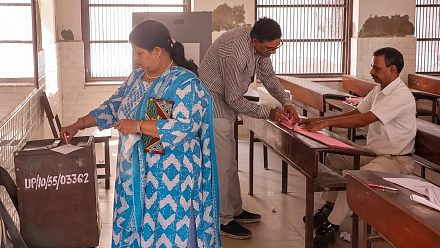
These are not conventional elections. The electorate is restricted to eligible teachers and registered graduates, who elect Members of the Legislative Council (MLCs) through a preferential voting system on ballot papers. Unlike Assembly elections, in which the entire eligible electorate can participate, these contests capture the political mood of a much narrower section of society. One needs to register through a form to be able to vote – just being in the normal electoral roll is not enough. The voter base, hence, is small. Also, one needs to provide preferential order for candidates – not necessarily vote for just one candidate.
NDA won 16 out of the 28 MLC polls in various states. In UP, BJP won 6 out of the 11 seats while SP won 5. Congress has taken potshots at BJP for losing the polls in Varanasi and Nagpur while the PM took on Congress for winning just a solitary seat.
The Constitution provides for approximately one-twelfth of a State Legislative Council’s members to be elected by graduates and another one-twelfth by teachers. These constituencies exist only in states with a Legislative Council. The eligibility requirements are specific: graduates must generally have held their qualification for at least three years, while teachers must have completed at least three years of teaching during the preceding six years in eligible institutions. Separate electoral rolls are maintained under Section 27 of the Representation of the People Act, 1950. The idea is to give the educated class a chance to send representatives to the upper house in state assemblies.
This creates an electorate with interests that can differ from those of the general voting population.
For a teacher, the immediate concerns may be recruitment, salaries, promotions, pension benefits, contractual employment or the administration of educational institutions. For a graduate, the issues could include unemployment, competitive examinations, the quality of higher education, inflation and opportunities for economic mobility.
These concerns are not detached from the wider political climate. They are, in fact, part of it. But the weight voters attach to each issue, and the way those concerns influence their ballot, may differ considerably from the priorities of farmers, industrial workers, small traders, women voters or rural households.
That distinction is crucial when political parties attempt to interpret an MLC result as evidence of a wider electoral trend.
For the ruling party, a favourable result can indicate that its organisational machinery remains effective and that it retains support among sections of the electorate that are often politically engaged. A setback, meanwhile, can flag dissatisfaction over local governance, education policy, employment or candidate selection.
For the Opposition, these contests offer an opportunity to test its ability to mobilise voters, build alliances and convert discontent into votes without waiting for an Assembly election.
The campaigns can also expose weaknesses that a party might otherwise overlook. A candidate’s personal standing, a strong local network, the mobilisation of teachers’ associations, or resentment over a specific administrative decision may shape the outcome.
That makes the result useful as a political diagnostic. But it is not necessarily a statewide verdict on the government.
Can these elections predict Assembly results? The answer is: not on their own.
An MLC candidate may win because of a strong personal following, an established teachers’ association, a local network or a campaign focused on a specific professional grievance. An Assembly candidate, by contrast, must appeal to a far wider electorate, often across sharply different social and economic groups.
The two elections also operate on different political scales. In an Assembly contest, caste equations, welfare schemes, leadership, law and order, local development, national political narratives and the performance of the incumbent government can all influence voting behaviour. In a Teachers’ or Graduates’ Constituency, the relative importance of those factors may be different.
Nor does a victory for a party in an MLC election necessarily indicate that it has expanded its support across the state. The party could have consolidated a narrow but influential voter base. Equally, a defeat does not automatically signal statewide anti-incumbency.
Still, dismissing these elections as politically insignificant would be a mistake. A series of results across constituencies, particularly when accompanied by evidence of shifting voter preferences, organisational weakness or recurring grievances, can offer clues about a changing political environment.
The most accurate way to read Teachers’ and Graduates’ MLC elections is as a political weather vane: they can indicate which way the wind is blowing among particular sections of society, but they cannot tell us, by themselves, how the entire state will vote.