'Sheer Stupidity': Harish Salve Slams Oppn March To SC, Says Top Court Being Used As Political Tool
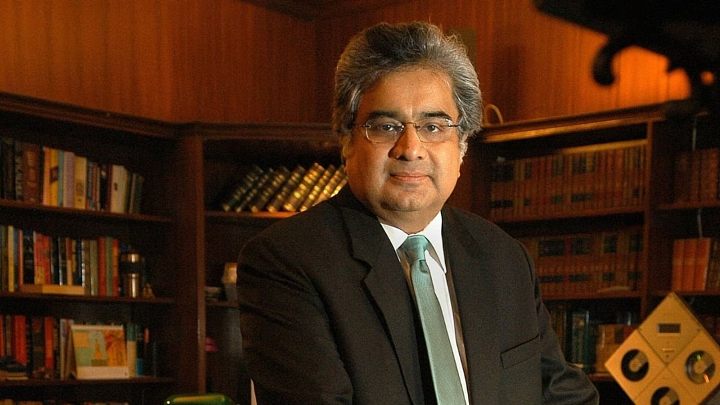
Former Solicitor General Harish Salve has strongly criticised the Opposition’s decision to march to the Supreme Court and seek a meeting with Chief Justice of India (CJI) Surya Kant, describing the move as “sheer stupidi
Ni News Desk··96K nabasa
'Sheer Stupidity': Harish Salve Slams Oppn March To SC, Says Top Court Being Used As Political Tool
Former Solicitor General Harish Salve has strongly criticised the Opposition’s decision to march to the Supreme Court and seek a meeting with Chief Justice of India (CJI) Surya Kant, describing the move as “sheer stupidity” and alleging that the judiciary was being used as a political tool.
In an interview with IANS, Salve questioned the INDIA bloc’s approach to the judiciary amid its protests against Chief Election Commissioner Gyanesh Kumar and allegations of irregularities in the electoral process. He argued that political parties must follow established legal procedures rather than seek to exert pressure on constitutional institutions.
“This is sheer stupidity. It appears as though they are proceeding on the assumption that they have no faith in the Constitution or any system and that they will do whatever they want,” Salve said.
Salve’s remarks came after Congress leader Rahul Gandhi announced a march to the Supreme Court on Monday over allegations of “vote chori”, or electoral fraud, and demanded the resignation of Gyanesh Kumar. Gandhi also called on opposition parties, civil society groups and citizens to join the march and submit a memorandum to the CJI.
News18 had reported on Sunday that the CJI, however, has reportedly declined the request and indicated that instead of submitting a memorandum, Gandhi and the delegation should approach the court by filing a petition.
‘Supreme Court Being Used As A Political Tool’
Questioning the Opposition’s attempts to approach the CJI, Salve said the judiciary was being drawn into political disputes. “Absolutely. In my opinion, they are trying to use the Supreme Court as a political tool every day,” he said.
He maintained that the courts were examining questions relating to human rights, the right to protest and freedom of expression under Article 19 of the Constitution, and that political parties should allow the judicial process to take its course. “The judges are doing their job,” Salve said, adding that the Supreme Court had passed what he described as a balanced order.
Salve also criticised the tendency of political leaders and lawyers to question the judiciary when its decisions do not go in their favour. He said disagreement with a particular judgment should not be confused with a loss of faith in the judicial system. “Faith in the judiciary and the correctness of a particular judgment are two different things,” he said.
He added that those who disagree with a verdict can express their views and present arguments, but should not suggest that an unfavourable decision necessarily undermines the judiciary’s credibility.
On Gyanesh Kumar
On the Opposition’s demand for action against Kumar, Salve said the allegations should be examined through the established judicial process.
He pointed out that the Supreme Court had sought a response from the CEC and that the Election Commission would have an opportunity to present its position and records before the court. “Is it necessary to create a commotion every day? Is it necessary to inconvenience the people of Delhi?” Salve asked, raising concerns about the potential impact of protests on businesses and ordinary citizens during the festive season.
He said the court would examine whether any irregularities had taken place and how they had been addressed. “The Supreme Court has sought a response from the Chief Election Commissioner, and the court will deliver its decisions in due course,” he said.
Salve also argued that any action against the CEC would have to follow the appropriate constitutional procedure, depending on the findings and circumstances. He stressed that the Supreme Court could not directly remove the CEC from office. “There is no need to draw conclusions in haste. This is politics,” he said.
‘Right To Protest Does Not Place Anyone Above The Law’
Salve also defended the need to regulate protests in accordance with the law, arguing that the constitutional right to demonstrate did not permit people to disregard police restrictions. “The main point is that the right to protest is subject to the applicable police laws. It does not exist outside the law,” he said.
He added that if permission to hold a protest was denied, organisers could challenge the decision through the appropriate legal process rather than defy restrictions and subsequently claim that their rights had been violated. “The Supreme Court has made it clear that the right to protest does not place anyone above the law,” Salve said.
Salve also questioned the strategy adopted by the Congress despite the presence of several senior lawyers in the party. “From a legal perspective, I am surprised that a party with such extensive legal expertise is choosing this course of action,” he said, adding that Congress leaders would have to explain whether the strategy was being pursued on the advice of their lawyers.
Salve Alleges Foreign Funding Behind Protests
In the interview, Salve alleged that foreign forces were instigating protests in India and claimed that foreign funding was being provided for such activities. He cited developments in Nepal, Sri Lanka and Bangladesh as examples of what he believes is a broader pattern of external interference.
“I believe that foreign funding is being provided for these efforts and that they are being instigated from abroad. This is my allegation,” he said.
Salve also referred to individuals he alleged were helping mobilise protests and questioned the sources of funding for such activities. He argued that the government had a responsibility to investigate allegations of foreign involvement.
These remarks constitute Salve’s allegations; the interview does not establish independent evidence to substantiate them.
He further argued that the protests were politically motivated and expressed doubt that they represented a broader public movement. “I am fully confident that an investigation will be initiated. However, I do not consider this a people’s movement,” he said.
‘We Must Not Weaken Our Institutions’
Salve said political parties must recognise that the country’s constitutional framework comprises institutions with distinct roles and responsibilities, including the judiciary, legislature, elected executive and Election Commission.
He warned that repeated attacks on institutions could undermine public confidence in governance, regardless of which political party was in power. “We must not weaken or target our institutions,” he said.
Salve added that democratic debate could not function if political parties treated every disagreement as evidence of bias or political motivation. “If you start saying that only you are right and that anyone who disagrees with you has compromised their position or is politically motivated, genuine exchanges of ideas come to an end,” he said. “Democracy cannot function this way.”