'Sharper Competition, National Assertions': Jaishankar Says Multipolar World Order Taking Shape Amid Conflicts
External Affairs Minister S Jaishankar on Saturday said a new multipolar world order marked by sharper competition, greater national assertions and a more transactional global approach is taking shape amid the ongoing co
Ni Vani Mehrotra··103K nabasa
'Sharper Competition, National Assertions': Jaishankar Says Multipolar World Order Taking Shape Amid Conflicts
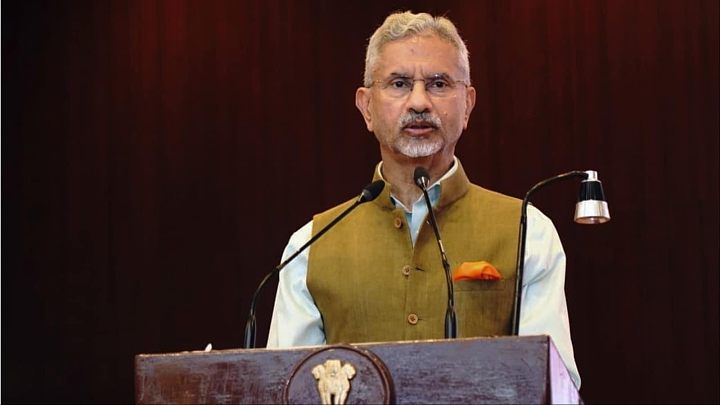
External Affairs Minister S Jaishankar on Saturday said a new multipolar world order marked by sharper competition, greater national assertions and a more transactional global approach is taking shape amid the ongoing conflicts in West Asia and Ukraine.
Speaking at the HT Leadership Summit, Jaishankar said the world was undergoing a major transition that would make the global landscape increasingly complex and less predictable, with a growing number of autonomous decision-making centres and countries prioritising their national interests.
“That will be the culture or the ethos of the era that we are moving into. I don’t want you to get a sort of picture of anarchy, but definitely sharper competition, more national assertions, and in that sense inherently a more unstable (world),” Jaishankar said.
The External Affairs Minister said the emerging global order would have more centres of autonomous decision-making, with countries becoming increasingly nationalistic in their choices and decisions.
“Countries overall would be much more national in their choices and decisions. Alliances will be less cohesive because of national interests and more transactional because they feed into each other: less cohesive, more transactional,” he said.
Jaishankar described the increasing number of “self-centred” players, alongside multiple conflicts, geopolitical frictions and uncertainty, as factors contributing to the changing global landscape.
On the US-China competition, he said it was a significant contributor to global volatility but cautioned against attributing all ongoing conflicts to the rivalry between the two powers.
“You can’t say US-China turbulence is driving the Gulf or driving what’s happening in Ukraine. I think you have multiple causes here. But definitely the US-China competition is a big part of the overall disturbance or volatility,” he said.
INDIA NEEDS STRONGER DOMESTIC CAPABILITIES
Jaishankar said India would have to prepare for the emerging global reality by strengthening its domestic capabilities, underlining the importance of the government’s Atmanirbhar Bharat and Make in India initiatives.
“For me, these are the building blocks of our foreign policy because you cannot have an effective foreign policy in this era without much stronger national capacities,” he said.
He also stressed the need to build India into a manufacturing power, noting that the country had missed the manufacturing opportunity between the 1960s and the late 1990s.
“Today, we have to build ourselves into a manufacturing power. At the same time, we have to also aim to get into the technologies and capabilities which are required for the contemporary era,” he said.
INDIA-US TRADE DEAL NEARS FINISHING LINE
On the proposed India-US trade agreement, Jaishankar said negotiations had resolved most of the outstanding issues, and the two sides were now working towards addressing the remaining concerns.
“Well, it’s certainly our hope, and in many ways anticipation, that we are at the last stretch. That’s not a secret,” he said at the summit.
He added that the bulk of the issues had been sorted out and expressed hope that the agreement would be concluded soon.
“The hope is that we should close it out soon. It’s always the case that in that last period, everybody’s impatient,” Jaishankar said.
The minister said India’s objective was to secure a trade agreement that was balanced and beneficial to the country and provided it with a comparative advantage over comparable economies.
“For us, the key is that we want a trade deal which is beneficial, is balanced and would give us a comparative advantage over groups of comparable economies,” he said.
Calling the US India’s biggest market, Jaishankar said a trade agreement with the world’s largest economy would benefit India. However, he stressed that negotiations involved serious economic considerations and could not be concluded through hurried decisions.
He also said the negotiations had involved examining tariff issues line by line.
“But I think having put in that effort, we have now reached almost the finishing line. I think bear with it, and hopefully we’ll get it,” he said.