Person Converting From Hinduism To Islam Cannot Claim 'Backward Class' Muslim Status: Supreme Court
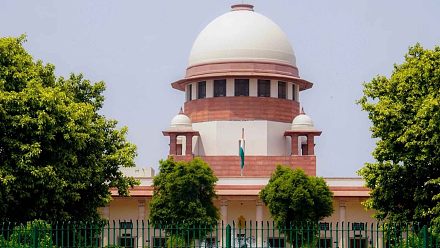
The Supreme Court on Thursday upheld a Madras High Court judgment holding that a person who converts from Hinduism to Islam cannot claim backward class reservation solely based on their pre-conversion caste status.
Ni Vani Mehrotra··114K nabasa
Person Converting From Hinduism To Islam Cannot Claim 'Backward Class' Muslim Status: Supreme Court
The Supreme Court on Thursday upheld a Madras High Court judgment holding that a person who converts from Hinduism to Islam cannot claim backward class reservation solely based on their pre-conversion caste status.
A bench of Justices Prashant Kumar Mishra and Shree Chandrashekhar dismissed a challenge filed by the Tamil Nadu government against the High Court’s decision to strike down a 2024 government order that permitted people converting to Islam from certain backward communities to obtain community certificates identifying them as members of one of seven notified Backward Class Muslim communities.
In its ruling, the Supreme Court held that conversion to a non-Hindu religion does not automatically entitle a person to claim affirmative action benefits associated with their previous social identity.
“A person who converts from the Hindu social order to a non-Hindu social order cannot claim affirmative action under Article 16(4) of the Constitution merely on the basis of the social backwardness associated with his pre-conversion status,” the court said, according to Bar and Bench.
PRE-CONVERSION CASTE STATUS CANNOT BE TRANSFERRED
The Supreme Court also clarified that conversion to Islam, Christianity or another non-Hindu religion does not, by itself, confer membership of a particular notified backward class community in the new religious order.
According to Live Law, the bench ruled that a person’s former caste or community status cannot simply be transferred to a notified Backward Class Muslim category because of religious conversion.
The court further observed that the Constitution (Scheduled Castes) Order, 1950, does not recognise Scheduled Caste status for persons professing religions other than Hinduism, Sikhism or Buddhism.
“By virtue of paragraph 3 of the Constitution (Scheduled Castes) Order, a person who professes a religion other than Hinduism, Sikhism or Buddhism cannot be deemed to be a member of a Scheduled Caste,” the court held, as reported by Bar and Bench.
It added that a person converting to a religion not covered by the order ceases to possess the Scheduled Caste status attached to their antecedent caste and cannot claim benefits dependent on that status.
The bench also addressed cases in which a person converts from the Hindu social order to another religion and subsequently reconverts to Hinduism. It held that such a person’s entitlement to affirmative action cannot be determined merely by referring to their pre-conversion status.
Instead, an independent, fact-specific assessment must establish whether the person’s original caste or social identity has genuinely revived upon reconversion and whether the applicable constitutional and legal requirements have been met.
WHAT WAS THE TAMIL NADU GOVERNMENT ORDER?
The case arose from a March 9, 2024, government order issued by Tamil Nadu’s Backward Classes, Most Backward Classes and Minorities Welfare Department.
The order permitted people converting to Islam from Backward Classes, Most Backward Classes, Denotified Communities or Scheduled Castes to be treated as Backward Class Muslims and obtain community certificates identifying them as members of one of seven notified communities for reservation purposes.
The seven notified communities are Ansar, Dekkani Muslims, Dubekula, Labbais, including Rowthar and Marakayar, Mapilla, Sheik and Syed.
The Madras High Court had declared the government order unconstitutional, holding that it ran contrary to judicial precedents concerning the consequences of conversion to Islam.
According to Live Law, the High Court had observed that a person converting to Islam could be treated as a Muslim but could not automatically be considered a member of one of the seven notified Backward Class Muslim communities merely because of their previous caste status.
HOW THE CASE REACHED THE SUPREME COURT
The proceedings originated from a petition filed by Sameer Ahamed, who converted from Hinduism to Islam in 2015.
A gazette notification recording his conversion was issued in 2016. He subsequently married according to Islamic rites and customs and had two children.
Sameer later applied for a community certificate identifying him as belonging to the Muslim Lebbai community. The Tahsildar rejected his application, prompting him to approach the Madras High Court.
He relied on the Tamil Nadu government’s March 2024 order to claim eligibility for the certificate.
According to Live Law, the High Court, while examining his plea, questioned the legal validity of the government order and impleaded the State as a party to determine its constitutionality.
The Tamil Nadu government defended the order, arguing that it was based on a recommendation made by the Tamil Nadu Backward Classes Commission in a letter dated February 6, 2024.
The State contended that the measure was intended to ensure that people who had previously enjoyed reservation benefits did not lose them upon converting to Islam.
It also argued that extending the benefits would not disturb the existing social balance.
The High Court, however, struck down the order.
The State subsequently challenged that decision before the Supreme Court through a special leave petition filed on July 6.