‘Partnership, Not Alliance’: Jaishankar On India-US Ties And The Bigger Shift Behind Tariffs
External Affairs Minister S Jaishankar has said countries must recalculate their relationships with the United States as Washington changes the way it engages with the world, while underlining that India’s ties with the
Ni News Desk··37K nabasa
‘Partnership, Not Alliance’: Jaishankar On India-US Ties And The Bigger Shift Behind Tariffs
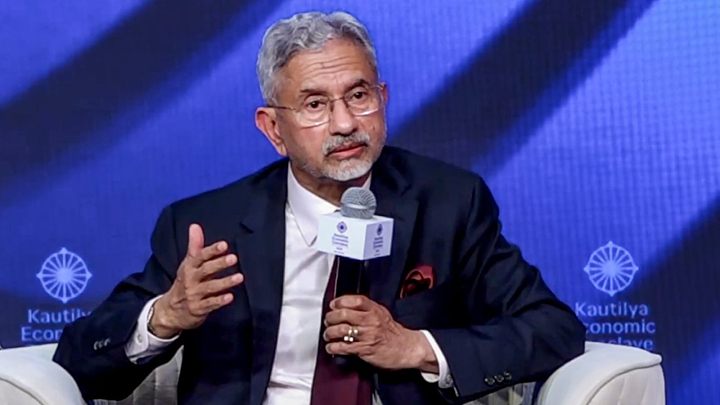
External Affairs Minister S Jaishankar has said countries must recalculate their relationships with the United States as Washington changes the way it engages with the world, while underlining that India’s ties with the US are a strategic partnership, not a formal alliance.
Jaishankar’s remarks come amid differences between New Delhi and Washington over trade, tariffs and other bilateral issues, with the two countries continuing to engage on areas of shared interest. His comments also come ahead of US Secretary of State Marco Rubio’s upcoming visit to India, during which energy cooperation and broader strategic ties are expected to figure on the agenda.
Speaking about Washington’s changing global posture, Jaishankar, over the weekend, said the shift was not limited to any one country and required governments to reassess how they engage with the US.
ALSO READ | ‘Age Of Flux’: Jaishankar Warns Of Turbulent Times, Says India Will ‘Rise To Challenges’
“The reality is the United States has repositioned itself. It has changed the manner in which it engages the world, the basis on which it engages the world. I think every country, in a way, has to recalculate and reset its relationship with the United States.”
India-US Ties Are A Strategic Partnership, Not An Alliance
Distinguishing India’s relationship with Washington from the formal alliances the US maintains with other countries, Jaishankar said New Delhi’s engagement with Washington was based on shared interests rather than alliance obligations.
“We have many issues we are working on with the United States, but we don’t have an issue of the terms of alliance because we are not officially an ally. We are a country which has a strong strategic partnership with the US, but a strategic partnership is a partnership; it’s not an alliance,” he said.
Jaishankar said India and the US had spent more than two decades identifying areas where their interests converged and building cooperation around them. He indicated that the changing international environment had not fundamentally altered that underlying approach.
“In our case, for the last 20-odd years, we have worked out what we felt were convergences, overlaps, shared common interests with the US, and we had agreed that we would pursue that. I don’t think that has fundamentally changed.”
ALSO READ | ‘Limits To What US, China Can Agree’: EAM Jaishankar Says World Adjusting To ‘Very Different America’
The distinction is significant as India continues to pursue cooperation with the US while retaining the flexibility to make independent decisions on issues where the two countries’ interests may differ.
Tariffs Reflect A Bigger Shift In US Economic Policy
On trade, Jaishankar pointed to Washington’s changing approach to tariffs, arguing that the issue needed to be understood in the context of the US seeking to rebuild its domestic industrial base and alter the terms on which other countries access its economy.
“The US has a fundamentally different approach to the use of tariffs. But even that is a symptom of something else. The US is today determined to reindustrialise and to reset the terms of access to its economy,” he said.
The comments come as India and the US continue to work through trade-related differences. The tariff debate is part of a broader discussion about market access, domestic manufacturing and the terms of economic engagement between the two countries.
For India, the challenge is to preserve areas of cooperation while negotiating trade arrangements that account for its own economic interests and the terms Washington is offering competing economies.
Rubio’s India Visit In Focus
Jaishankar’s remarks come ahead of Rubio’s planned India visit from October 17 to 22, which is expected to include engagements in Mumbai and Jamnagar. According to the US State Department, discussions are expected to cover the strategic partnership, regional and global developments, and prospects for enhanced energy cooperation.
The visit comes at a time when the two sides have several issues to address, including stalled trade negotiations and differences over US tariff measures. Energy cooperation is also an important part of the bilateral agenda.
The diplomatic engagement will provide an opportunity for both sides to discuss areas where cooperation can advance even as they manage disagreements.
Jaishankar’s Earlier ‘Lonelier Power’ Remark
Jaishankar’s latest comments follow his recent assessment that the global order is being reshaped by a significant change in the US’s international posture and the rise of China.
Speaking at the Munich Leaders Meeting in New Delhi earlier this month, he described the US as having “deliberately become a lonelier power”, while identifying China’s growing influence as another defining feature of the changing global landscape. He also said strategic competition was leading countries to weaponise whatever leverage they possessed, even as economic and political interdependence continued.