Myanmar Training Camp Case: Matthew VanDyke Gets Nod To Return To US, Can Stay Abroad Till Feb 24
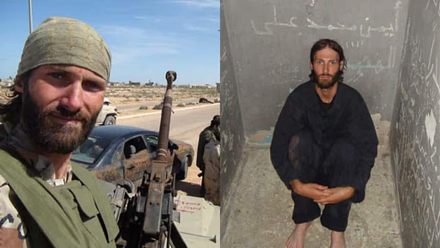
US national Matthew Aaron VanDyke was on Friday granted permission to return to the United States by a Delhi court, which has also allowed him to stay abroad till February 24, in the case linked to alleged drone-warfare
Ni Ananya Bhatnagar··76K nabasa
Myanmar Training Camp Case: Matthew VanDyke Gets Nod To Return To US, Can Stay Abroad Till Feb 24
US national Matthew Aaron VanDyke was on Friday granted permission to return to the United States by a Delhi court, which has also allowed him to stay abroad till February 24, in the case linked to alleged drone-warfare training for armed groups in Myanmar.
VanDyke, who was arrested by the National Investigation Agency (NIA) in March this year, is among seven foreign nationals accused of illegally entering Myanmar through India and allegedly providing drone-warfare training to ethnic armed groups fighting the country’s military junta.
The latest relief follows a series of court proceedings in September, when VanDyke and six Ukrainian nationals arrested in the same case were granted default bail and subsequently allowed to travel to their respective countries for a month to meet their families. The court had directed them to return to India after the permitted period.
What Is The Case Against Matthew VanDyke?
The NIA arrested VanDyke on March 13, 2026, in connection with an alleged conspiracy involving drone-warfare training for armed groups operating in Myanmar. Six Ukrainian nationals—Petro Hurba, Taras Slyviak, Ivan Sukmanovskyi, Marian Stefankiw, Maksim Honcharuk and Viktor Kaminskyi—were arrested in the same case at airports in Delhi and Lucknow.
ALSO READ | What Allowed VanDyke, 6 Ukrainians To Walk Free And Return Home? The UAPA Gap Behind Court’s Order
According to the NIA, the accused entered India on tourist visas but travelled to the Northeast without obtaining the required permits. The agency alleged that they subsequently crossed from Mizoram into Myanmar, where they participated in a training programme for ethnic armed groups.
The alleged training included drone operations, assembly techniques and jamming technology. The NIA has also alleged that the case involves a wider conspiracy linked to armed groups operating in the region.
The agency initially registered the case under provisions of the UAPA, including Section 18, which deals with conspiracy, advocacy, abetment or incitement relating to a terrorist act.
ALSO READ | VanDyke, Cybercrime, Hawala: India Tightens Rules To Blacklist Foreign Nationals | Exclusive
The investigation also examined alleged links between the accused and ethnic armed organisations in Myanmar, including the Chin National Front and the Kachin Independence Army. The NIA has alleged that the group provided training over a period of nearly three months.
Why Was VanDyke Granted Default Bail?
The question of default bail became central after the NIA filed its first chargesheet on September 8, the day the 180-day period for completing the investigation expired.
In that chargesheet, the agency invoked provisions of the Immigration and Foreigners Act, 2025, relating to unauthorised entry and other immigration violations. It did not invoke UAPA offences in the chargesheet, while maintaining that its investigation under the anti-terror law was continuing.
VanDyke approached the court seeking default bail, arguing that the agency had not completed the investigation into the alleged UAPA offences within the prescribed period.
On September 18, a special NIA court granted him default bail. The court observed that the chargesheet was “piecemeal”, as it dealt with provisions of the Immigration and Foreigners Act while the investigation into UAPA offences remained pending. It held that the investigating agency could not use an incomplete chargesheet to deny the accused the statutory right to default bail.
Default bail is a statutory safeguard available when an investigating agency fails to file the required chargesheet within the applicable legal deadline, subject to the conditions laid down by law. It is distinct from regular bail, which is considered on different grounds.
Court Earlier Allowed Seven Accused To Travel Home
After securing bail, VanDyke and the six Ukrainian nationals approached the court for permission to travel to their respective countries and for the release of their passports.
On September 24, the special NIA court allowed the seven accused to travel to the United States and Ukraine for 30 days, subject to conditions. They were directed to return to India after the permitted period. VanDyke had been lodged in Tihar Jail, while the Ukrainian nationals were held in Rohini Jail.
The permission to travel came after the NIA’s chargesheet did not invoke UAPA provisions against the accused, although the agency maintained that its probe into possible offences under the anti-terror law remained open.