Mahishasura, Chamundi Hills And A Clash Of Narratives: What Is The Story Behind Mysuru's Mahisha Dasara?
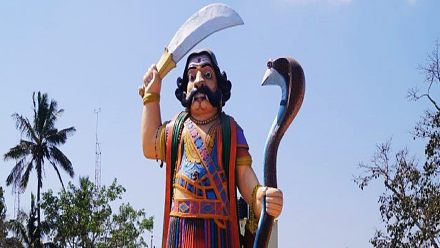
Mysuru City Police have denied permission for the proposed Mahisha Dasara celebration atop Chamundi Hills and imposed prohibitory orders around the Mahishasura statue ahead of the event on Saturday, October 10.
Ni Parishmita Saikia··74K nabasa
Mahishasura, Chamundi Hills And A Clash Of Narratives: What Is The Story Behind Mysuru's Mahisha Dasara?
Mysuru City Police have denied permission for the proposed Mahisha Dasara celebration atop Chamundi Hills and imposed prohibitory orders around the Mahishasura statue ahead of the event on Saturday, October 10.
Mysuru City Police Commissioner Seema Latkar has reportedly prohibited gatherings within a 200-metre radius of the statue. The restrictions are set to remain in effect from midnight on Friday, October 9, until 6 am on Sunday, October 11, according to the details available. The exact dates and scope of the order should be confirmed with the police before publication.
The Mahisha Dasara Aacharana Samiti had planned to organise the event at the hilltop. However, the police cited the need to prevent inconvenience to tourists visiting Chamundi Hills during the Dasara season and maintain law and order.
While the proposed gathering at the hilltop has been restricted, Mahisha Dasara celebrations are scheduled to take place at Town Hall in Mysuru on October 10, according to local media reports.
The decision has brought renewed attention to the competing interpretations of Mahishasura’s legacy, the significance of Mahisha Dasara and its relationship with the city’s celebrated Mysuru Dasara festival.
What Is Mahisha Dasara And Why Is It Celebrated In Mysuru?
Mahisha Dasara is an alternative cultural observance centred on Mahishasura, a figure traditionally portrayed in Hindu mythology as a buffalo-headed demon defeated by Goddess Durga, worshipped in Mysuru as Chamundeshwari.
The Mahisha Dasara Aacharana Samiti has been organising the celebration since 2015. Its supporters seek to challenge the conventional portrayal of Mahishasura and highlight alternative interpretations of his historical and cultural significance.
Members of the Samiti have claimed that Mahishasura was a historical ruler associated with Buddhism and that his legacy should be examined beyond the traditional religious narrative of a demon defeated by a goddess.
For sections of Dalit and other marginalised communities, Mahisha Dasara has also become a platform to question dominant religious narratives and assert alternative accounts of local history and identity.
The celebration is sometimes described as a counter to Mysuru Dasara. However, members of the organising committee have maintained that their intention is to highlight their interpretation of Mahishasura’s history rather than oppose the city’s traditional festival.
How Is Mahisha Dasara Different From Mysuru Dasara?
Although both observances are associated with the Mahishasura story, they differ in their religious interpretations, objectives and celebrations.
Mysuru Dasara is Karnataka’s state festival and a major religious and cultural event associated with the Wadiyar dynasty, which ruled the Kingdom of Mysore. The festival celebrates Goddess Chamundeshwari’s victory over Mahishasura, symbolising the triumph of good over evil. Its traditions combine Navaratri worship, royal ceremonies and large-scale public festivities.
The Wadiyar rulers developed Dasara into a prominent royal celebration, and its traditions continued after the end of princely rule. Key attractions include the illumination of Mysuru Palace, cultural performances, religious ceremonies and the famous Jumboo Savari procession. During the procession, the idol of Chamundeshwari is carried in a golden howdah atop a decorated elephant.
In 2026, Mysuru Dasara is scheduled to run from October 11 to October 21, with the grand procession taking place on Vijayadashami, October 21.
Mahisha Dasara: Re-examining Mahishasura’s Legacy
Mahisha Dasara, by contrast, focuses on Mahishasura himself and the alternative historical and cultural interpretations associated with him. Its supporters challenge the portrayal of Mahishasura solely as a demon and seek recognition for narratives that present him as a ruler or an important figure in the region’s cultural past.
The observance has consequently become part of a wider discussion about caste, identity, historical memory and the interpretation of cultural traditions.
Unlike the state-backed Mysuru Dasara, which features royal traditions and religious rituals, Mahisha Dasara is organised by a committee and supported by groups advocating an alternative interpretation of Mahishasura’s legacy.
Why Is Mahisha Dasara Controversial?
The disagreement centres on competing interpretations of the same figure.
In the traditional Hindu narrative, Mahishasura is defeated by the goddess, an event commemorated during Navaratri and Dasara. The Chamundeshwari temple atop Chamundi Hills is central to Mysuru’s religious identity, while the Mahishasura statue is a prominent landmark on the hill.
Supporters of Mahisha Dasara argue that alternative accounts of the figure deserve recognition and discussion. Some view the celebration as a way to reclaim histories they believe have been marginalised in mainstream religious and cultural narratives.
The issue has generated debate over religious beliefs, caste identities and the interpretation of regional history. The proposed gathering at Chamundi Hills has become particularly sensitive because the location is both a major pilgrimage destination and an important tourist attraction during the Dasara season.
Police have cited tourist convenience and the maintenance of law and order as reasons for restricting the gathering at the hilltop.
What Does History Say About Mysuru’s Connection With Mahishasura?
The association between Mysuru and Mahishasura is reflected in local tradition and the city’s religious identity. However, the precise historical origins of the city’s name and its relationship with ancient references to Mahisha remain subjects of historical discussion.
The Karnataka Government’s official Gazetteer records early references to Mysuru in inscriptions, including a copper plate inscription dated to 862 AD that refers to the place as ‘Maysooru’. It also notes that the identification of the ancient place called Mahishamandala with present-day Mysuru is uncertain.
These distinctions are important because the religious traditions surrounding Mahishasura and Chamundeshwari, as well as the alternative claims advanced by Mahisha Dasara supporters, should be distinguished from what can be established through inscriptions and historical records.
The debate therefore involves not only religious belief but also competing interpretations of the region’s past.
Mysuru Palace Prepares For Traditional Dasara Celebrations
Meanwhile, preparations are under way at Mysuru Palace ahead of the traditional Dasara celebrations beginning on October 11. The royal family’s jewel-encrusted golden throne, known as the Ratna Simhasana, has been assembled in the palace’s Durbar Hall as part of the customary preparations for the private royal durbar.
The assembly of the throne is accompaniedby religious rituals and follows traditions maintained by the Wadiyar family. Yaduveer Krishnadatta Chamaraja Wadiyar is expected to occupy the throne during the private durbar, an important part of the family’s Navaratri observances.
The throne is assembled specifically for the festival period and remains a prominent symbol of Mysuru’s royal heritage.
The preparations highlight the contrast between the established royal and religious traditions of Mysuru Dasara and the alternative historical narrative advanced by Mahisha Dasara organisers.
With the proposed gathering around the Mahishasura statue facing restrictions, the Town Hall celebration scheduled for October 10 is set to remain a focal point in the ongoing debate over the figure’s historical, religious and cultural significance.