Love, Breakup And Revenge Porn: How Private Moments Are Becoming A Cybercrime Nightmare For Women
What begins as a relationship between two young people is increasingly turning into a cybercrime nightmare for some women, with private photographs and intimate videos allegedly being uploaded or circulated online follow
Ni Rajan Vaid··180K nabasa
Love, Breakup And Revenge Porn: How Private Moments Are Becoming A Cybercrime Nightmare For Women
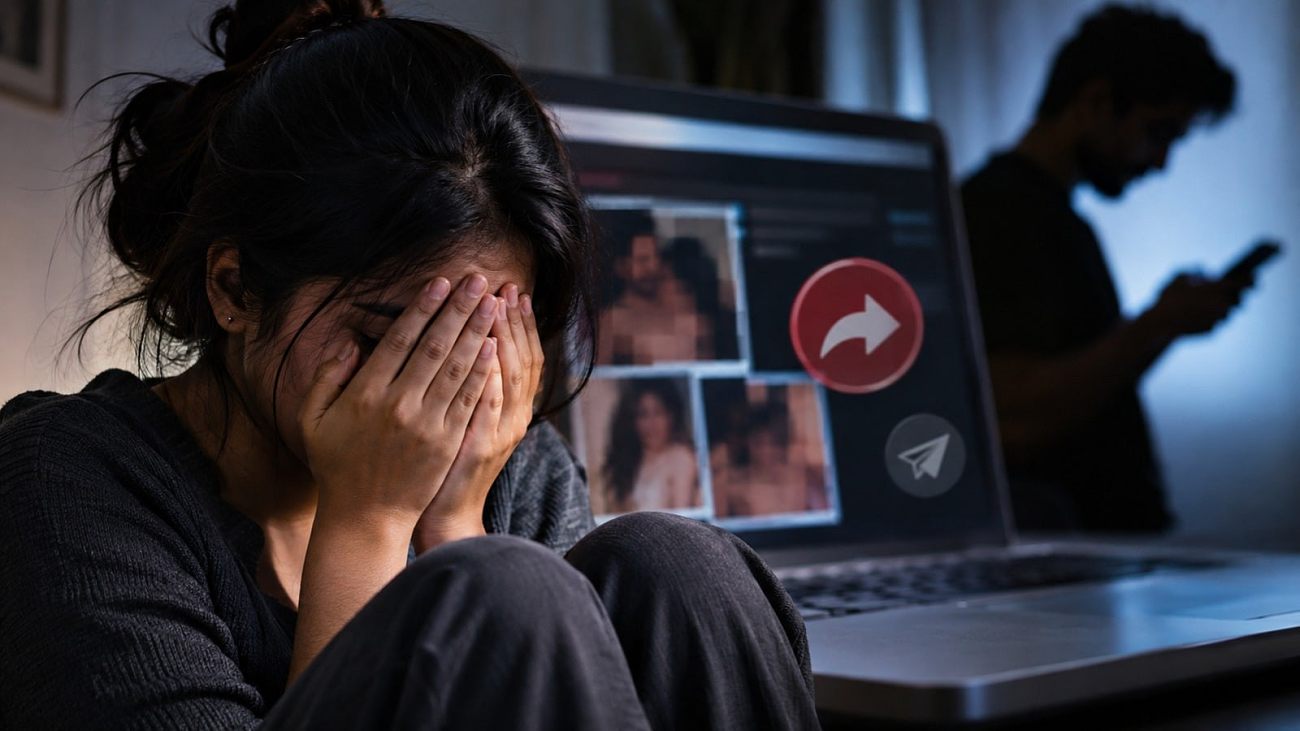
What begins as a relationship between two young people is increasingly turning into a cybercrime nightmare for some women, with private photographs and intimate videos allegedly being uploaded or circulated online following breakups. Police are expressing concern over this disturbing trend, even as more girls and women are finding the courage to approach authorities and report such incidents.
SP Shwetambari Sharma, Incharge of the Online Crime Against Women and Children (OCWC) Wing, JK4, has flagged the sharp rise in online offences targeting women and children, particularly the unauthorised sharing and circulation of private photographs on digital platforms.
Speaking to News18, Sharma attributed the growing number of cybercrime complaints to the rapid expansion of technology, increased internet usage and greater awareness among people about their rights and available reporting mechanisms.
One of the disturbing patterns drawing attention is the misuse of private photographs and intimate content following the breakdown of relationships. In several such cases, young people allegedly share photographs or videos during relationships, which are subsequently misused when the relationship turns sour.
In some instances, the content is allegedly uploaded on social media platforms, circulated through messaging applications or shared with friends and acquaintances to threaten, blackmail, embarrass or publicly humiliate the woman concerned.
The unauthorised circulation of such material can have serious consequences for victims, including emotional trauma, social stigma, reputational damage and fear of further harassment. The problem becomes particularly serious when the content is repeatedly shared across different platforms, making it difficult for victims to regain control over their personal images.
However, there is also an encouraging change. More girls and women are now approaching the police and reporting incidents of online harassment, image-based abuse and the circulation of private photographs without consent. Greater awareness about cyber laws and the availability of online complaint mechanisms have helped victims understand that such acts are criminal offences and that they have legal recourse.
NCRP figures reflect growing concern
The national figures underline the scale of the problem. According to data shared by the Ministry of Home Affairs in Parliament, complaints relating to cybercrimes against women on the National Cyber Crime Reporting Portal (NCRP) increased from 40,066 in 2023 to 48,335 in 2024 and further to 76,657 in 2025.
The 2025 figures include 37,743 complaints relating to sexually obscene material, 19,703 concerning sexually explicit acts, 8,780 involving rape or gang-rape-related sexually abusive content and 10,431 related to Child Sexual Abuse Material (CSAM).
The figures indicate a substantial increase in reported incidents, although they cover multiple categories of online abuse and do not separately identify cases arising from breakups or revenge-driven sharing of intimate photographs.
The NCRP, operated under the Indian Cyber Crime Coordination Centre (I4C), provides a dedicated mechanism for reporting cyber offences, with special provisions for crimes against women and children.
Uploading private photographs without consent is a crime
Sharing or publishing someone’s intimate photographs without their consent is not a harmless act of revenge. Depending on the nature of the content and circumstances, it can attract provisions of the Information Technology Act, 2000, including Sections 66E, 67 and 67A. More stringent provisions apply where children are involved.
The government has also strengthened mechanisms to address non-consensual intimate imagery (NCII). Under the IT Rules, intermediaries are required to take action on complaints involving specified content, including nudity, exposure of private areas and morphed images. Government guidance specifies a two-hour timeline for taking reasonable and practicable measures to remove or disable access to such content upon receiving a qualifying complaint.
Police sensitising personnel across police stations
Sharma said police personnel across police stations are being sensitised about these offences so that complaints can be handled effectively and victims can receive appropriate assistance.
The focus is on improving awareness, ensuring timely reporting and strengthening the response to cyber offences against women and children.
Women facing such harassment can register complaints through the official National Cyber Crime Reporting Portal at www.cybercrime.gov.in or approach their nearest police station. Victims should preserve relevant evidence, including screenshots, URLs, account details and messages, without further circulating the intimate content.
The growing willingness of women to report these offences is an important step towards tackling online abuse. The message is clear: a failed relationship does not give anyone the right to expose another person’s private life. Consent remains essential, and revenge through the misuse of intimate photographs is a criminal matter, not a personal dispute.